



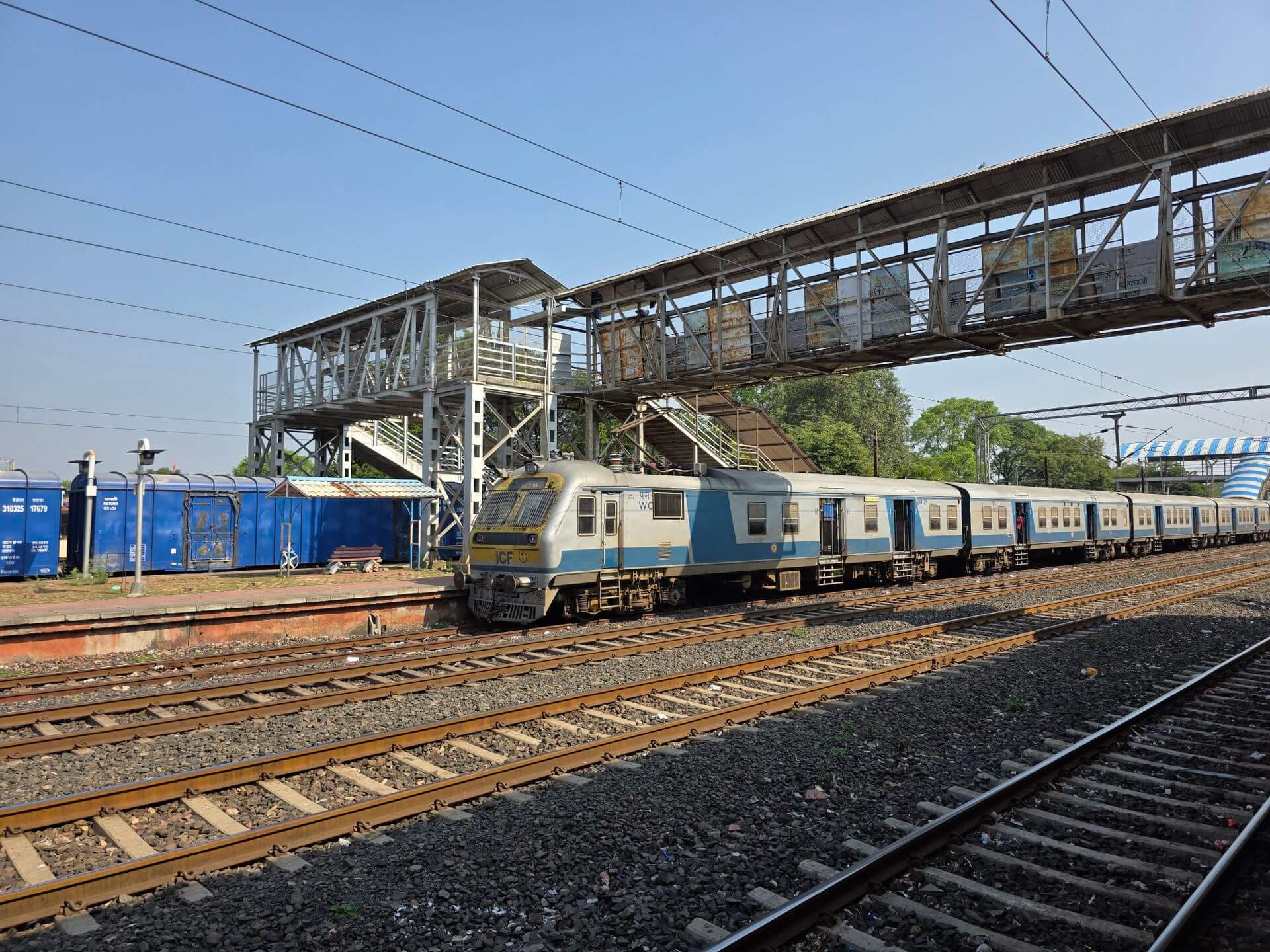



Overnight train safety in India is one of the biggest concerns for first-time foreign tourists, especially those visiting India for the first time.
The good news is that millions of passengers – including thousands of international travelers—complete overnight train journeys safely every day.
With the right train class, a confirmed berth, and a few simple precautions, overnight trains are one of the safest, most affordable, and most memorable ways to travel across India.
Most travelers find that the station feels far more overwhelming than the train itself. Once you’re settled into your reserved berth, the journey usually becomes much calmer than first-time visitors expect.
How does the berth system work? Which class should I book? Is it safe to sleep? What do I do with my luggage? These are practical questions with clear answers, and understanding them in advance transforms an unfamiliar system into a straightforward one.
Indian Railways carries millions of passengers every day. Foreign tourists regularly complete overnight journeys without incident when they understand how the system works.
Most overnight trains used by tourists operate with reserved coaches, onboard railway staff, and regular ticket inspections, making them a reliable option for long-distance travel across India.
The experience largely depends on three things: choosing the right train class, having a confirmed berth, and preparing before you board.
Are Overnight Trains Safe in India for Foreign Tourists?
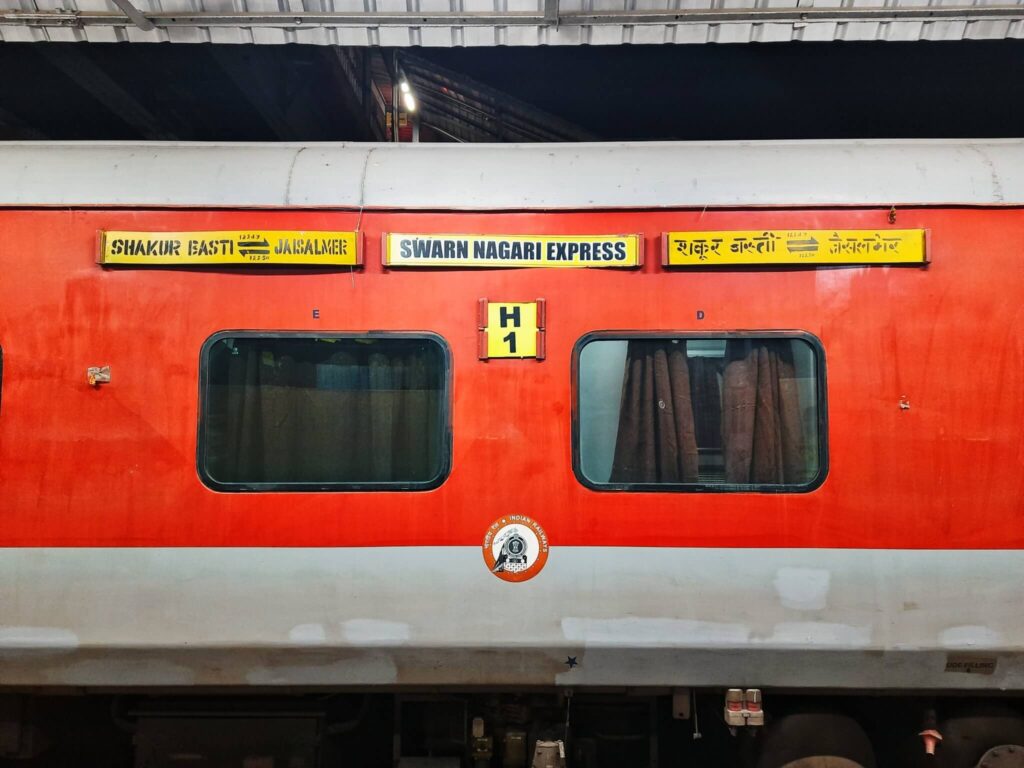
Yes, with proper planning. The main challenge for first-time travelers is unfamiliarity with the system rather than any inherent safety problem with train travel itself.
For most tourists, the biggest challenges are understanding the booking system, finding the correct coach, and knowing what to expect—not personal safety on the train itself.
Reserved AC coaches on Indian Railways are enclosed, climate-controlled environments with assigned berths where everyone has a confirmed place.
There is no ambiguity about where you are sleeping, no competition for space, and a Train Ticket Examiner (TTE) who walks the coach regularly and is responsible for passenger welfare.
The experience diverges significantly based on which class you book. A confirmed berth in AC 2-Tier is a different experience from an unreserved General Class coach.
Understanding this distinction before you book is the single most important piece of information for a first-time overnight train traveler in India.
Major stations like New Delhi Railway Station, Mumbai CST, and Bengaluru City Station can feel overwhelming on first encounter, particularly during peak hours.
The station environment is busy, loud, and requires navigating platforms and coach position charts with your luggage.
Knowing your coach number and platform position before you arrive resolves most of this. The train itself, once you are in your reserved berth, is considerably calmer.
Understanding Indian Train Classes Before Booking
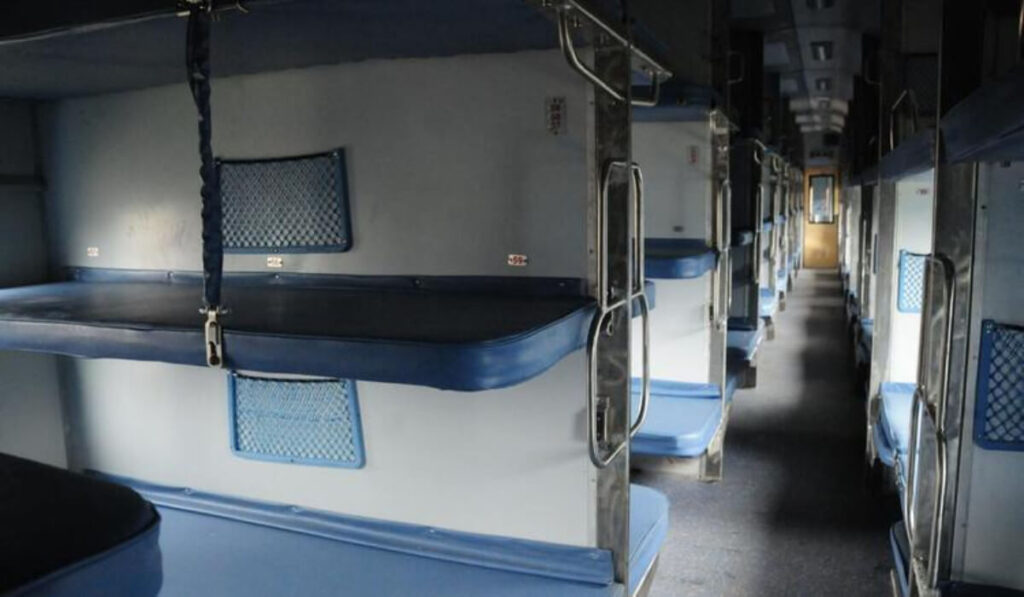
Indian Railways offers several travel classes. For overnight journeys, the class you choose determines your comfort, privacy, and the overall quality of the experience.
Class | Comfort Level | Privacy | Recommended For |
First AC (1A) | Highest | Excellent (lockable cabins) | Luxury travelers, maximum privacy |
AC 2-Tier (2A) | Very Good | Good (curtained berths) | First-time visitors, couples, families |
AC 3-Tier (3A) | Good | Moderate (open bays of 6) | Best value option for most tourists |
Sleeper Class (SL) | Basic | Limited (open coach) | Experienced budget travelers |
General Class | Very crowded | None | Not recommended for overnight tourist travel |
First AC (1A) offers lockable two or four-berth cabins with the highest level of privacy and comfort. It is the most expensive class and less widely available on all routes. For travelers who prioritize privacy above all else, it is worth the premium.
AC 2-Tier (2A) has open bays of four berths with curtains that can be drawn for privacy. Two lower berths and two upper berths face each other with a side berth across a narrow corridor.
Climate-controlled, comfortable, and the most consistently recommended class for first-time international visitors.
AC 3-Tier (3A) has bays of six berths: two lower, two middle, two upper, plus side berths. More passengers per coach than 2A but still climate-controlled and with assigned berths.
The most popular class among Indian domestic travelers and good value for international visitors who want comfort without the premium price of 2A.
Sleeper Class (SL) is the non-air-conditioned equivalent of 3A in terms of berth configuration, but open to the air, noisier, and with more passenger movement through the coach.
Not unsafe, but a different experience that requires more adjustment for travelers accustomed to Western standards.
General Class is unreserved and can become extremely crowded on popular routes.
Not appropriate for overnight travel for any visitor who is not specifically seeking a budget-above-all experience with significant tolerance for discomfort.
AC 2-Tier vs AC 3-Tier: Which Is Better for Tourists?
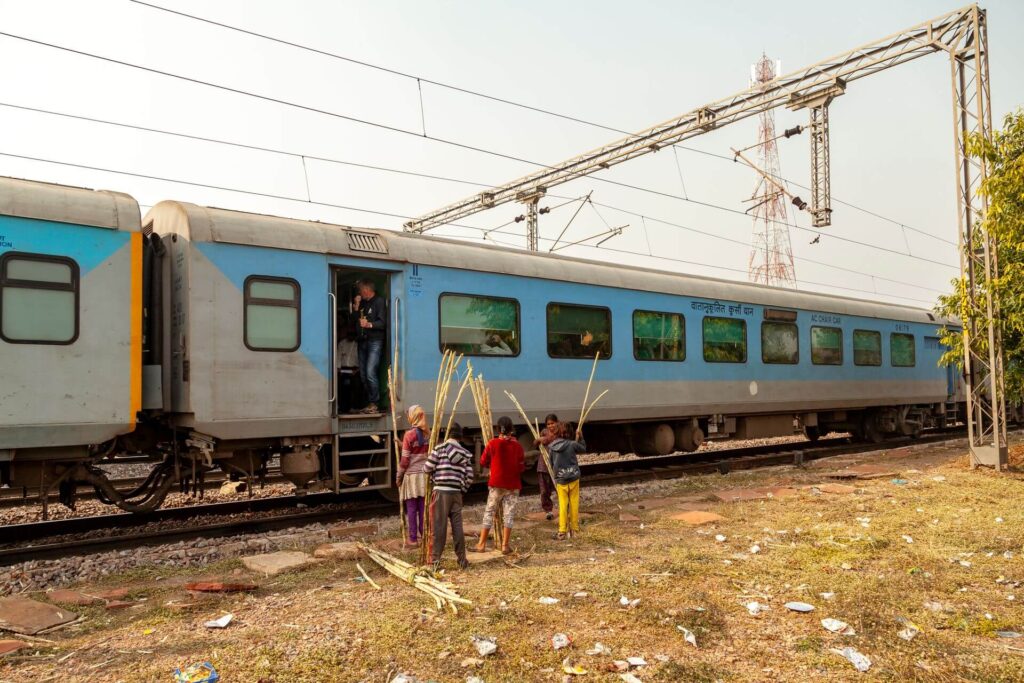
These are the two most practical overnight train options for the majority of international tourists, and the choice between them depends on budget and personal preference rather than safety.
AC 2-Tier suits first-time visitors, couples, and anyone who values more space and privacy. The bays of four berths feel less crowded than the six-berth bays in 3A.
The curtains provide genuine privacy once you are in your berth. The coach carries fewer total passengers.
It costs roughly thirty to fifty percent more than 3A on most routes but delivers a noticeably more comfortable experience.
Many repeat visitors to India eventually choose AC 3 Tier because it offers a good balance between comfort and price without sacrificing the safety of a reserved coach.
It is comfortable, affordable, and gives you a more authentic sense of how Indian families and professionals travel.
The additional berths in each bay mean a slightly more social environment, which some travelers enjoy and others find overstimulating.
For a week-long trip where overnight trains are a significant portion of the transport budget, the cost saving of consistently choosing 3A over 2A is meaningful.
Families with young children often find 2A easier because the reduced number of passengers in each bay means less activity around sleeping children.
Solo travelers who value peace and privacy lean toward 2A. Budget-conscious travelers and those who have completed a few overnight journeys without issue typically settle into 3A as their default.
Should Foreign Tourists Use Sleeper Class?
Sleeper Class is generally safe for many passengers, but it is a much less comfortable and less predictable environment than the AC classes, especially for first-time foreign visitors.
The coach is not air-conditioned, which in most of India for most of the year means warm and sometimes quite hot.
Windows can be opened, which creates airflow but also admits noise, dust, and insects depending on the route and season.
Passengers move through the coach more than in AC classes. The environment is louder, more open, and more unpredictable.
For experienced budget travelers who have already completed a few Indian overnight journeys and are comfortable in less structured environments, Sleeper Class is entirely viable.
The berth configuration is the same as 3A and confirmed tickets mean you have an assigned sleeping space.
For first-time international visitors, particularly those arriving directly from a long-haul flight with no India experience, Sleeper Class is a significant jump from familiar travel conditions.
The recommendation for a first overnight train journey is an AC class, not because Sleeper Class is dangerous but because managing unfamiliarity is easier in a more controlled environment.
How to Choose the Best Berth on an Overnight Train
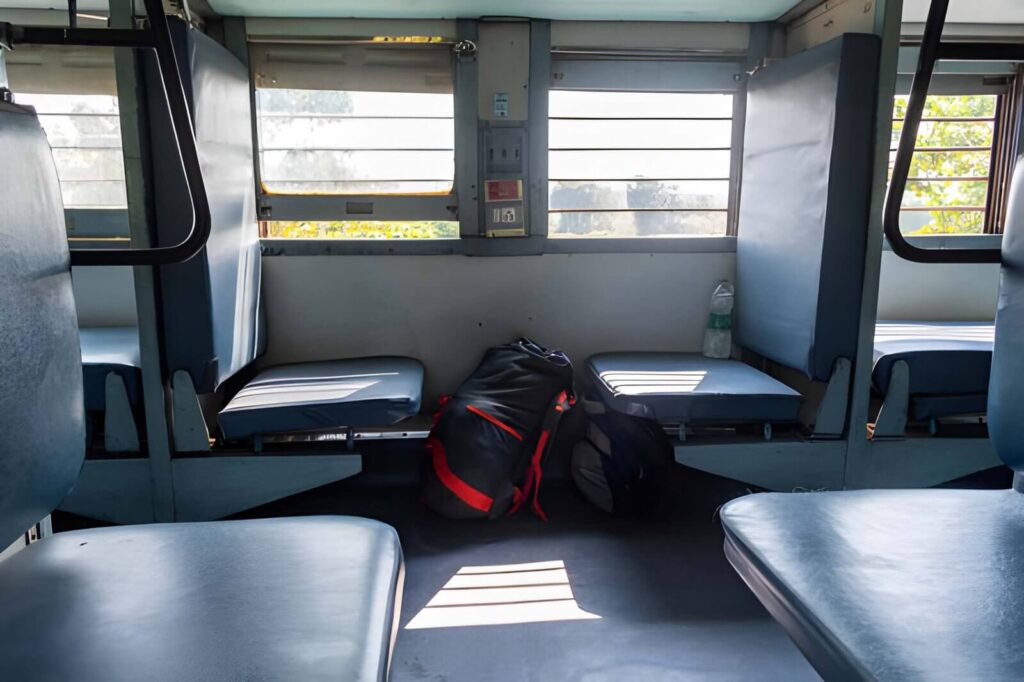
Within your chosen class, berth selection affects your comfort more than most travelers realize before their first overnight journey.
Berth | Privacy | Easy Access | Best For |
Lower Berth | Medium | Excellent | Families, older travelers |
Middle Berth | Medium | Average | Budget travelers |
Upper Berth | High | Limited | Solo travelers |
Side Lower | Good | Excellent | Solo travelers |
Side Upper | High | Limited | Privacy seekers |
Lower berth is the most convenient option for most travelers. Easy to access at any hour, comfortable for sitting during the day, and practical for storing luggage underneath.
If you’re carrying a backpack or medium-sized suitcase, keeping it locked underneath a lower berth also makes it easier to check your luggage during the journey.
When booking through IRCTC, you can choose a preferred berth (such as lower or upper), although the final allocation depends on availability and isn’t guaranteed.
The trade-off is that during the day, before berths are made up for sleeping, your seat functions as a social space where other passengers from the bay may sit.
Some travelers find this pleasant. Others find it intrusive. If you want to sleep or read during the day, a lower berth requires more boundary management than an upper.
Middle berth (in 3A) is folded up against the wall during the day and only made available for sleeping at night.
This means you cannot use it as a berth until the evening, which is inconvenient on journeys that start in the afternoon.
Once made up for the night it is comfortable, but the daytime limitation is a genuine inconvenience on longer journeys.
Upper berth offers the most privacy and the fewest interruptions. Once you are up there, you are essentially in your own space. No one asks to sit on your berth during the day.
The disadvantages are the climb required (the train moves, the ladder is basic, and this is less comfortable in the middle of the night) and the slightly warmer temperature compared to lower berths, as heat rises in the coach.
Side berth (the two berths at the end of each bay running perpendicular to the main berths) offers more privacy than the main bay berths because you are adjacent to the corridor rather than facing other passengers across a small table.
The space is slightly narrower than a standard berth. Experienced India train travelers who want a quieter experience often specifically request side-lower berths when booking through IRCTC.
For solo female travelers, a lower berth in an AC coach is the most practical combination: easy access, good visibility, and proximity to the corridor where the TTE and other passengers are regularly present.
How to Book a Safer Overnight Train Journey
Book through IRCTC, the official Indian Railways ticketing platform, rather than through third-party resellers.
An IRCTC account requires registration with a foreign phone number or email, which takes a few minutes to set up.
The platform shows real-time availability, allows berth selection, and issues electronic tickets that work as your boarding document.
If IRCTC registration feels confusing, many international travelers use trusted booking platforms such as 12Go or official travel agencies, although booking directly with IRCTC usually offers the best availability and lowest prices.
Book as early as possible for popular routes. Overnight trains between Delhi and Varanasi, Mumbai and Goa, and major cities in Rajasthan often sell out weeks in advance, especially during the peak travel season from October to March.
Trying to book three days before you want to travel on a popular route in December will typically show sold-out in every class except General.
When tickets show as sold out, check the Tatkal quota. Tatkal releases a portion of seats 24 hours before departure at a premium price (typically ten to thirty percent above base fare).
It is a reliable fallback for popular routes when advance planning has not been possible. Also check the Tourist Quota, which holds a small number of berths specifically for foreign visitors on major routes.
These are only accessible at the Foreign Tourist Booking Counter at major railway stations, not online, and require your passport. They are a genuine option when online availability is exhausted.
Confirm your PNR (Passenger Name Record) status before travel. You may also see RAC (Reservation Against Cancellation) status.
RAC passengers can board the train and receive a shared berth, while fully waitlisted passengers cannot travel on most reserved trains unless their ticket is confirmed.
Can Foreign Tourists Use a Passport?
Yes. Foreign tourists can travel using their passport as their primary identification when booking and during ticket inspection. Keep it easily accessible, as the TTE may ask to see it along with your ticket.
What to Do Before Boarding the Train
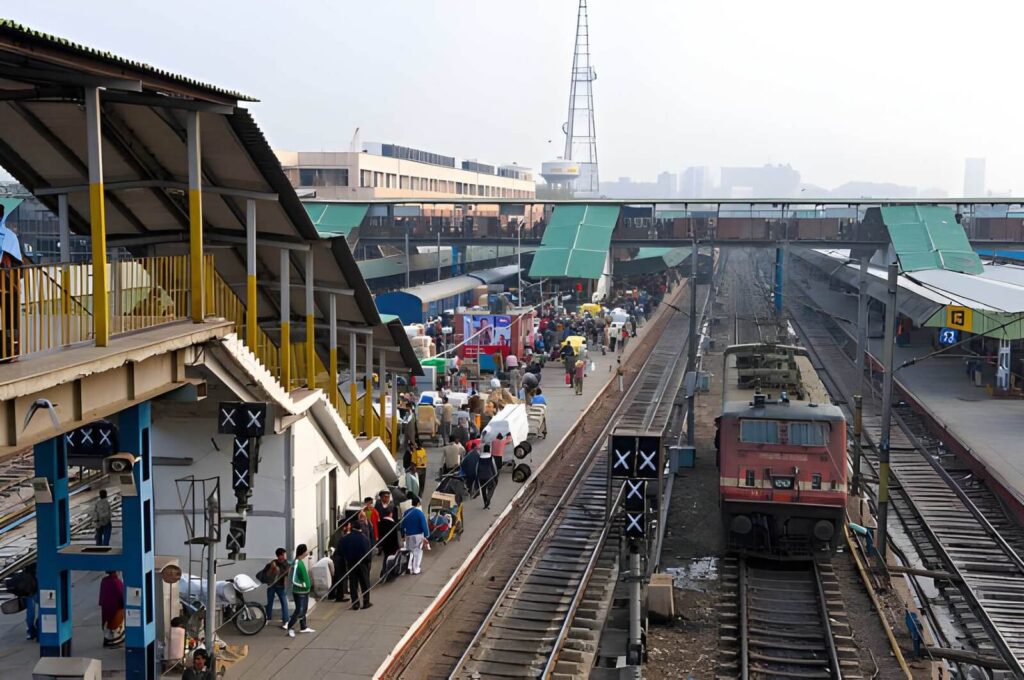
A little preparation before arriving at the station removes most of the stress first-time visitors experience. The hour before boarding is where most first-time train travel stress happens. Being organized eliminates most of it.
Before leaving your hotel:
- Download your ticket offline or take a screenshot. Mobile data can be unreliable at busy stations.
- Note your train number, coach number, and berth number separately from the ticket. You will need these to find your position on the platform.
- Check the IRCTC app or the National Train Enquiry System for the current platform number. Platforms are sometimes changed at short notice.
- Charge your phone to full. A power bank is essential for overnight journeys.
- Pack essentials in an accessible bag rather than buried in checked luggage.
At the station:
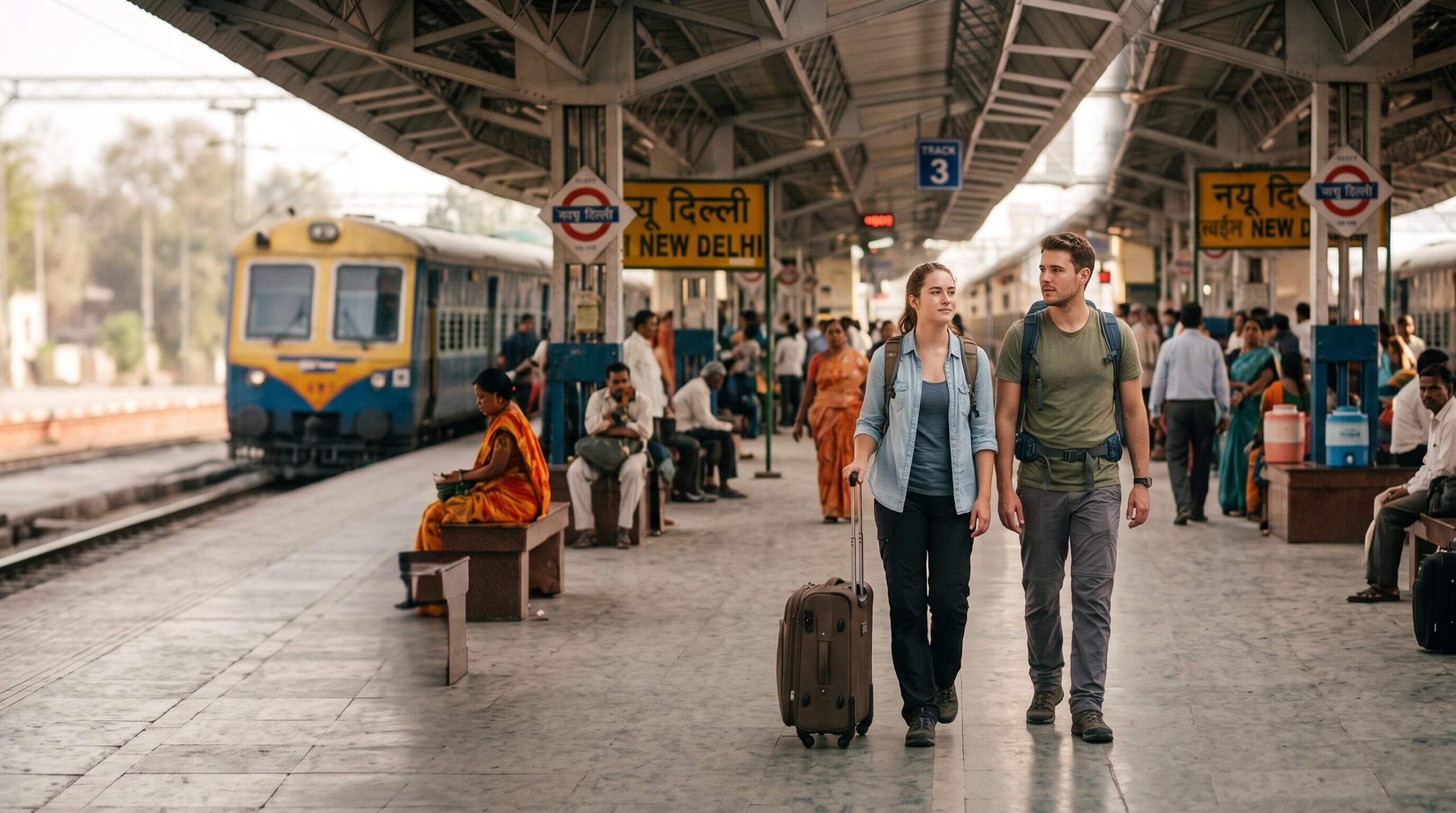
- Arrive at least 45 minutes before departure. Major stations like New Delhi Railway Station require navigating crowds, finding the right platform, and locating the coach position chart before you can even get to your boarding spot.
- Find the coach position chart posted on boards throughout the station. It shows where each coach will stop on the platform.
- Locate your coach letter (S1, B2, A1, etc.) and walk to that position to wait. This prevents the scramble of the train arriving and everyone trying to locate their coach simultaneously.
- You can also check the reservation chart displayed on the platform to confirm your coach and berth before boarding.
- Keep your ticket, phone, and ID accessible from a front pocket or top of your bag. You will need to show your ticket to the TTE shortly after boarding.
What to Pack for an Overnight Train Journey
The space available in an Indian train berth is limited. Packing deliberately makes the journey significantly more comfortable.
Practical essentials:
- Small padlock for your luggage. Bags can be chained to the fixture under the lower berth using the chain that is usually already attached, with your padlock securing it. This is standard practice and removes the need to keep a constant eye on your bag while sleeping.
- Power bank of at least 10,000 mAh. Charging points exist in AC coaches but availability varies and outlets may already be occupied.
- Earplugs. Trains are not silent. Announcements, conversation, and track noise are continuous.
- Eye mask. The coach lights dim overnight but do not go completely dark.
- Light jacket or thin layer. AC coaches are genuinely cold on some routes, particularly in winter.
- Hand sanitizer and tissues. Train toilets vary in cleanliness and supplies are not guaranteed.
- Sealed bottled water and snacks. Pantry car food and platform vendors are available on most overnight routes, but quality and reliability vary. Having your own supplies covers gaps.
- Small valuables pouch worn against your body for phone, passport, and cash while sleeping.
The cleanest time to use them is usually shortly after boarding or early in the morning before most passengers wake up.
Leave large, hard-sided luggage at your hotel where possible. Soft bags that can be compressed under the berth are significantly more practical than wheeled suitcases in train travel.
How to Keep Your Belongings Safe While Sleeping
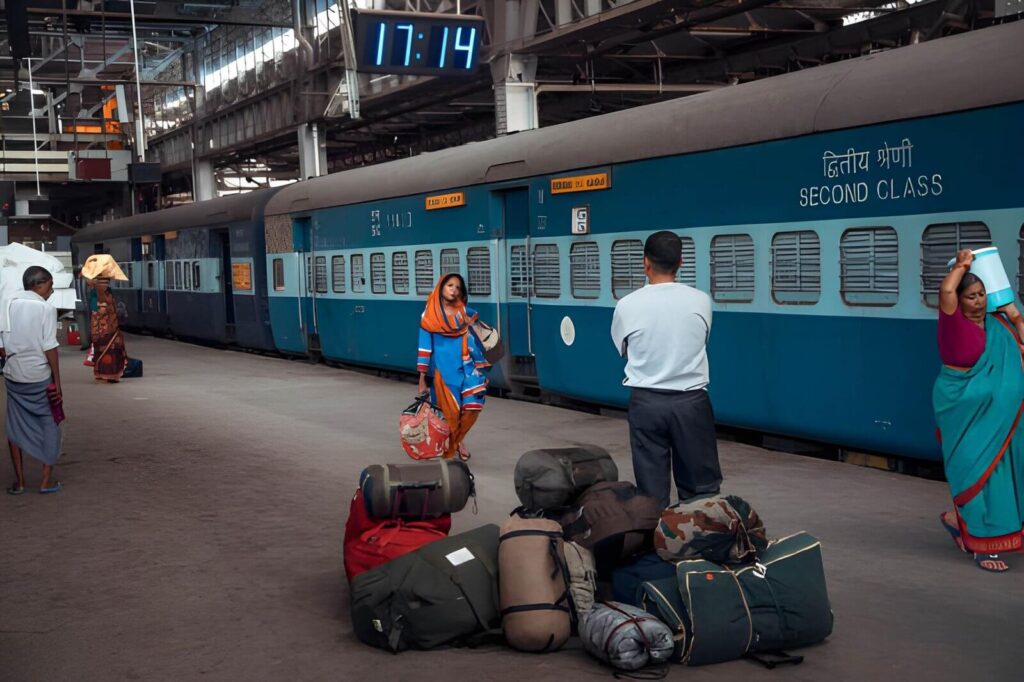
Overnight train security in India is primarily about organization rather than responding to active threat.
Most belongings that go missing do so because they were left unattended in obvious places, not because of targeted theft.
Chain your suitcase or backpack to the luggage fixture under the lower berth using your own padlock. This is standard practice on Indian Railways and greatly reduces the risk of opportunistic theft while you sleep.
Your bag is not going anywhere if it is secured to the train itself. If you’re carrying expensive camera equipment or electronics, keep those items in a smaller bag with you rather than inside your main luggage.
Keep your passport, wallet, phone, and cards in a pouch worn against your body while sleeping.
A money belt or small cross-body pouch worn under clothing is comfortable enough for sleeping and eliminates the possibility of these items being accessible while you are asleep.
Most AC coaches have charging points near the berths, but they may already be occupied or temporarily not working.
Charge your phone while you’re awake whenever possible rather than leaving it unattended overnight.
Keep all money and cards in the same bag only if you are keeping that bag secured or on your person at all times. Distributing across two locations means that a single loss does not take everything.
Are Train Doors Locked at Night?
No. Coach doors normally remain unlocked because passengers board and leave the train at different stations throughout the journey.
This is standard on Indian Railways and should not be mistaken for a security issue. Reserved AC coaches remain occupied by ticketed passengers, and railway staff regularly move through them.
Toilet, Food, and Hygiene on Overnight Trains
Toilets: AC coaches on Indian trains typically have both Indian-style squat toilets and Western-style seated toilets.
Cleanliness varies depending on the route length, the number of passengers, and when the coach was last cleaned. They are generally usable but not the most pristine facilities.
Carry your own tissues, hand sanitizer, and a small soap bar. The toilets are at the ends of each coach.
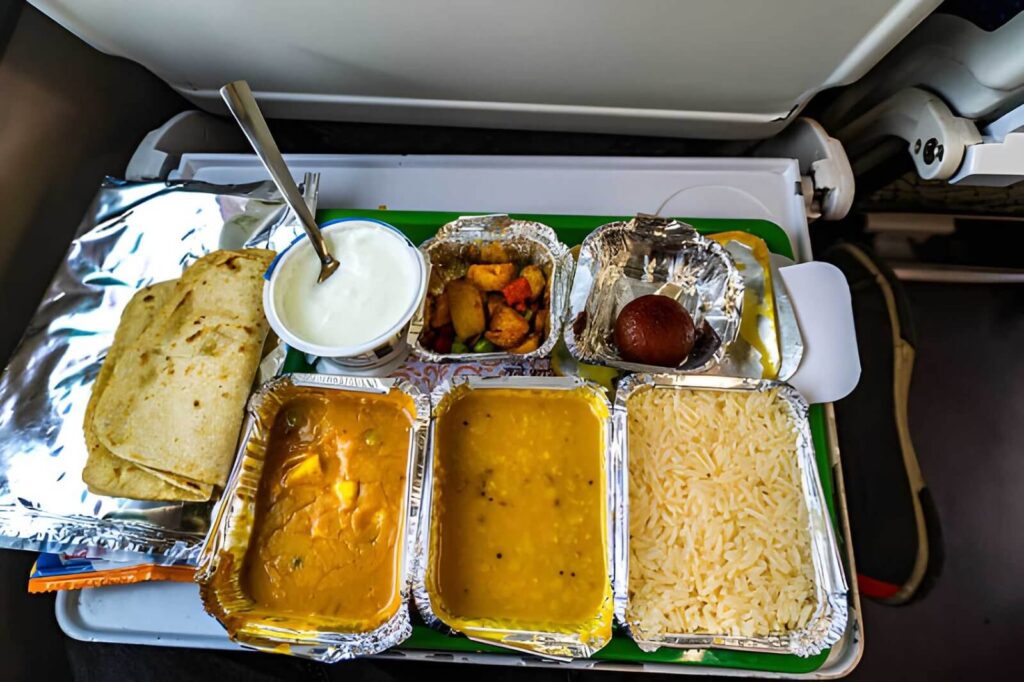
Food: Many overnight trains have a pantry car selling hot meals, chai, and snacks, while others rely on station vendors or IRCTC eCatering.
You can also order food directly to your seat on many routes through IRCTC’s eCatering service, which partners with restaurants at major stations.
Both are popular with Indian passengers and generally safe in the sense that high turnover keeps food fresh. Sealed packaged snacks and your own bottled water are the lowest-risk options if you are cautious about food.
For a broader guide to eating safely while traveling in India, the Indian food guide for first-time travelers covers the specific situations to be careful with.
Hygiene: AC coaches are relatively clean at the start of a journey. On long routes of sixteen hours or more, the standard drops toward the end.
A small kit with hand sanitizer, wet wipes, and tissues covers most situations. Use sanitizer after handling luggage and before eating regardless of whether you have had access to a sink.
Overnight Train Safety Tips for Solo Female Travelers

Solo female travel on Indian overnight trains is common and entirely manageable in AC coaches with a confirmed reservation and a few consistent habits.
Book an AC coach, ideally 2A for maximum privacy on a first overnight journey.
The enclosed bay environment, curtains, and reduced passenger count in 2A make it significantly more comfortable for solo female travelers than 3A or Sleeper Class on a first overnight journey.
Many solo female travelers also prefer berths close to families or other women, which naturally creates a more comfortable environment during overnight journeys.
The Ladies Quota under IRCTC’s reservation system holds berths specifically for solo women travelers. When booking through IRCTC, look for this quota option.
If the Ladies Quota is unavailable, choosing a berth near families or other women can also make first-time travelers feel more comfortable during overnight journeys.
It typically provides better placement in the coach and often results in traveling near other women or families.
Keep your phone charged and accessible at all times. The TTE’s contact information is available through the IRCTC app and railway helpline (139).
If something makes you uncomfortable during the journey, the TTE is the first point of contact.
Avoid oversharing personal details with fellow passengers, particularly your solo status, which hotel you are staying at, and how long you will be in each city.
This is the same discretion that applies in any public environment, not India-specific. Trust your instincts early.
If a fellow passenger’s attention is unwelcome, the steps in the next section apply. Acting at the first signal is more effective than waiting to see whether the situation escalates.
For a comprehensive guide to female travel safety across India’s transport systems, the guide on how to stay safe on public transport as a woman in India covers metro, bus, and train travel in full.
What to Do If Someone Makes You Uncomfortable
Most overnight train journeys pass without incident. When they do not, the steps are clear.
If a fellow passenger repeatedly interrupts you, makes intrusive comments, or ignores signals that you want to be left alone, a direct and clear statement works better than polite deflection. “I would prefer not to talk” or “please leave me alone” said firmly and clearly is understood.
Continued polite engagement with someone who is pushing boundaries gives the interaction room to continue.
If the behavior persists, move closer to other passengers in the bay or move to a different part of the coach. Changing your physical position ends most situations that a verbal request has not.
Contact the Train Ticket Examiner (TTE) if the situation is not resolving. The TTE walks the coach regularly and has authority over passenger behavior.
On many routes, the Railway Protection Force (RPF) also patrols stations and responds to security issues when required. This is not an escalation.
It is exactly the purpose of the TTE’s presence in the coach. Railway staff and nearby passengers in India do intervene when an incident becomes visible.
Silence gives persistent harassers more room. Making the situation known removes it. In a genuine emergency on the train, call 139 (Indian Railways helpline) or 112 (national emergency number).
Indian Railways also has an in-journey complaint mechanism through the Rail Madad app and the 139 helpline for issues that arise during travel.
Common Overnight Train Mistakes First-Time Tourists Make
Booking the cheapest class without understanding what it involves. The price difference between Sleeper Class and AC 3-Tier is meaningful for a budget traveler but the experience difference is significant.
Read what each class actually involves before optimizing purely for price.
Arriving at the station too late. New Delhi Railway Station, Mumbai CST, and other major hubs require time to navigate. Arriving twenty minutes before departure with luggage leaves no margin for finding the right platform, locating the coach position on the chart, and reaching your boarding position. Forty-five minutes minimum.
Carrying oversized luggage. A hard-sided 28-inch suitcase is a serious problem on an Indian train. The space under the lower berth accommodates bags. It does not accommodate large suitcases.
If your luggage cannot fit under a train berth, reconsider either your packing or your transport choice.
Not saving ticket information offline. Railway stations and trains have patchy mobile data coverage. An e-ticket that requires internet access to display is a problem at the station gate.
Screenshot your ticket and keep your PNR and coach number written down separately.
Boarding the wrong coach. Indian trains are long and platforms are busy. Every coach has a letter and number (B2, S4, A1) painted on the outside. Match this to your ticket before boarding.
The coach position chart at the station tells you where each coach will stop on the platform. Check it before the train arrives rather than running along the platform after it does.
Ignoring the train’s expected arrival time. Overnight trains can occasionally arrive earlier or later than scheduled, so it’s worth setting an alarm and checking your progress using the NTES app before going to sleep.
Best Overnight Train Routes for First-Time Visitors
Delhi to Varanasi: One of India’s great cultural journeys. Several overnight trains cover this route in roughly twelve hours, arriving in time for the morning ghats.
The Kashi Vishwanath Express and the Vibhuti Express are among the regular options. Book 2A or 3A well in advance during peak season.
Delhi to Mumbai: The Rajdhani Express between Delhi and Mumbai is one of Indian Railways’ premier services. Sixteen to seventeen hours, fully AC, meals included in the ticket price.
A genuine experience of long-distance Indian train travel at its most polished.
Delhi to Jaipur or Jodhpur: Shorter overnight options for the Rajasthan circuit. The Mandore Express to Jodhpur is a popular choice. Journey time of around ten hours means arriving early morning with the full day ahead.
Mumbai to Goa: The overnight Konkan Kailash Express or Jan Shatabdi on the Konkan Railway route is one of India’s most scenic train journeys, running along the coast through tunnels and across bridges.
Around eight to nine hours depending on the service. Popular and books up quickly, particularly on weekends and during peak season.
Final Checklist

Before boarding:
- Confirmed ticket with PNR, coach number, and berth number saved offline
- Train number and platform confirmed (check IRCTC app or station boards)
- Phone fully charged
- Power bank packed and charged
- Padlock for luggage chain
- Essential documents in accessible, secure location
- Bottled water and snacks packed
During the journey:
- Luggage chained and locked under lower berth
- Valuables in a pouch against your body while sleeping
- Phone kept close, not left charging unattended
- TTE contact information saved (139 helpline)
- Berth curtain drawn for privacy while sleeping
- Alert to your arrival station (set an alarm if your stop is in the early hours)
- Shoes placed where you can find them quickly in the morning
Overnight train safety in India comes down to preparation rather than luck. Choosing a reserved AC coach, keeping your luggage secure, and understanding how Indian Railways works will make your journey far more comfortable and enjoyable.
For most foreign tourists, an overnight train isn’t something to worry about – it’s one of the most rewarding ways to experience India while covering long distances efficiently.
FAQs about Train Safety in India for Foreign Tourists
Are overnight trains safe in India for foreign tourists?
Yes. Overnight trains in India are generally safe for foreign tourists who book a confirmed berth in a reserved AC coach. Most travelers complete their journeys without problems by securing their luggage, keeping valuables close, and following basic travel precautions.
Which train class is safest for foreign tourists in India?
AC 2-Tier (2A) and AC 3-Tier (3A) are the safest and most practical options for foreign tourists. Both offer reserved berths, air-conditioned coaches, and regular ticket checks. First AC provides the most privacy but costs more.
Is it safe to sleep on an overnight train in India?
Yes. It is generally safe to sleep on an overnight train in India if you have a confirmed berth in a reserved coach. Lock your luggage, keep your passport and phone close, and avoid leaving valuables unattended.
How do I keep my luggage safe on Indian trains?
Lock your suitcase or backpack to the luggage fixture under your berth with a small padlock. Keep your passport, wallet, phone, and other valuables in a small bag on your person while sleeping.
Can foreign tourists book Indian train tickets online?
Yes. Foreign tourists can book Indian Railways tickets through IRCTC or trusted booking platforms. Booking early is recommended, as popular overnight trains often sell out during peak travel seasons.
Are Indian train toilets clean?
Indian train toilets are generally usable, but cleanliness varies by route and journey length. Most AC coaches have both Western-style and Indian-style toilets. Carry tissues and hand sanitizer for added comfort.
Is AC 2-Tier better than AC 3-Tier for first-time visitors?
For most first-time visitors, AC 2-Tier offers more privacy and space. AC 3-Tier is more affordable and still comfortable, making it a popular choice for budget-conscious travelers.
Can solo female travelers safely use overnight trains in India?
Yes. Solo female travelers regularly use overnight trains in India. Booking a reserved AC coach, staying aware of your surroundings, and contacting the TTE if needed are sensible safety precautions.
What should I pack for an overnight train journey in India?
Pack a padlock, power bank, water bottle, snacks, tissues, hand sanitizer, earplugs, an eye mask, and a light jacket. Keep your passport, phone, and wallet within easy reach while sleeping.
What should I do if I feel unsafe on an Indian train?
If you feel unsafe, inform the Train Ticket Examiner (TTE) immediately or call the Indian Railways helpline (139). In an emergency, contact 112 or ask nearby passengers for assistance.
Images: Pexels
