



You’ve got a map of India open in one tab and a growing list of cities in another – Delhi, Agra, Jaipur, Varanasi, Goa, Kerala – but no real sense of how many you can fit into the two or three weeks you have.
This is where many first-time trips to India go wrong. Too many cities, too little time, and long travel days can quickly turn an exciting trip into an exhausting one.
This India itinerary for first-time travelers helps you plan a realistic route based on your trip length, interests, and travel style.
You’ll find the best routes for beginners, sample 7-, 10-, 14-, and 21-day itineraries, and practical tips for getting between destinations without rushing.
Quick Answer
If you’re planning your first trip to India, here’s the simplest way to build your itinerary:
- Start with the Golden Triangle (Delhi, Agra, and Jaipur) if this is your first trip – it’s one of the easiest routes to follow and gives you a good introduction to India.
- Add one region, not five – pick a single extension (Rajasthan, Varanasi, Kerala, or Goa) rather than trying to cover all of India.
- Aim for at least 2–3 nights in most major stops – staying longer usually gives you enough time for sightseeing without making every day feel rushed.
- Build in travel-day buffers – distances in India often take longer to cover than they look on a map.
- Match your pace to your trip length, not the other way around – a 10-day trip and a 25-day trip shouldn’t attempt the same number of cities
How Many Days Do You Actually Need for India?
One of the hardest parts of planning an India itinerary is figuring out how many days you actually need. First-time visitors often try to fit too many cities into a short trip without accounting for travel time between them.
Trip length | What's realistic |
5–7 days | Golden Triangle only (Delhi, Agra, Jaipur) |
8–10 days | Golden Triangle + Udaipur, Varanasi, or Pushkar |
11–14 days | Golden Triangle + Rajasthan, or North India + Goa |
15–21 days | North India + South India, or North India + Kerala |
22+ days | Multi-region trip with North, South, or another region |
For most first-time travelers, 10–14 days is a comfortable starting point, giving you enough time to see several major destinations without spending most of the trip in transit.
A useful rule is to allow 2–3 nights for most major stops, plus part or all of a day for transfers between cities.
The Golden Rule of India Itinerary Planning
One of the biggest things to remember when planning an India trip is that travel between cities can take longer than the map makes it look.
Traffic, road conditions, and train schedules mean a 300km journey can easily take 6–7 hours by road, even though the same distance in Europe or the US might take 3.
This is where many first-time itineraries go wrong. A route that looks efficient on paper – hopping between five cities in ten days – often means losing entire days to transit that were meant for sightseeing.
How to plan around this:
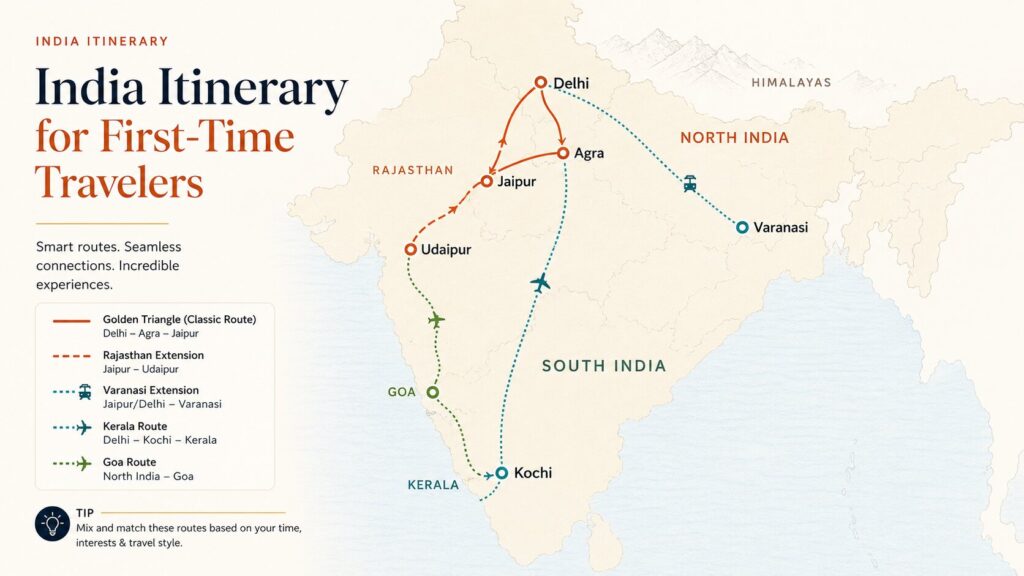
- Group destinations that are genuinely close together. Delhi–Agra–Jaipur form a natural Golden Triangle route.
- Use internal flights for longer jumps, such as Delhi to Kerala, rather than spending a full day or more traveling by road or rail.
- Treat travel days as their own day in the itinerary, not something squeezed between two full sightseeing days
Popular India Itinerary Routes for First-Time Travelers
Most well-built first-time India trips follow one of a handful of proven circuits. Here’s how each works and who it suits.
The Golden Triangle (Delhi – Agra – Jaipur)
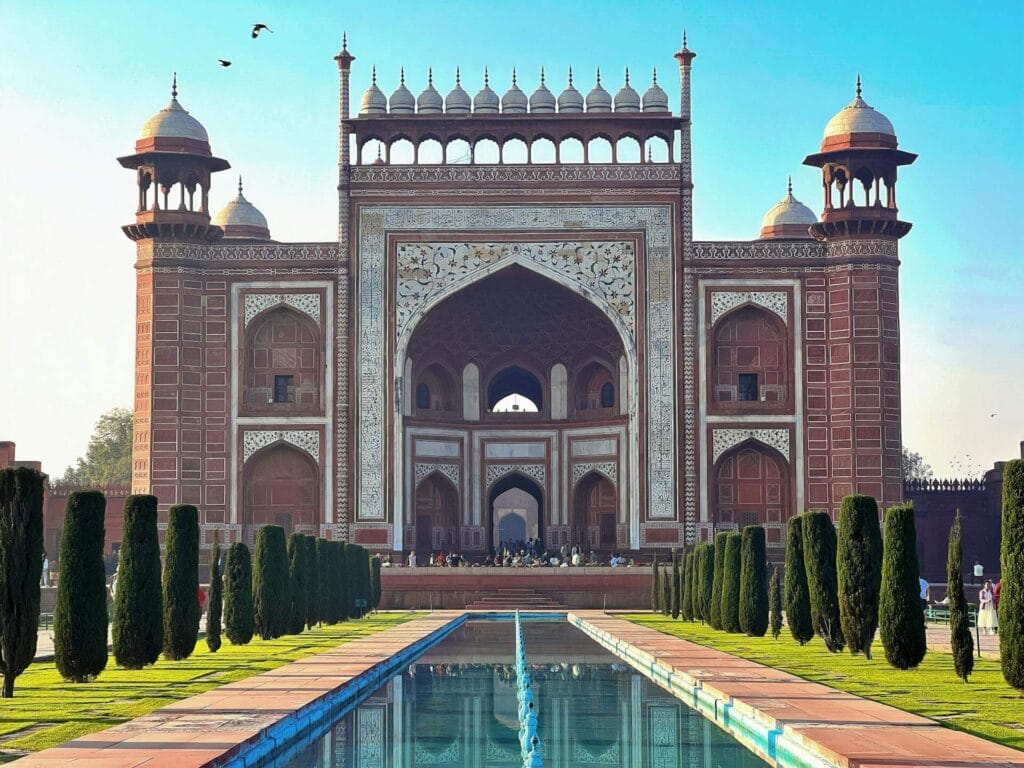
The Golden Triangle is the classic first-time India itinerary, and for good reason. Delhi, Agra, and Jaipur are relatively easy to combine, with good road and rail connections between them.
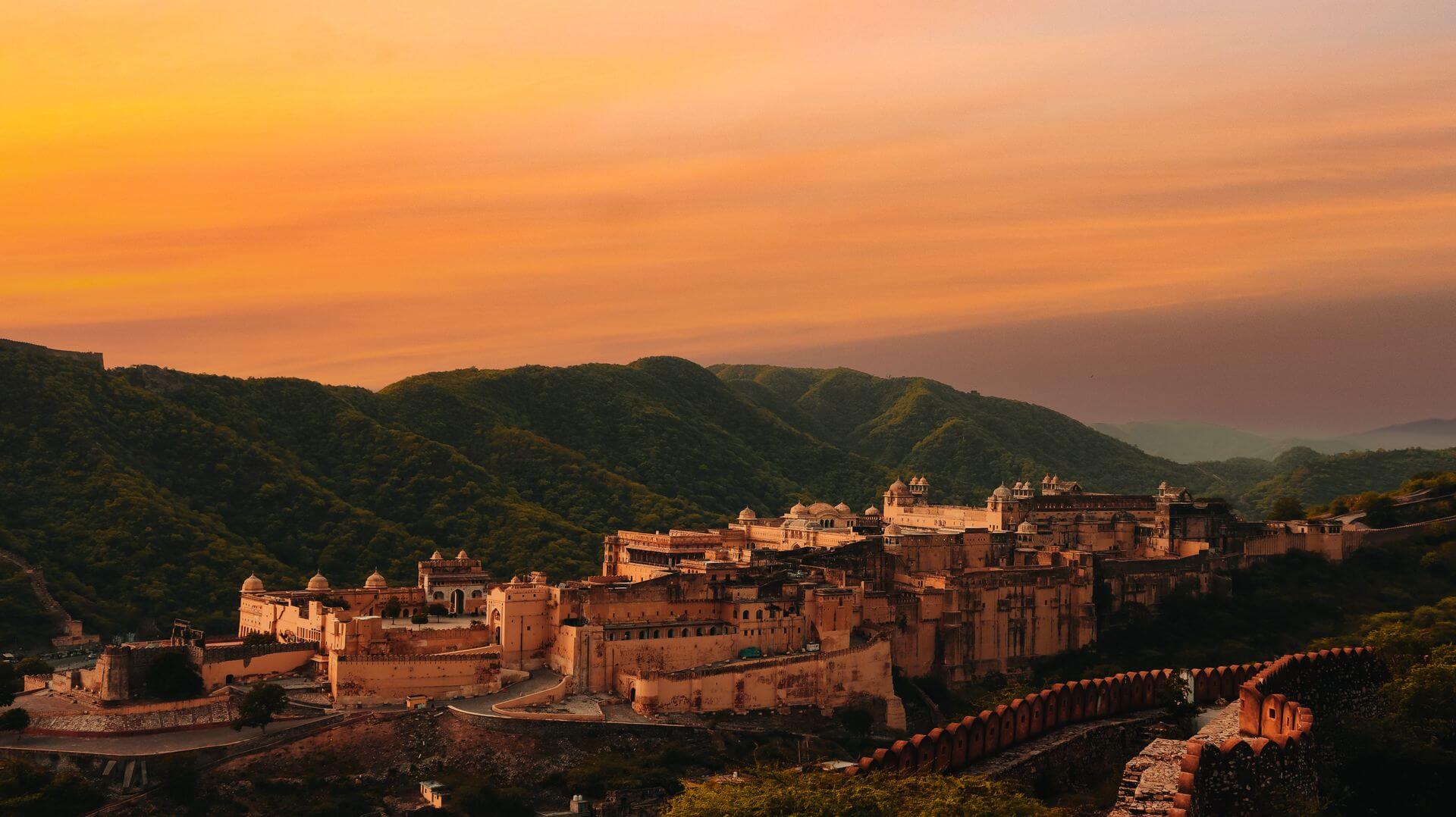
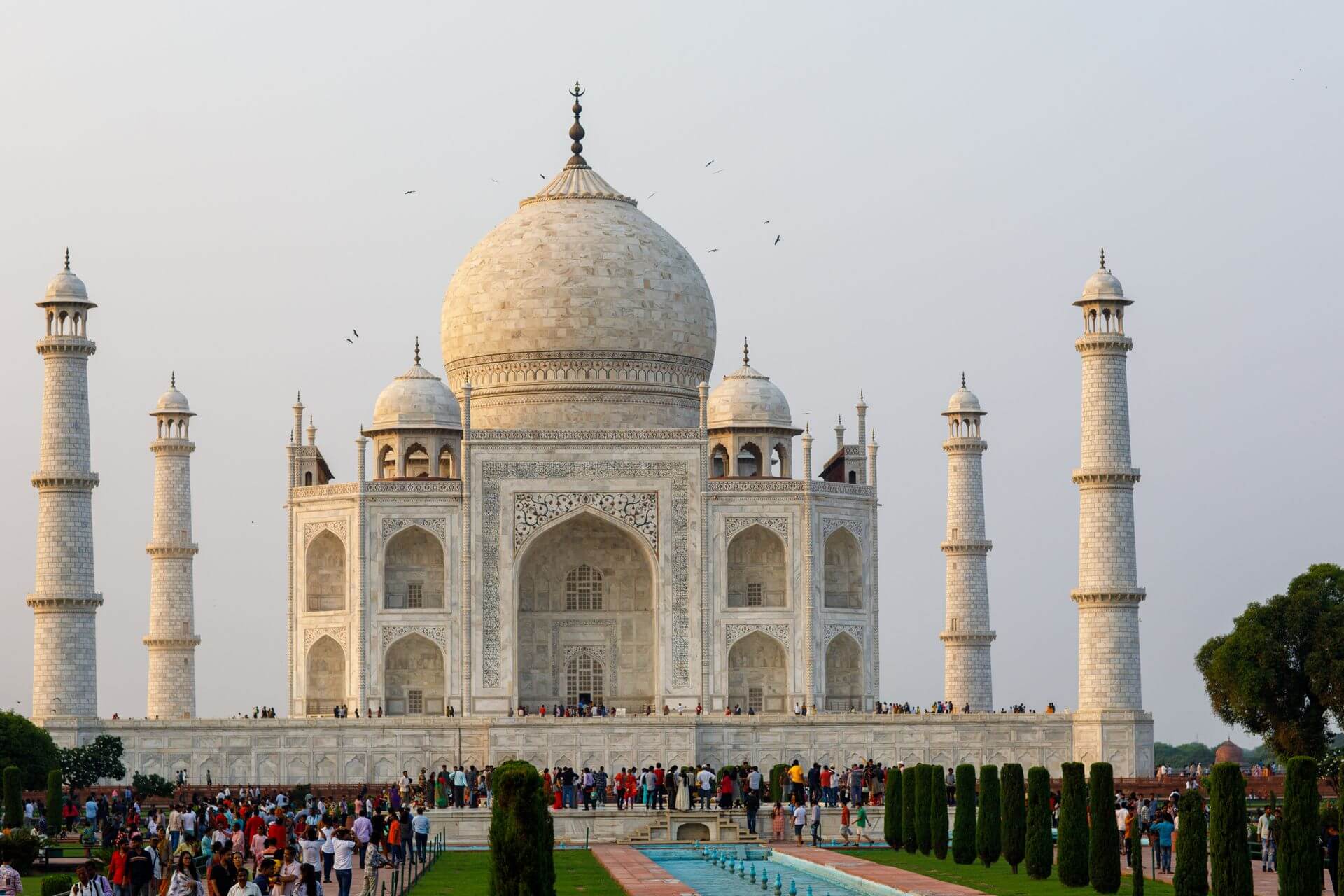
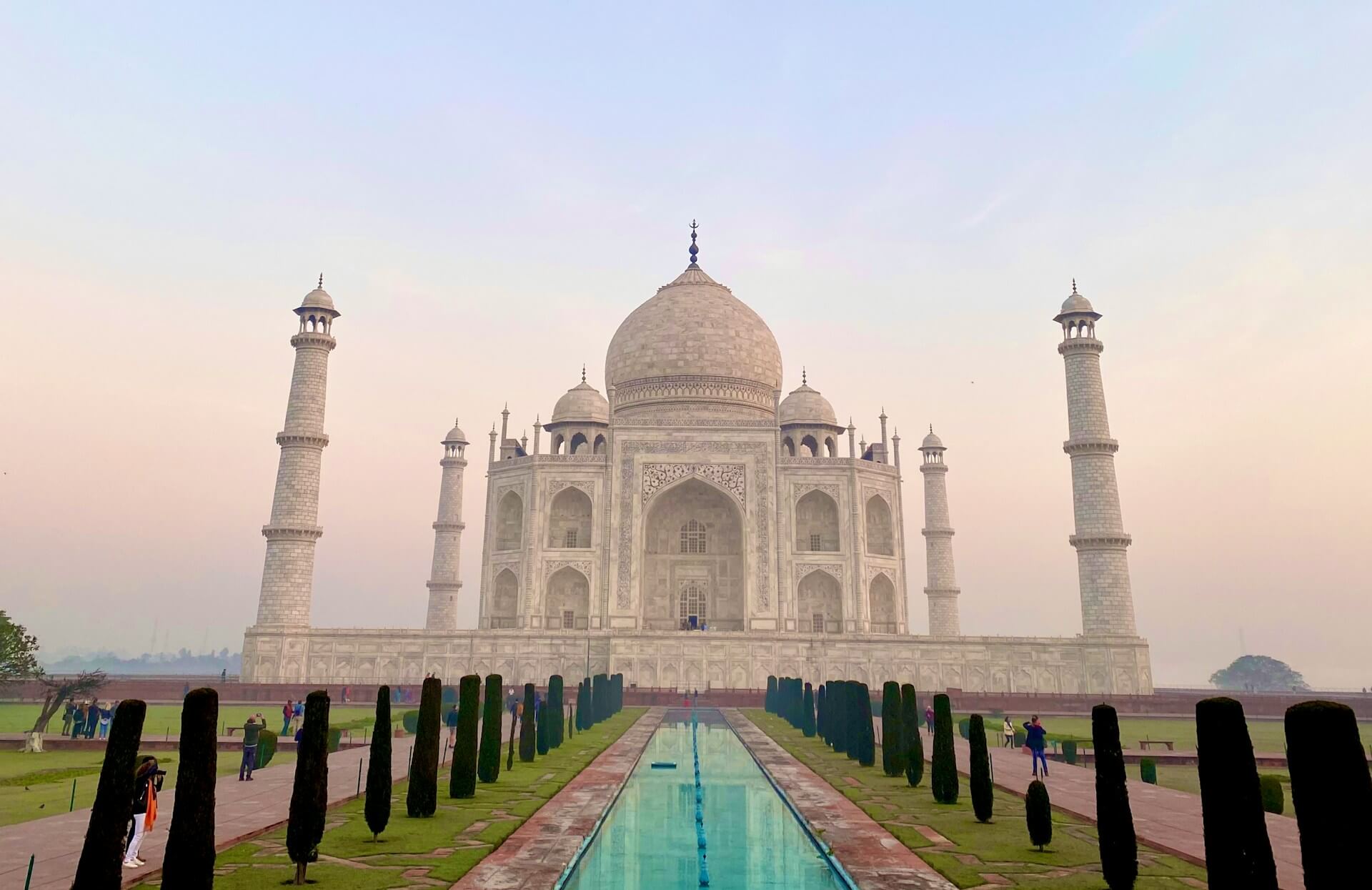
Together, they give you a taste of three very different sides of India – Delhi’s historic neighborhoods and modern city life, Agra’s Taj Mahal, and Jaipur’s forts, palaces, and colorful markets.
Best for: first-timers with limited time, anyone nervous about longer-distance India travel, business travelers extending a trip by a few days.
A comfortable pace: 2–3 nights in Delhi, 1–2 nights in Agra, and 2–3 nights in Jaipur.
Golden Triangle + Rajasthan Extension
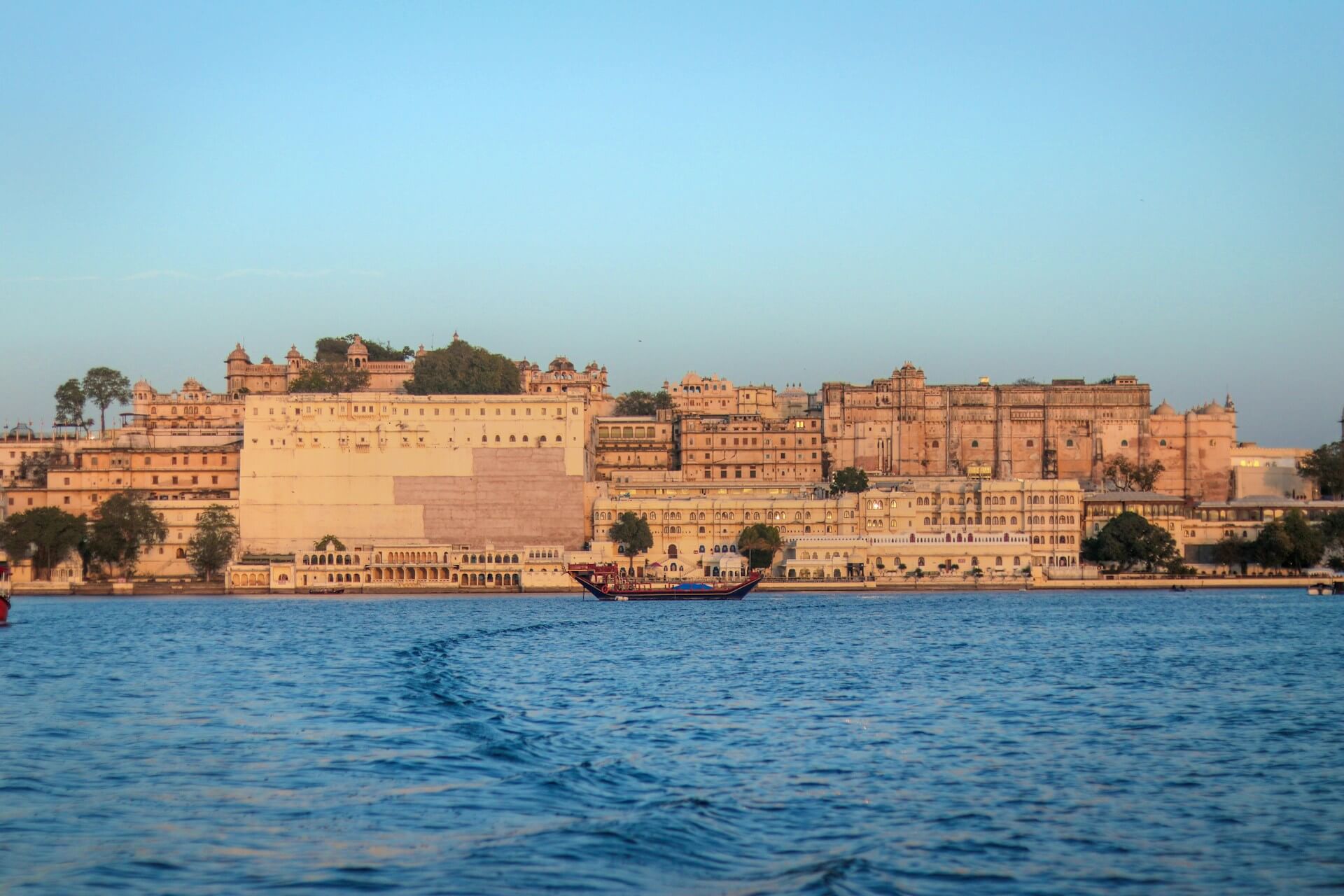
If you have more than a week, adding Udaipur, Jodhpur, or Pushkar can turn the Golden Triangle into a longer Rajasthan itinerary, with lake palaces, historic forts, blue-painted old-city streets, and desert landscapes.
Best for: travelers with 10+ days who want more depth without leaving North India, couples looking for a mix of culture and romantic settings (Udaipur especially).
Typical pacing: Golden Triangle as above, plus 2 nights Udaipur and/or 2 nights Jodhpur.
North India + Varanasi Spiritual Circuit
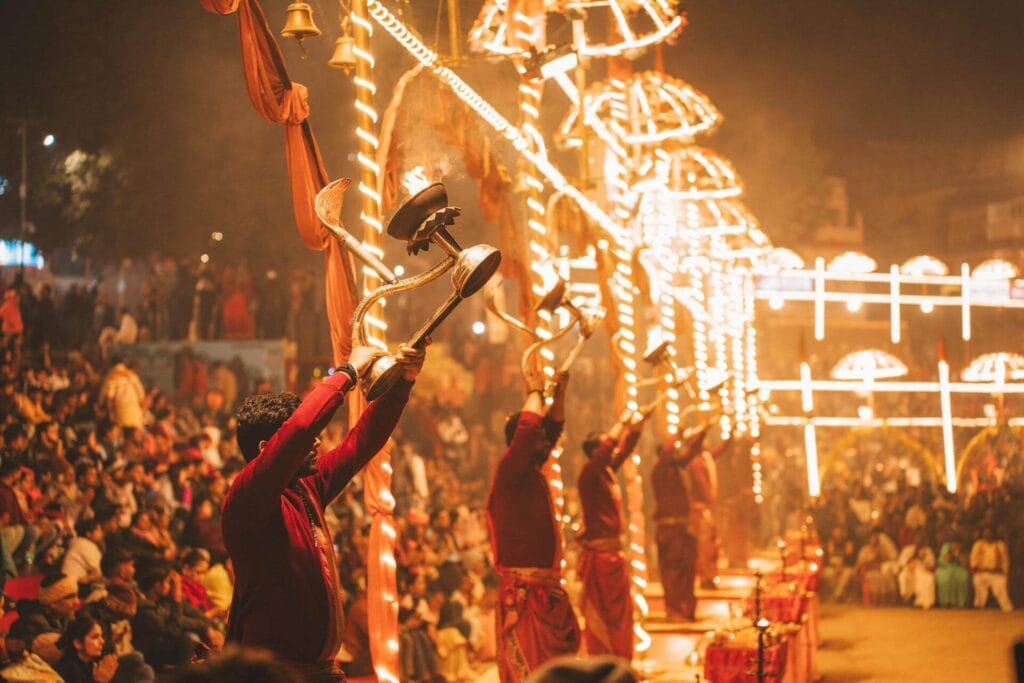
Adding Varanasi to a North India itinerary gives you a very different experience, centered around the ghats of the Ganges, early-morning boat rides, evening ceremonies, and the city’s deeply spiritual atmosphere.
Best for: travelers interested in India’s spiritual and religious side, photographers, anyone comfortable with a more sensory-intense city experience than Jaipur or Agra offer.
Typical pacing: 2–3 nights. A flight can save significant travel time compared with a long road or rail journey.
South India Circuit (Kerala, Tamil Nadu, Karnataka)
A South India itinerary feels very different from a Rajasthan or North India trip, with Kerala’s backwaters, temple towns, tea plantations, tropical landscapes, and a generally slower pace.
Best for: travelers who’ve already done North India, honeymooners and couples (Kerala backwaters especially), anyone traveling during the hotter months who would rather explore a greener, slower part of India.
Typical pacing: 2 nights Kochi, 2 nights Kerala backwaters (houseboat stay), 2–3 nights in a hill station like Munnar, optional extension to Tamil Nadu’s temple towns.
Himalayan and Hill Station Circuit
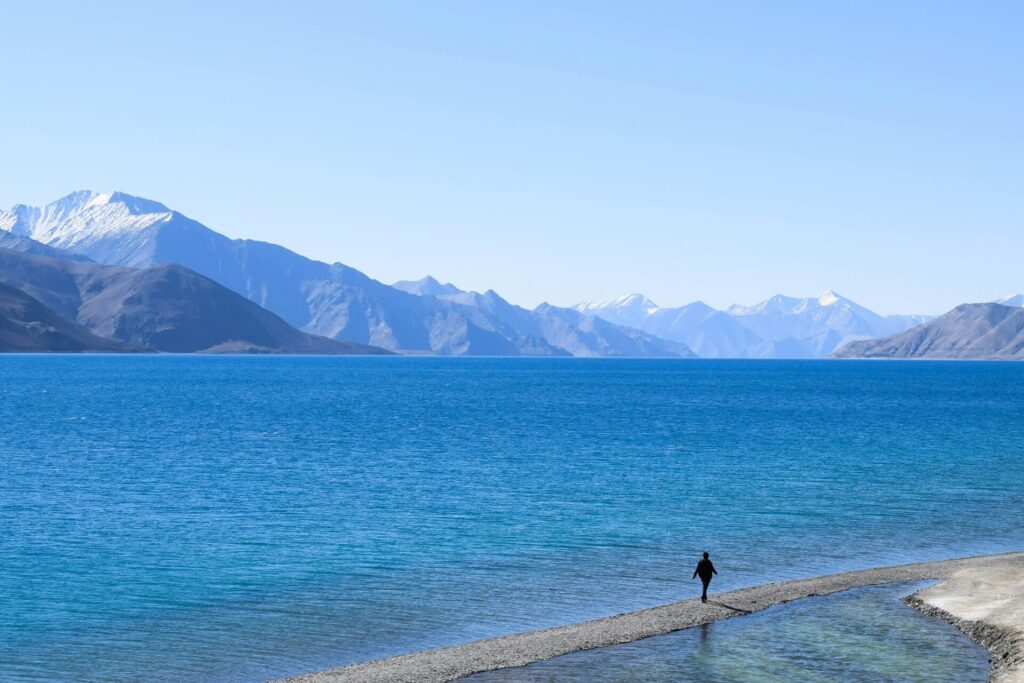
Ladakh, Himachal Pradesh, and Uttarakhand offer a completely different side of India – mountains, monasteries, trekking, and cooler weather.
The best time to visit varies by destination, road conditions, and altitude.
Best for: travelers with a specific interest in trekking, mountain scenery, or Tibetan Buddhist culture; not a good fit for a first, short India trip due to the travel time and altitude adjustment involved.
Typical pacing: minimum 5–7 days for Ladakh alone, given altitude acclimatization needs.
Goa Beach Add-On
Goa works particularly well as a 3–4 day beach break at the end of an India itinerary.
After several days of sightseeing, its beaches, relaxed restaurants, and slower pace can give you a chance to unwind before your flight home.
Best for: almost every traveler type as a closing few days, especially useful for resetting before a long flight home.
Typical pacing: 3–4 nights is enough for a relaxing finish to most itineraries.
Sample Itineraries by Trip Length
Here’s how these pieces combine into complete itineraries, organized by how much time you have.
7-Day Itinerary: Golden Triangle Only
Day | Location | What to do |
1 | Delhi | Arrive, check in, and keep the day light |
2 | Delhi | Old Delhi, Jama Masjid, Chandni Chowk |
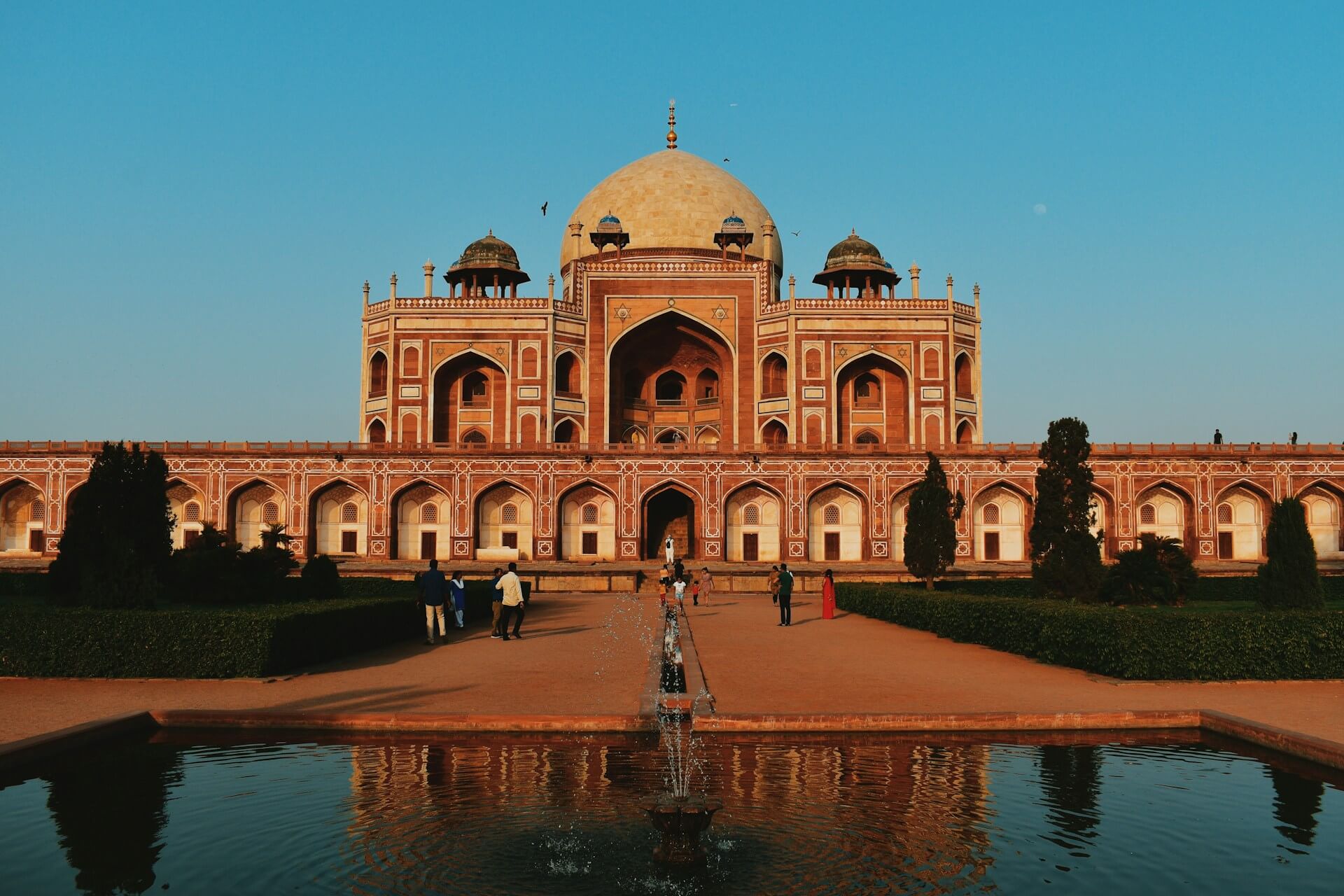
3 | Delhi | India Gate, Humayun's Tomb, Qutub Minar |
4 | Agra | Travel from Delhi, visit Agra Fort, see the Taj Mahal if time allows |
5 | Jaipur | Travel to Jaipur, explore the old city and local markets |
6 | Jaipur | Amber Fort, City Palace, Jantar Mantar |
7 | Jaipur | Hawa Mahal, shopping, and a relaxed final day |
This 7-day India itinerary is best for first-time visitors who want to focus on the country’s most famous sights without adding too many travel days.
10-Day Itinerary: Golden Triangle + Udaipur
Day | Location | What to do |
1 | Delhi | Arrive, check in, and rest |
2 | Delhi | Old Delhi and Chandni Chowk |
3 | Delhi | India Gate, Humayun's Tomb, and Qutub Minar |
4 | Agra | Travel to Agra, visit Agra Fort, Taj Mahal |
5 | Jaipur | Travel to Jaipur and explore the old city |
6 | Jaipur | Amber Fort, City Palace, and Jantar Mantar |
7 | Jaipur | Markets, Hawa Mahal, and a slower sightseeing day |
8 | Udaipur | Travel to Udaipur and explore around Lake Pichola |
9 | Udaipur | City Palace, old city, and lakeside sights |
10 | Udaipur | Relaxed morning and departure |
A 10-day India itinerary gives you enough time to see the Golden Triangle and add Udaipur without constantly changing hotels. Udaipur also gives the trip a slower finish after the busier cities.
14-Day Itinerary: Golden Triangle + Udaipur + Goa
Day | Location | What to do |
1 | Delhi | Arrive, check in, and rest |
2 | Delhi | Old Delhi and historic sights |
3 | Delhi | New Delhi, Humayun's Tomb, and Qutub Minar |
4 | Agra | Travel to Agra, Taj Mahal, and Agra Fort |
5 | Jaipur | Travel to Jaipur and explore the old city |
6 | Jaipur | Amber Fort, City Palace, and Jantar Mantar |
7 | Jaipur | Markets and a relaxed sightseeing day |
8 | Udaipur | Travel to Udaipur and explore Lake Pichola |
9 | Udaipur | City Palace, old city, and lakeside sights |
10 | Goa | Fly to Goa and settle in |
11 | Goa | Beach day and relaxed sightseeing |
12 | Goa | Explore a different beach area or nearby attractions |
13 | Goa | Free day for beaches, food, or a day trip |
14 | Goa | Relaxed morning and departure |
Fourteen days gives you enough flexibility to combine the Golden Triangle, Udaipur, and Goa without making every day feel rushed.
If you prefer culture and spirituality over beaches, you can replace Udaipur or Goa with Varanasi instead.
21-Day Itinerary: North + South Split
A 3-week India itinerary gives you enough time to combine North and South India without trying to see every major destination. The easiest way to do it is to use a domestic flight for the longer journey south.
- Days 1–8: Delhi, Agra, Jaipur and Udaipur
- Spend the first part of the trip exploring the Golden Triangle and Rajasthan.
- Day 9: Travel south
- Fly from North India to Kochi or another major South India hub.
- Days 10–13: Kochi and Kerala backwaters
- Explore Fort Kochi, spend time on the backwaters, and enjoy a slower pace.
- Days 14–16: Munnar or Tamil Nadu
- Choose Munnar for tea plantations and mountain scenery, or Tamil Nadu for temples and cultural sites.
- Days 17–21: Goa
- Finish with several relaxed days on the coast before your flight home.
Building Your Itinerary Around Who You’re Traveling With
The right pacing and route shifts significantly depending on who’s actually on the trip.
Solo travelers: You can move a little faster and keep your plans flexible, but a first solo trip to India is usually easier with some extra buffer time for transport and logistics.
Couples: Udaipur, Kerala’s backwaters, and Goa consistently rank as the most popular romantic stops — worth prioritizing over cramming in extra cities.
Families with kids: Slower pacing usually matters more than squeezing in extra destinations. Give yourselves more time in each city and consider a family-friendly India itinerary with fewer hotel changes.
Female travelers, including those traveling solo: Well-established tourist routes such as the Golden Triangle and parts of South India can be easier to plan because there are plenty of hotels, transport options, and established tourism services.
As with any destination, it’s still important to research each stop and choose transport and accommodation carefully.
Backpackers and budget travelers: Trains work well for connecting nearby cities (Delhi–Agra–Jaipur), keeping costs down compared to flights, though longer North-to-South jumps are still faster and often similarly priced by air.
Senior travelers: Favor routes with fewer, longer stops and more private transport between them rather than budget trains or crowded local buses, since this reduces physical strain significantly.
Business travelers extending for leisure: A 3–4 day Golden Triangle add-on after a Delhi or Mumbai business trip is one of the most efficient ways to see a meaningful slice of India without needing a separate dedicated trip.
Digital nomads: Goa and Kerala’s slower-paced towns work better for longer stays with reliable wifi than the more intense sightseeing pace of North India’s Golden Triangle.
Transport Between Cities: Planning Your Route Logistics

How you travel between cities can make or break an India itinerary. Trains, domestic flights, private cars, and buses all have their place, and the best option depends on the distance, budget, and amount of time you have.
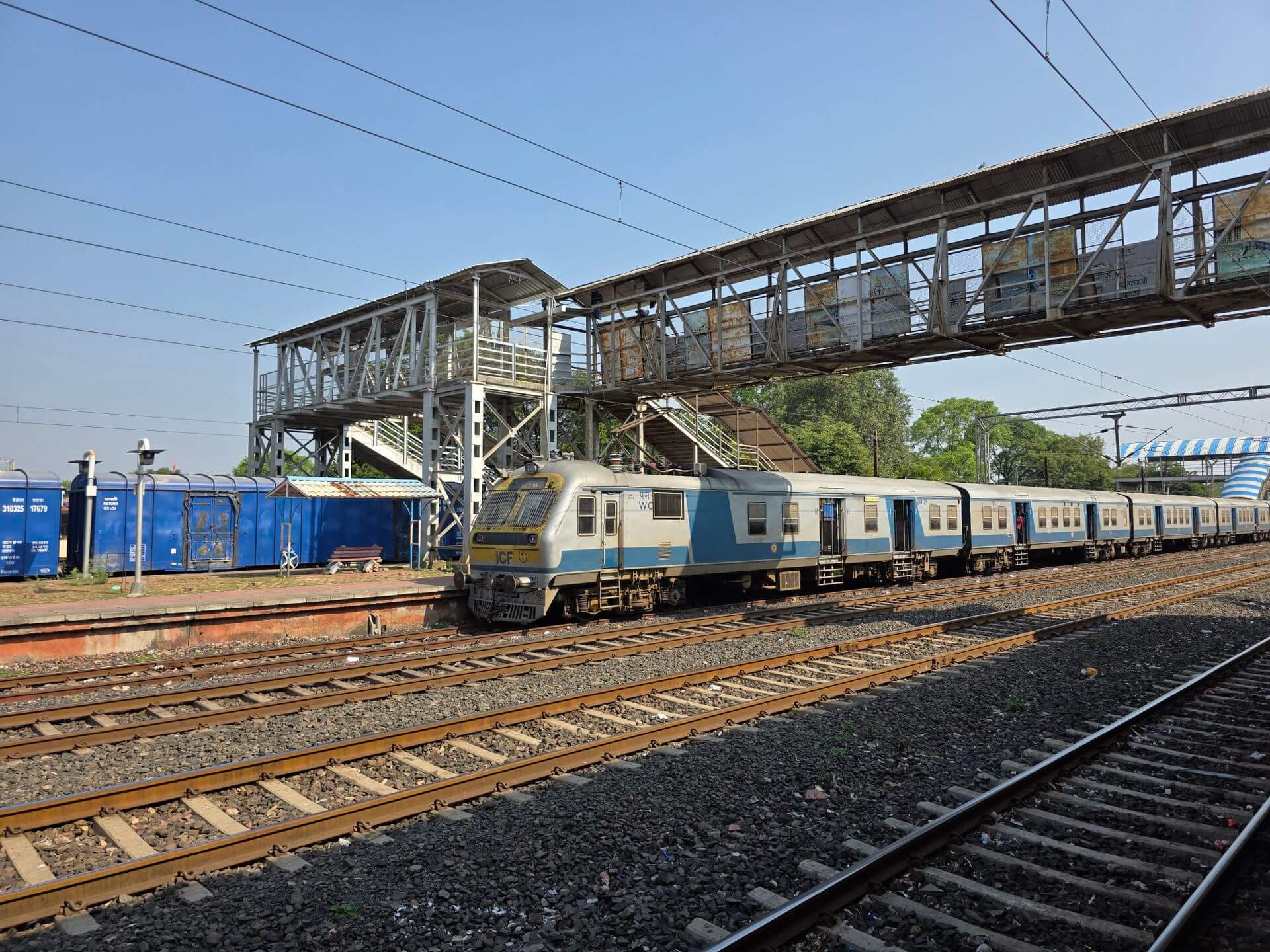
Trains: A good option for many popular routes, including Delhi–Agra–Jaipur.
They’re often a comfortable and affordable way to travel between major Indian cities, but popular trains and classes can sell out, so check the current booking window before your trip and reserve early when possible.
Domestic flights: Best for longer jumps (Delhi to Kerala, North to Goa) where a train or road journey would eat a full day or more. India’s budget carriers make this an affordable option even for backpackers.
Private driver: Particularly useful for a Golden Triangle or Rajasthan itinerary, where having your own car makes it easier to travel between cities, stop along the way, and avoid working around train schedules.
A practical rule: for shorter journeys, compare train and private-car options first. For longer distances, check whether flying would save you most of a day.
Balancing Must-See Sites With Downtime
One of the easiest ways to make a first trip to India more enjoyable is to leave some breathing room in your schedule.
Packing every day with sightseeing and long transfers can leave you exhausted before the trip is halfway over.
How to build in downtime:
- Add one unscheduled day for every 4–5 days of active sightseeing
- Treat your last stop (often Goa or Udaipur) as a deliberate wind-down, not another checklist city
- Resist the urge to add “just one more city” once your route already covers 4–5 stops in under two weeks
India rewards travelers who allow some slack in the schedule — street food discoveries, an extra hour at a fort, or simply recovering from heat and travel fatigue all need room that a fully packed itinerary doesn’t leave.
Practical Information
Flights, hotels, and trains each have different booking windows, so it’s worth planning ahead for India’s peak travel season from roughly October to March, particularly around Diwali and the Christmas–New Year period.
Typical daily costs by travel style:
- Backpacker: roughly $25–40 USD per day
- Mid-range: roughly $60–120 USD per day
- Comfort/private driver: roughly $150–300+ USD per day
These are rough estimates and can vary significantly by season, city, hotel type, and how much private transportation you use.
Useful travel apps: IRCTC Rail Connect for trains, a major booking app for flights and hotels, and Google Maps with offline maps downloaded for the cities on your route.
Common Mistakes Travelers Make
Trying to see “all of India” in one trip. India is roughly the size of Western Europe — no single trip, even a month long, comfortably covers North, South, and the Himalayas without constant rushing.
Underestimating transfer time between cities. A route that looks tight and efficient on a map often loses a full day to transport that wasn’t accounted for.
Booking too few nights per stop. Fewer than 2 nights anywhere means you’re mostly traveling and checking in, not actually experiencing the place.
Ignoring the weather when choosing your route. A Rajasthan itinerary in June can feel completely different from the same trip in December. Before deciding where to go, check the weather for each region and make sure your route fits the season.
Copying someone else’s itinerary exactly. A route built for a couple’s honeymoon or a backpacker’s budget trip doesn’t automatically fit a family with kids or a senior traveler — adjust pacing and stops to your actual trip, not a generic template.
Final Thoughts: Planning Your India Itinerary
The best first-time India itinerary isn’t the one that covers the most cities – it’s the one that matches your pace, interests, and available time without leaving you exhausted halfway through the trip.
Good India itinerary planning comes down to choosing the right route, allowing enough time between destinations, and leaving room to actually enjoy each place.
Start with the Golden Triangle if you’re unsure where to begin, add one region that genuinely interests you, and save the rest of India for another trip.
Frequently Asked Questions About Planning an India Itinerary
How many days do you need for a first trip to India?
For a first trip to India, 10–14 days is a good starting point. This gives you enough time to explore the Golden Triangle and add one more destination or region without spending most of the trip traveling.
What is the best India itinerary for first-time travelers?
The Golden Triangle is one of the best India itineraries for first-time travelers. Delhi, Agra, and Jaipur are relatively easy to combine and give you a mix of history, culture, architecture, and local experiences.
Is 7 days enough for India?
Seven days is enough for a focused first trip, but not enough to see much of the country. The best option is to stay in one region, such as the Golden Triangle, rather than trying to combine North and South India.
Is 10 days enough for India?
Yes, 10 days is enough for a good first trip to India if you keep the route focused. The Golden Triangle works well on its own, or you can add Udaipur, Varanasi, or another nearby destination.
Is 14 days enough to visit India?
Yes, two weeks is enough for a well-paced India trip covering several major destinations. You can combine the Golden Triangle with Rajasthan, Varanasi, Kerala, or Goa, depending on your interests.
What is the Golden Triangle in India?
The Golden Triangle is a popular India travel route connecting Delhi, Agra, and Jaipur. It is a good choice for first-time visitors because the three cities offer very different experiences and can be combined into one relatively compact trip.
What cities should I visit in India for the first time?
For a first trip, Delhi, Agra, and Jaipur are the easiest starting points. If you have more time, consider adding Udaipur, Varanasi, Goa, or Kerala based on your interests rather than trying to visit too many cities.
How do you travel between cities in India?
Trains, domestic flights, and private cars are the main options for traveling between Indian cities. Trains and cars work well for shorter routes, while domestic flights are usually more practical for long journeys such as North India to Kerala or Goa.
What is the best time to visit India?
For many popular destinations, October to March is a comfortable time to travel because much of North India has cooler and drier weather. However, the best time depends on where you are going, since Kerala, Goa, the Himalayas, and other regions have different weather patterns.
How many cities should I visit in India in two weeks?
For a two-week India trip, around three to five main stops is usually more manageable than trying to visit eight or ten cities. Fewer stops give you more time for sightseeing and reduce the amount of time you lose to transportation.
Images: Pexels
