



Planning a trip to India? One of the first questions many travelers ask is, “What vaccines do I need for India?”
The answer depends on where you’re traveling, how long you’ll be staying, your planned activities, and your overall health.
For most tourists, staying up to date with routine vaccinations and discussing recommended vaccines such as Hepatitis A and typhoid with a travel health professional is a good place to start.
Travelers visiting rural areas, staying for longer periods, or spending time around animals may also need to consider additional vaccines.
This guide explains which vaccines are commonly recommended for India, whether any vaccinations are required for entry, when to get vaccinated before your trip, and the practical food, water, and mosquito precautions that help reduce your risk of illness while traveling.
This article provides general travel health information and should not replace professional medical advice. Always consult your GP or a qualified travel health clinic for recommendations based on your medical history and travel itinerary.
Table of Contents showQuick Answer: What Vaccines Do I Need for India?
Most travelers should make sure their routine vaccinations are up to date and discuss Hepatitis A and typhoid vaccines before visiting India.
Depending on your itinerary, travel duration, and activities, your doctor may also discuss rabies, Japanese Encephalitis, or Hepatitis B vaccination.
Are Vaccines Required to Enter India?

Understanding the difference between required and recommended vaccinations matters before you start planning.
Required vaccines are those where proof of vaccination is mandatory for entry. For most international travelers visiting India, there is currently no standard vaccination required for entry.
However, one important exception applies: travelers arriving from or transiting through countries where yellow fever is endemic may be required to show proof of yellow fever vaccination.
If your travel route includes time in sub-Saharan Africa or tropical South America before India, check the current requirements with the Indian embassy or consulate for your country before departure.
Recommended vaccines are those that travel health professionals advise based on the health risks present in the destination. Recommended does not mean mandatory.
It means that a qualified health professional has assessed the risk profile of the destination and suggests that certain vaccinations are worth considering for your protection.
Which recommended vaccines apply to you depends on your itinerary, travel style, health history, and the length of your stay. Health guidance changes over time.
Always verify current requirements and recommendations with an official source, such as your national public health agency, a travel clinic, or the World Health Organization’s travel health pages, before departure.
For India-specific public health updates, travelers can also refer to official sources such as the Ministry of Health and Family Welfare, Government of India, and the National Centre for Disease Control (NCDC).
Latest Health Updates from India’s Health Authorities
Check Your Routine Vaccinations Before Traveling to India
Before thinking about India-specific vaccines, the most useful step for many travelers is reviewing whether their routine vaccinations are current.
MMR (Measles, Mumps, Rubella): India continues to report measles cases, so it’s worth checking that your MMR vaccination is up to date before you travel.
Confirm your MMR status before traveling, particularly if you are not certain you have received two doses.
Tetanus, Diphtheria, and Pertussis (Tdap): Standard in most Western countries but with booster requirements.
If your last tetanus booster was more than ten years ago, travel is a practical reason to update it. Minor cuts and scrapes are more common while traveling than during everyday life.
Influenza: India’s influenza season overlaps with peak tourist season in different ways by region.
Airports, trains, and crowded attractions make it easier for viruses to spread. Annual flu vaccination is standard travel preparation regardless of destination.
COVID-19: Check current guidance from your health authority and your destination on COVID-19 vaccination status requirements. Guidance has changed repeatedly and continues to evolve. Verify the current position before departure.
Polio: India was declared polio-free in 2014, but some health authorities recommend confirming polio vaccination is up to date for international travelers as a precaution, particularly for long trips.
Many travelers focus exclusively on destination-specific vaccines and overlook routine protection. Both matter.
Recommended Vaccines for India Travel

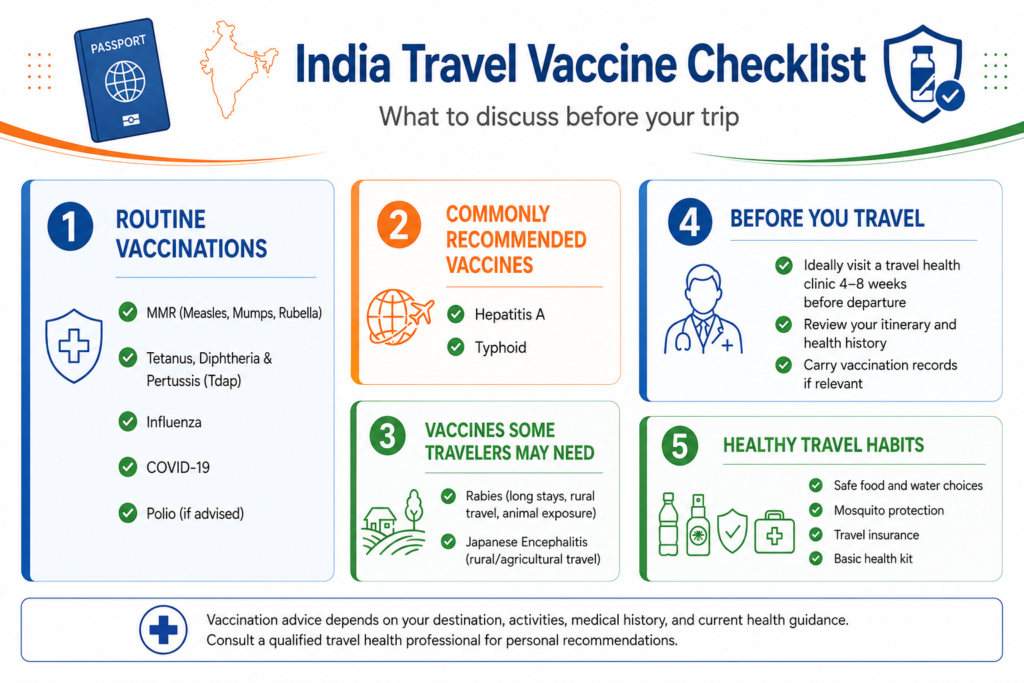
Use this India travel vaccine checklist as a starting point before discussing your plans with a travel health professional.
Hepatitis A
Hepatitis A is transmitted through contaminated food and water. It is one of the most consistently recommended vaccines for travelers to India.
The reason is simple: food and water contamination can occur even when you take sensible precautions.
The Hepatitis A vaccine provides long-term protection, is widely available, and is considered routine preparation for India travel by most travel health clinics.
A single dose before travel provides protection for at least a year, and a booster given six to twelve months later extends that protection for up to twenty years.
Safe food and water practices remain important even after vaccination. The vaccine protects against Hepatitis A specifically, not against all foodborne illness.
Understanding what to eat and drink safely in India is covered in detail in the guide on how to avoid food poisoning in India.
Typhoid
Typhoid fever is a bacterial infection transmitted through contaminated food and water.
The risk is higher for travelers who eat at local restaurants, street food vendors, and in rural areas compared to those staying exclusively in high-end hotels with tightly controlled kitchen standards.
Vaccination is worth discussing with your travel clinic for most India trips, and is particularly recommended for backpackers, budget travelers, those planning long stays, and anyone visiting rural areas.
Two vaccine options are commonly available: an oral vaccine taken as a series of capsules and an injectable single-dose vaccine. Your clinic will advise on which is more appropriate for your timeline.
Typhoid vaccination reduces your risk but does not eliminate it. The vaccine’s effectiveness is not a reason to abandon careful food and water habits.
The two work together rather than one replacing the other. For a practical guide to food safety in India beyond vaccination, the Indian food survival guide for first-time travelers covers the specific habits that prevent illness.
Hepatitis B
Hepatitis B is transmitted through blood and bodily fluids rather than through food or water. The relevance for travelers depends on the nature of their trip.
For short-term tourists visiting popular sites, the day-to-day exposure risk is low. For travelers who may need medical care abroad, those involved in activities where exposure to blood is possible (including certain sports or activities), longer-term travelers, and those with specific medical procedures anticipated during their trip, the vaccine is worth discussing with your health provider.
Hepatitis B vaccination is now part of childhood immunization schedules in many countries. Many travelers may already be protected without realizing it. Check your vaccination records before assuming you need a course.
Rabies
Rabies exists in India, and dogs, monkeys, and other animals at tourist sites are the most likely source of exposure for international visitors.
The practical advice is simple: do not approach, pet, or feed stray animals. India has a significant stray dog population in urban areas, and primates at temple sites in particular can be aggressive.
Pre-travel rabies vaccination does not remove the need for urgent medical care after an animal bite. It simplifies the treatment needed after exposure.
It removes the need for rabies immunoglobulin, which can be difficult to source quickly in some parts of India, and gives travelers more flexibility when seeking care.
Pre-travel rabies vaccination is typically discussed for travelers planning extended trips, those visiting rural areas, adventure travelers, and anyone whose activities increase the likelihood of animal contact.
For a standard ten-day city itinerary, your travel clinic may assess the risk differently than for a month-long rural trip.
If an animal bite does occur during your trip, wash the wound thoroughly with soap and water immediately and seek medical attention without delay, regardless of vaccination status. This is covered in the guide on what to do in an emergency in India.
Japanese Encephalitis
Japanese Encephalitis (JE) is a viral infection transmitted by mosquitoes in rural and agricultural areas of Asia, including parts of India.
It is typically considered for travelers spending extended time in rural areas, agricultural settings, or forested regions, particularly during the monsoon season when mosquito activity is highest.
For most standard tourist itineraries covering cities, historical sites, and coastal destinations, the risk is assessed as low and the vaccine is not routinely recommended.
If you’re planning rural homestays, trekking, or extended time in agricultural areas, discuss the vaccine with your travel health provider before departure.
Who May Need Additional Vaccines for India?

A first-time tourist visiting Delhi, the Taj Mahal, Jaipur, Mumbai, Goa, and Kerala on a ten to fourteen day standard itinerary has a different risk profile from a backpacker spending three months traveling India independently, or a volunteer worker based in a rural community.
This distinction matters because it affects which vaccines your travel clinic is likely to prioritize for discussion. Hepatitis A and typhoid are commonly recommended across most India travel scenarios.
Rabies, Japanese Encephalitis, and some other vaccines are more situation-specific.
Telling your travel clinic exactly where you are going, how long you are staying, what type of accommodation you are using, and what activities you have planned allows them to give you advice that is relevant to your specific trip rather than a generic overview of every vaccine ever associated with the region.
When Should You Get Vaccines Before Traveling to India?
Timing matters because some vaccines require multiple doses over several weeks, and your body needs time to develop immunity after vaccination.
1–2 months before travel: This is the ideal window for your travel clinic appointment. It gives you time to complete multi-dose vaccine courses, manage any mild vaccine reactions, and schedule follow-up appointments if needed.
Book your appointment as soon as your travel dates are confirmed.
2–4 weeks before travel: If you missed the ideal window, appointments in this range still allow the majority of vaccine courses to be completed and provide meaningful protection before departure.
Some single-dose vaccines provide effective protection within two weeks.
Last-minute travelers: Even a clinic appointment within a week or two of departure is worth doing.
A single dose of Hepatitis A vaccine, for example, provides meaningful protection before departure even without the booster. Some protection is better than none, and your clinic can advise on what is practical given your timeline.
Contact your GP or travel health clinic rather than waiting until the last moment. Travel clinics in many countries book up weeks in advance, particularly in peak travel planning seasons.
How to Choose the Right Vaccines for Your Trip to India
The question is not “what vaccines does India require” but “what vaccines are relevant for my specific trip.” The following questions help both you and your travel health provider give and receive more useful advice:
How long am I staying? Longer trips mean more cumulative exposure.
Which states and regions am I visiting? Urban tourist circuits, rural areas, coastal destinations, and mountain regions all have different profiles.
Am I traveling only in cities or will I visit villages and rural areas? Will I be trekking, camping, or engaging in outdoor activities that increase exposure to animals and insects?
Am I traveling with children? Children’s vaccination requirements and considerations differ from adults.
Do I have existing health conditions, immunocompromising conditions, or medications that affect vaccination decisions? Am I pregnant or planning to become pregnant?
Some vaccines have specific guidance for pregnant travelers. Taking this information to a travel clinic appointment produces a much more tailored and useful outcome than a generic conversation.
Travel Health Tips Beyond Vaccines
Vaccinations are only one part of staying healthy in India. The others are just as practical.
Food safety is where most traveler illness in India actually originates. Making safe food choices every day is one of the best ways to avoid illness.
The guide on how to avoid food poisoning in India covers the specific situations, the vendor selection logic, and what to do if illness does occur.
Water safety is the single most consistent source of preventable health problems for international visitors. Tap water in India is not safe for tourists regardless of city or hotel category.
Use sealed bottled water from reputable brands for drinking and brushing your teeth. The full explanation of India’s water situation is covered in the guide on whether tourists can drink tap water in India.
Mosquito protection matters across India but the specific risk depends on your destination and season.
DEET-based repellent of at least 30 percent concentration, applied before going outside and reapplied every three to four hours, addresses dengue fever, malaria in relevant regions, and other mosquito-borne risks.
Dengue is transmitted by day-biting mosquitoes, which means protection during the day is as important as at night.
Comprehensive travel insurance is strongly recommended. Medical care at private hospitals is affordable by Western standards but emergency situations, hospitalization, and particularly emergency evacuation can involve significant costs without coverage.
The health preparation conversation is incomplete without ensuring your insurance provides adequate medical coverage for your destination.
India Travel Health Kit Checklist
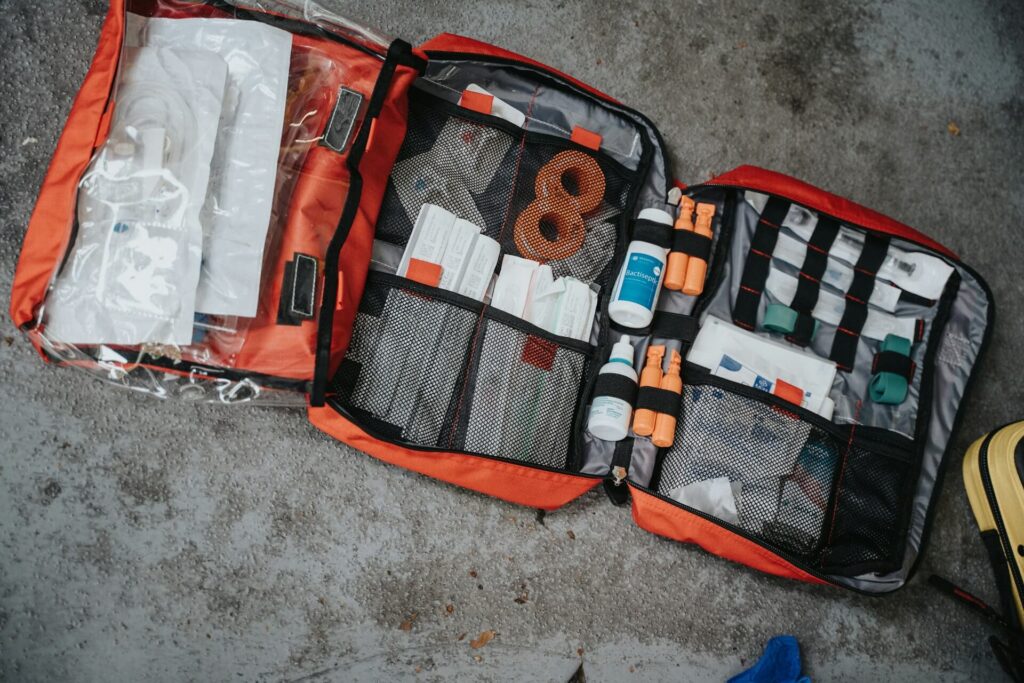
Pack this before you leave, not after you arrive:
- Prescription medications in sufficient supply for the full trip plus extra
- Copies of all prescriptions in case of loss or customs queries
- Oral rehydration salts (ORS) for dehydration from illness or heat
- Basic first-aid items: antiseptic wipes, plasters, bandages
- Antidiarrheal medication (loperamide) for symptom management when needed
- Pain relief and fever medication (paracetamol or ibuprofen)
- Hand sanitizer for situations where soap and water are unavailable
- DEET mosquito repellent of at least 30 percent concentration
- Sunscreen of SPF 50 or higher
- Personal medical information including blood type and any allergy details
- Travel insurance policy number and 24-hour emergency line
- Vaccination record or health card if relevant for your trip
ORS packets deserve specific mention. They are the most useful item in your kit for the most common health issue travelers face: dehydration from heat, illness, or both.
They are also available at every pharmacy in India for almost nothing, but having them in your bag before you need them is better than searching for a pharmacy while already unwell.
Recommended Vaccines for Different Types of Travelers
Traveler Type | Key Considerations |
First-time tourist (city itinerary) | Routine vaccines, Hepatitis A, typhoid discussion |
Backpacker (budget, local transport, long stay) | All of the above plus rabies discussion, extended coverage |
Family with children | Children’s vaccination status review, pediatric advice |
Long-term visitor or volunteer | More comprehensive health review including JE, rabies |
Rural or trekking traveler | Extended mosquito protection, rabies, JE discussion |
Business traveler (short stay, urban) | Routine vaccines, Hepatitis A |
Senior traveler | Full health review with GP, influenza prioritized |
This table is a starting framework for conversation with your travel clinic, not a prescription. Your actual preparation should be based on professional advice tailored to your specific circumstances.
Knowing what vaccines you need for India is an important part of planning a safe and enjoyable trip, but vaccinations are only one part of staying healthy while traveling.
Safe food and water habits, effective mosquito protection, good personal hygiene, and comprehensive travel insurance all play an equally important role.
Before you travel, review your routine vaccinations and book a travel health appointment at least four to eight weeks before departure if possible.
Sharing your itinerary with your healthcare provider will help you receive recommendations that are appropriate for your destination, travel style, and length of stay. With the right preparation, most travelers enjoy India without serious health problems.
By getting the recommended vaccines, packing a simple travel health kit, and following sensible precautions, you can spend less time worrying about illness and more time enjoying everything India has to offer.
Frequently Asked Questions About Vaccines for India
Do I need vaccinations to travel to India?
Most travelers do not need mandatory vaccinations to enter India. However, vaccines such as Hepatitis A and typhoid are commonly recommended. The right vaccinations depend on your travel plans, length of stay, activities, and personal health history.
What vaccines are recommended for India travel?
Commonly recommended vaccines for India travel include Hepatitis A, typhoid, and up-to-date routine vaccinations such as MMR, tetanus, and influenza. Some travelers may also need to discuss rabies, Hepatitis B, or Japanese Encephalitis based on their itinerary.
Is the Hepatitis A vaccine necessary for India?
The Hepatitis A vaccine is one of the most commonly recommended vaccines for travelers visiting India. It helps protect against infection caused by contaminated food and water, although safe eating and drinking habits are still important.
Do I need a typhoid vaccine for India?
Many travelers should consider the typhoid vaccine before visiting India, especially those eating local food, traveling independently, staying for longer periods, or visiting rural areas. The vaccine lowers risk but does not replace careful food and water precautions.
How long before traveling to India should I get vaccines?
Ideally, schedule a travel health appointment four to eight weeks before your trip. This allows time for multi-dose vaccines and immunity to develop. Even if you are leaving soon, a travel clinic can still recommend useful protection.
Can I travel to India without vaccinations?
Yes, many people travel to India without additional vaccines, but they may have a higher risk of preventable illnesses. A travel health professional can help you decide which vaccinations are suitable based on your destination, activities, and medical history.
Do I need a yellow fever vaccine to enter India?
Most travelers do not need a yellow fever vaccine for India. However, travelers arriving from or transiting through countries with yellow fever risk may need to provide proof of vaccination before entering the country.
Do I need a rabies vaccine for a trip to India?
A rabies vaccine is not required for every India traveler, but it may be recommended for long stays, rural travel, trekking, adventure activities, or increased animal exposure. Avoiding contact with stray dogs and other animals remains essential.
Are India travel vaccines different for children?
Children may need different vaccination advice compared with adults. Families traveling to India should ensure children’s routine vaccinations are up to date and consult a pediatrician or travel health clinic about additional travel vaccines.
What health precautions should I take besides vaccines in India?
Vaccines are only one part of staying healthy in India. Travelers should also practice safe food and water habits, use mosquito protection, carry basic medications, maintain good hygiene, and have suitable travel insurance for medical emergencies.
Images: Unsplash
