
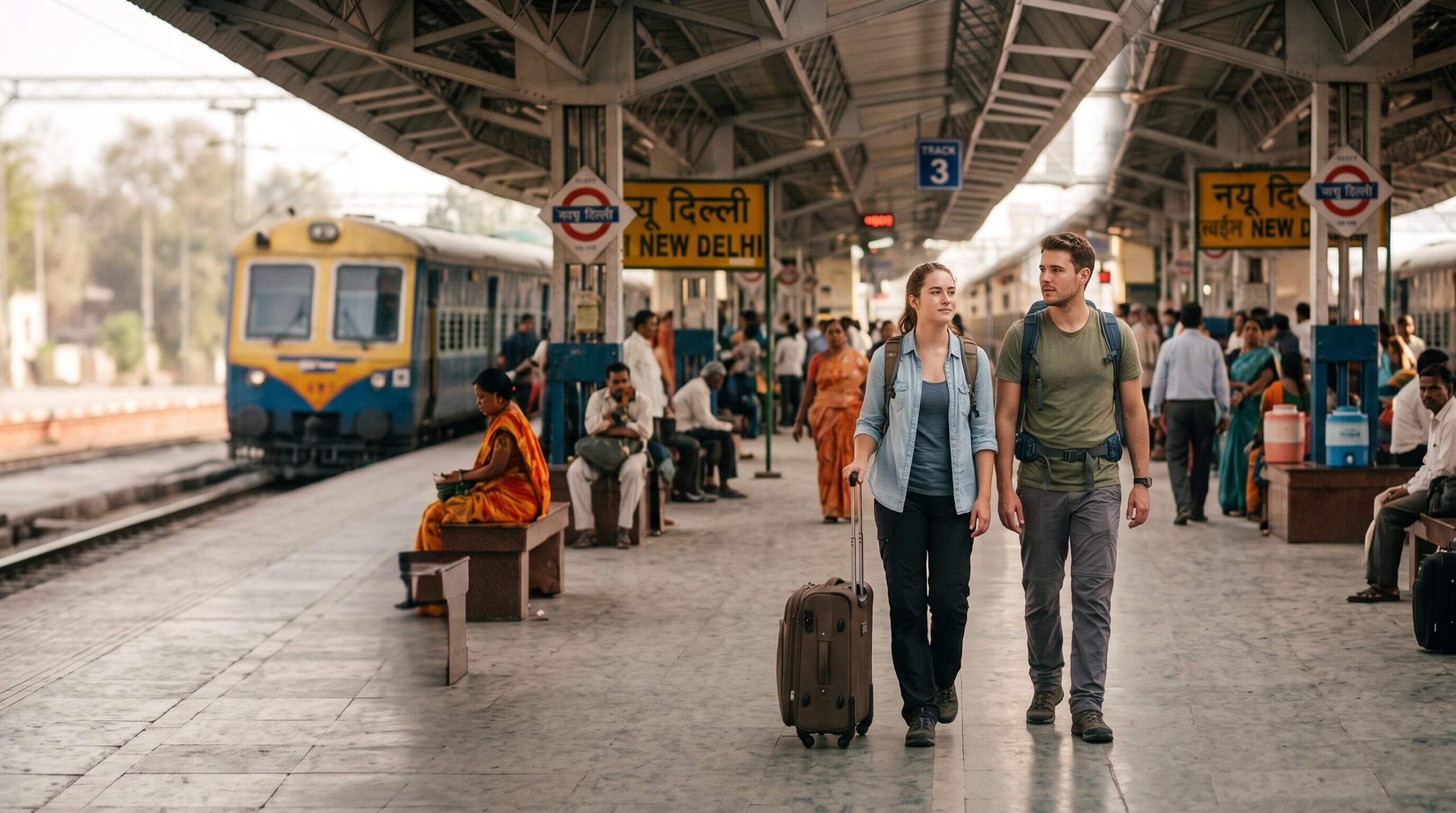

Solo travel in India gets a pretty bad reputation online. Many forums are filled with horrifying stories, most Facebook groups are full of warnings, and your family probably freaked out when you first mentioned the idea.
But the situation is changing slowly. In India, solo travelling around the country is much safer than all the scary claims you read on the internet, but you still have to pick your destinations carefully.
I’ve met all sorts of solo travellers who have had fantastic times in places that I wouldn’t even think of sending my worst enemy to, and others who felt pretty uneasy in places that many people swear by.
A lot of it comes down to how uptight you are, how much travel experience you’ve got under your belt, and, let’s be honest, just how much fun you are as a travel partner. Some places are just a lot more welcoming to solo travellers – especially if you’re a total newbie.
This guide looks at the safest places to travel solo in India, focusing on destinations that are welcoming, easy to navigate, and well set up for independent travelers — especially if you’re doing India on your own for the first time.
I’m focusing on places with some decent infrastructure, friendly locals who won’t hassle you, proper traveller communities, and just the right amount of tourists so you don’t feel like you are wandering around completely on your own.
What Makes a Place “Safe” for Solo Travelers?
When people search for the safest places to travel solo in India, they often think only in terms of crime statistics.
In reality, safety is also about how comfortable you feel walking around, how easy it is to meet other travelers, whether locals are used to solo visitors, and how reliable the infrastructure is when you need it.
The safest solo travel destinations in India usually have a few things in common:
Established tourist infrastructure means hotels understand solo travelers, restaurants have single tables, and transport options actually run on schedule.
You’re not explaining yourself constantly or negotiating everything from scratch. A visible traveler community matters more than you’d think.
Places where other solo travelers hang out mean shared taxis, splitting costs, restaurant recommendations, and just not feeling alone in a country of 1.4 billion people.
Reliable transportation lets you leave if something feels off. Good train connections, frequent buses, working rideshare apps—these give you options and peace of mind.
Based on these factors, the destinations below consistently stand out as some of the safest places to travel solo in India, particularly for first-time visitors and slow travelers.
Rishikesh – Solo Traveler Central
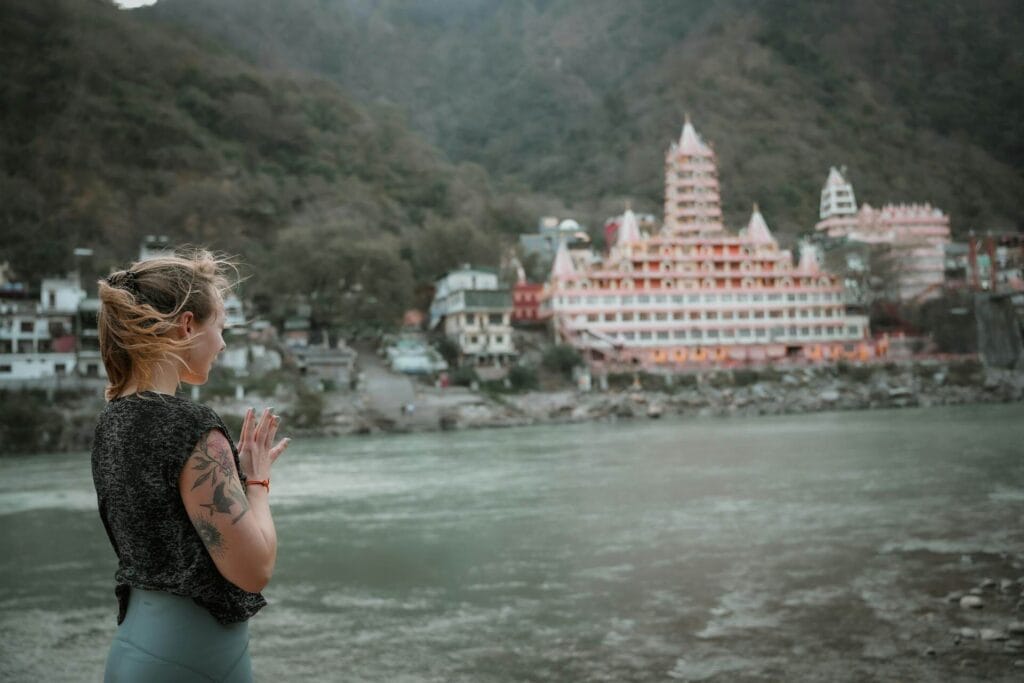
Rishikesh is high on just about every solo traveller’s wish list for good reason.
This Indian foothills town in the Himalayas is a magnet for yoga enthusiasts, spiritual seekers, backpackers, and thrill-seekers – and it’s no surprise they all seem to end up in the same coffee shop.
The town is split across the Ganges River: the west side is a typical Indian madhouse, but cross one of the pedestrian suspension bridges, and you’ll be transported to a different world – guesthouses with river views, rooftop cafes dishing up fluffy banana pancakes, yoga studios on every corner, and sometimes more foreign faces than locals in the streets.
If you’re new to India, or solo travel in general, our first time travel guide to India is a great resource to help you plan your adventure, offering insights into other must-see places and essential travel tips.
Why it works for solo travel:
You’ll be meeting new people all the time – everyone ends up sharing tables in the cafes, joining group rafting trips, or stumbling into the same Beatles Ashram tour. Making friends here is ridiculously easy, no effort required.
The town has a great setup for solo visitors; guesthouses offer single rooms that won’t break the bank (₹500-1200 a night), cafes have book-swapping stations, notice boards with details of group activities, and owners who’ll give you a warm welcome by day three.
Plus, it’s genuinely safe – I’ve walked back to my guesthouse at 10 PM on my own more times than I can count without any issues, and the streets stay well-lit for tourists, and there are always a few people around.
What you should get up to:
White-water rafting trips (₹500-800 for a basic package) go out daily during the season, or you can drop into a yoga class pretty much anywhere – try a few studios until you find one that feels just right.
The Beatles Ashram (₹150 to get in) is a great place to wander around on your own. Tapovan and Laxman Jhula are always worth a cafe-hop; budget around ₹1,500-2000 a day for basic accommodation, meals, and activities.
If you can avoid it, you can make do on even less with a basic room and some simple meals. But if you feel like splashing out, you can spend ₹5,000 on a luxury yoga retreat.
The catch: Rishikesh attracts a very specific type of person. If you’re into yoga, spirituality, or mountain vibes, you’ll love it. But on the flip side, if all that new-agey stuff really isn’t your scene, you’ll be driven utterly bonkers in no time.
Pushkar – Small Town, Big Solo Appeal
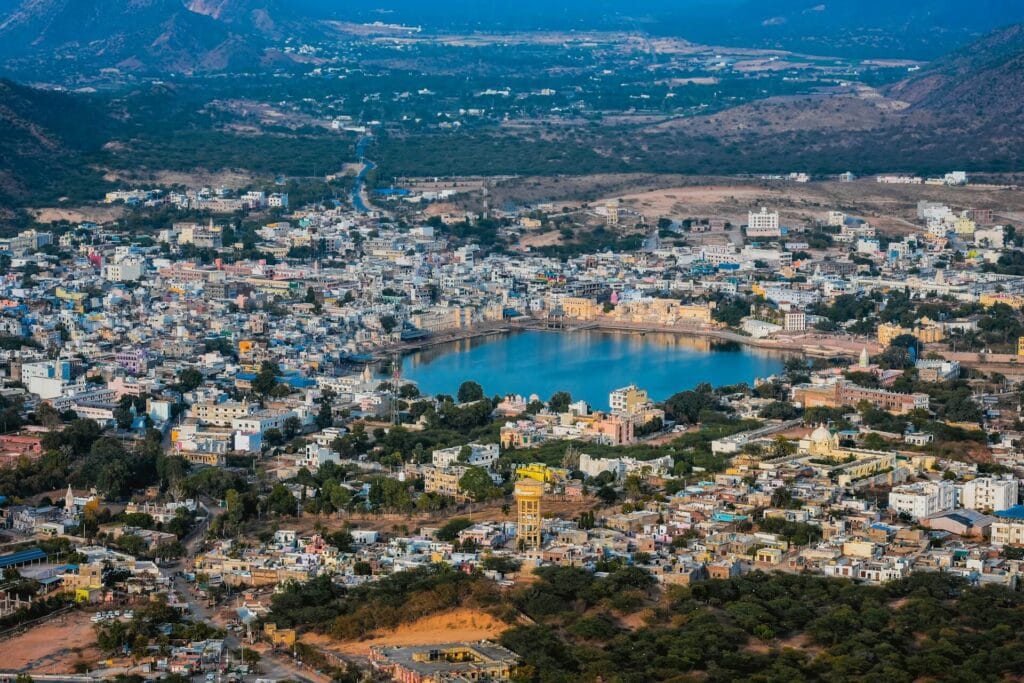
This tiny little town in Rajasthan wraps itself around a sacred lake and somehow feels like a world away from the rest of the state.
To be honest, the strict rules around no booze, no meat, no leather – it’s all pretty laid-back, really – keep Pushkar feeling quieter and more peaceful than other tourist traps in the area.
You can walk the whole town in about 20 minutes – the ghats circle the lake, the cafes line the main street, and the guesthouses pop up in all the tiny lanes in between.
The good news is that you basically can’t get lost, which means no constant stress about navigating.
Solo traveler perks:
The size of Pushkar is actually a real advantage. You’re bound to bump into the same travelers in different cafes, and that makes it easy to pick up casual friendships along the way.
“Hey, you were at Little Italy the other day” can quickly turn into a travel companion for a trip to Ajmer or a shared ride to Jaipur.
And those rooftop restaurants, well, they’re perfect for solo diners – everyone just sits on cushions, orders up a thali, and pretty soon you’re chatting with the people next to you.
I’ve even had some of the best India tips from a 60-year-old guy from Germany at the table next to me – beats any old guidebook any day.
Pushkar also seems to attract long-term travelers and not so many tour groups – people here have usually been in India for a while now and actually know their stuff.
Things to do:
Get up early and walk the ghats before the tour groups arrive – it’s actually really peaceful. Climb up to the Savitri Temple and watch the sunset over the desert.
Browse the market without feeling too guilty about buying those dodgy “Pushkar pants” – albeit they might just look a bit daft back home… Take a cooking class – some of the cafes do them for around 800–1200 rupees.
Day trip: Ajmer is just a 30-minute ride away. The Ajmer Sharif Dargah is a pretty cool Sufi shrine with loads of pilgrims but not many tourists. Just go with an open mind and don’t forget to dress modestly.
Budget around 1200–2000 rupees a day. You can get a clean single room for 400–1000 rupees a night. And food is incredibly cheap – 150 rupees will get you a full thali.
Hampi – A Solo Traveler’s Secret Gem That Nobody Ever Mentions
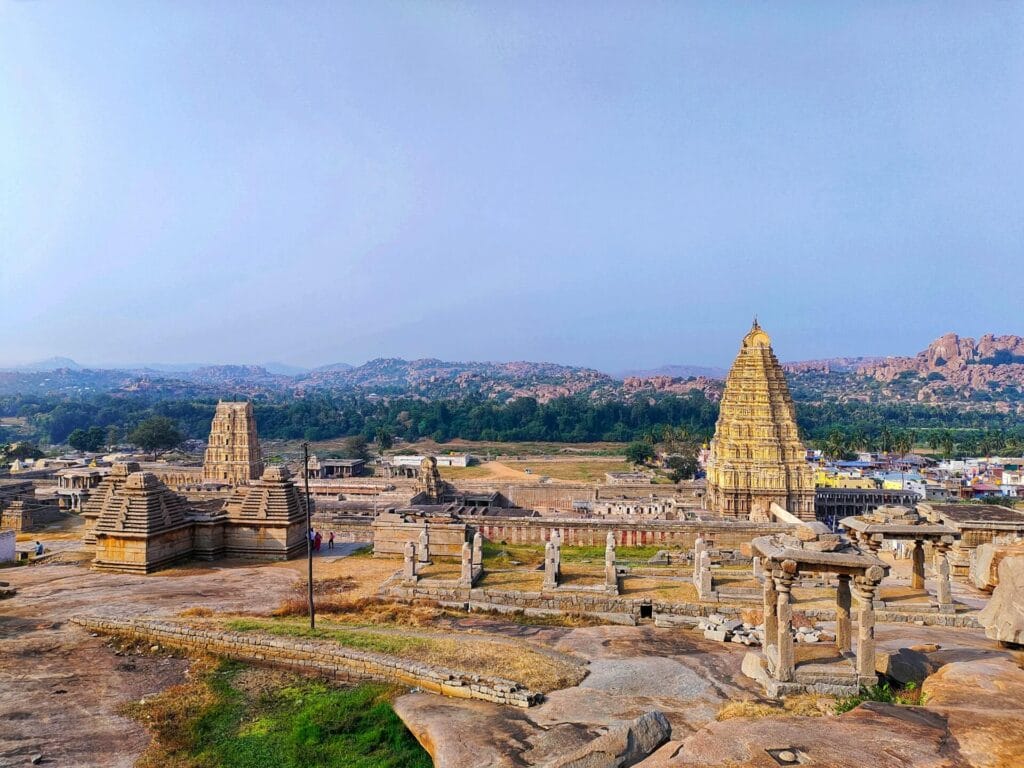
Hampi isn’t on most solo travelers’ bucket lists, which is something of a mystery—really, it’s a traveler’s dream. The landscape is something out of a sci-fi film: ancient temple ruins scattered over a boulder-strewn wasteland that seems uncannily like Mars.
You can hire a bike for a bargain ₹50 and spend days just riding around and exploring the 500+ monuments; most of the time, you’ll be the only one around to see them.
Hampi isn’t the kind of place where you’ll be stuck on a guided tour with hundreds of day-trippers—no, this is where laid-back backpackers come to stay for a while, not just rush through on a whistle-stop tour.
And on the other side of the river is ‘Hippie Island,’ officially known as Virupapur Gaddi—that’s where solo travelers hang out.
Guesthouses with hammocks swinging in the breeze, restaurants playing non-stop Bob Marley, other travelers who have become so comfortable here they’ve almost forgotten what day it is—yeah, it’s super chill.
Why You’ll Love It as a Solo Traveler
The vibe here is super relaxed. You’re not going to feel like you’re in a mad dash at any point. Sit down under a tree at the Vittala Temple complex for an afternoon, and nobody will bother you—it’s a really peaceful place.
Accommodation is dirt cheap (you can get a basic room for as little as ₹300 for the night), so you can stay for as long as you like without breaking the bank.
The longer you stay, the more likely you are to meet other travelers and even locals who run the guesthouses. Plus, it’s as safe as houses here—virtually no crime at all.
The biggest worry you’ll have is maybe getting a bit of sunstroke if you’re cycling around without enough water.
Some Useful Reminders for Planning Your Trip
Rent a scooter or bike—trying to walk everywhere gets pretty exhausting pretty fast, especially as the distances look a lot bigger than they are across those boulder fields.
Coracle boat rides (₹30) are a cheap and fun way to get across the river to Virupapur Gaddi. Climb Matanga Hill for the sunset—it’s well worth getting up early for.
Just be aware that the town basically shuts down during the day as it’s just too hot—so the mornings and late afternoons are best for exploring.
Getting there: Take the overnight train from Goa (many people do this as part of a Goa trip) or the bus from Bangalore.
Don’t even think about trying to cram your trip into just two days—trust us, people who try to do this always end up extending it to at least a week.
McLeodganj – A Himalayan heaven you never knew
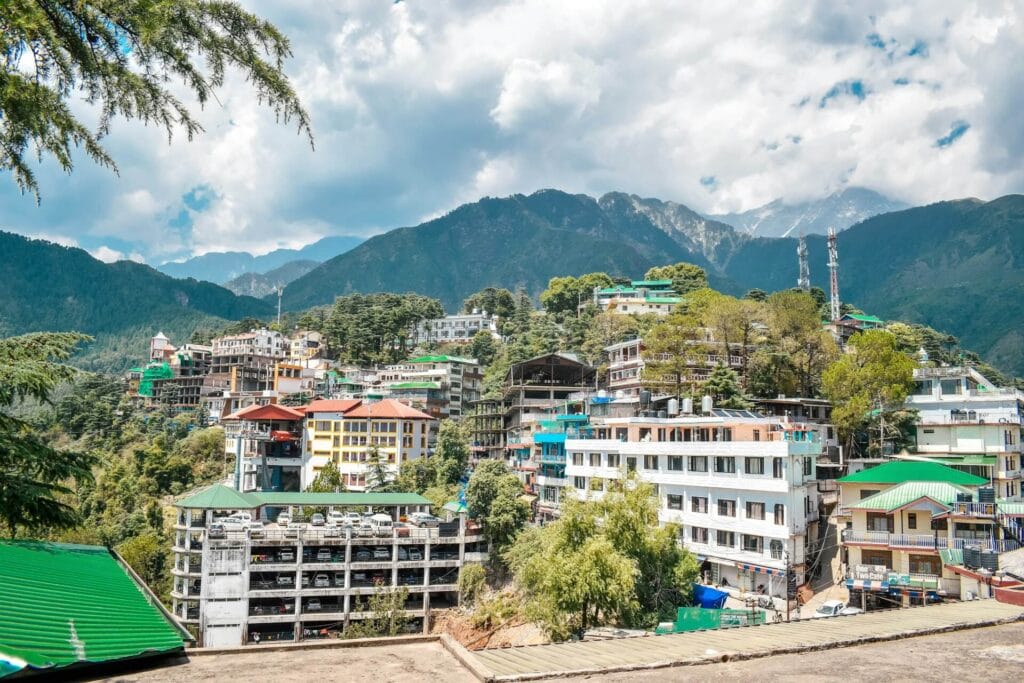
McLeod Ganj, a beautiful place in the even more beautiful state of Himachal Pradesh – the current abode of the Dalai Lama in exile- is a perfect blend of all things Tibetan, a destination for backpackers, and a mountain retreat unlike the usual Indian hill stations.
The Tibetan influence makes the place exceptionally peaceful compared to others. Here, you’ll find monasteries instead of temples, and momos instead of samosas!
The benefits of traveling solo:
Cafe culture is on a par with Rishikesh – every cafe seems to have someone typing on their laptop, lost in a book, or writing in a journal with a cup of chai.
People are always up for a chat, and the Tibetan community is welcoming to solo travelers, which is a huge plus. The trekking options are also suitable for solo adventurers.
The Triund trek (9km and moderately challenging) offers a balance between company and solitude; you won’t be walking in a large crowd. You can even camp on the hilltops (300-500 meters) and share stories around a campfire with other trekkers.
What you just have to experience:
Take a trip to the Tsuglagkhang Complex – it’s the Dalai Lama’s temple and a must-see.
Check out meditation sessions at the Tushita Meditation Centre (they offer 10-day courses as well as drop-in sessions), and then take a short walk up to Dharamkot village (20 minutes max) for a hippie vibe and a great mountain view.
As for budgeting, you should be able to get by on about ₹1,500 to 2,500 a day, depending on your accommodation.
Food is amazing and cheap – you can get a plate of momos, a bowl of thukpa, and a cup of chai for ₹200 and still have change left over.
Timing is everything: March to June and September to November are the perfect months to visit. The monsoons in July and August are beautiful, but also wet. December to February can be chilly, with occasional snow.
Gokarna – Goa’s Quieter Cousin
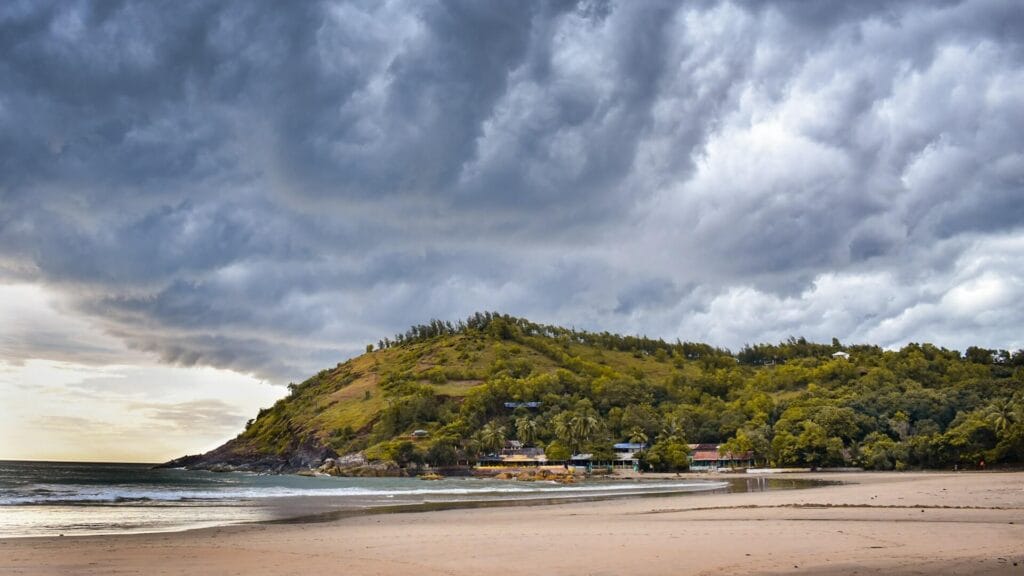
Gokarna captures the beach vibe without Goa ever getting over the top. This Karnataka coast town has a bit of the sacred going on (its famous Shiva temple), which keeps development in check and the atmosphere pretty laid back.
The four main beaches connect via cliff paths or a short boat hop – Om Beach has the restaurants and places to crash. Kudle is bigger and a bit more lively; Half Moon and Paradise are on the quiet side, and you’ll need to hike or take a boat to get to them.
Solo Travel Appeal:
The beach shacks here offer long-stay deals (₹400–1,000 a night) and communal tables for meals. Effectively, that means you end up making friends with the people next door.
Yoga classes happen right on the beach, and there’s often a fire burning on the beach in the evenings, drawing in random groups. It’s pretty chill here.
The temple town rules are, you know, don’t drink (but really, nobody cares), which keeps the rowdy party crowd at bay, and solo female travellers say they feel really safe and comfortable here.
The community is made up mostly of people sticking around for more than a few days; they get to know the boat drivers and actually have a decent idea of how things work around here.
Things to do:
You’ll need a whole day to get between the beaches on the cliff trails. Rent a scooter (₹400–600 daily), and you can get into Gokarna town and the other nearby beaches.
Murudeshwar – with its massive Shiva statue – is about 90 minutes away. But mostly, Gokarna is about slowing down – reading on the beach, watching the sunset, not overplanning things too much.
Daily budget ₹1,200–2,000. Food is super cheap (₹150–300 per meal), and the beach shacks have pretty wide-ranging accommodation options, from basically bamboo huts for ₹300 to ₹3,000 beach resorts.
Coorg – A Hidden Gem of a Destination
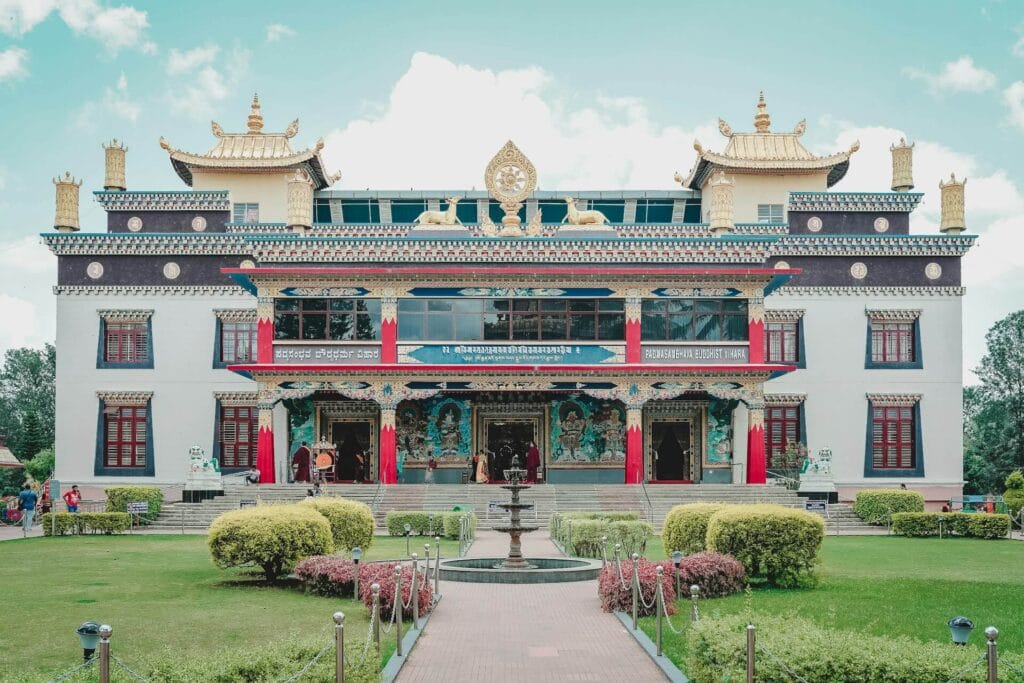
Coorg, officially known as Kodagu in the state of Karnataka, is where India really lets its hair down. It’s coffee plantations as far as the eye can see, hills shrouded in mist, locals who will make you feel like part of the family, and a complete lack of hassle.
This place doesn’t make it onto most solo travel itineraries because it’s more about immersing yourself in a rural way of life and getting out into nature, rather than the whole backpacker scene.
Which is exactly why you should be heading there.
What makes it so safe:
The homestay culture here is a real treat. You get to stay with local families who genuinely treat you like a guest, rather than just another tourist – they’ll cook for you, share their knowledge of coffee plantations, arrange treks for you, and make sure you’re having a good time.
The region is prosperous, and crime is almost non-existent. The fact that Coorg’s coffee industry is thriving means that the locals aren’t reliant on tourism for their livelihoods – so you’re welcomed, but not bombarded with touts and scams.
Transport is hassle-free, and hiring a scooter lets you explore at your own pace. The roads are in decent nick, and for the first time in a long while, you’ll find that the signs actually make sense.
The Experience:
Stay in a coffee estate homestay (roughly 1,500 to 3,000 rupees per night, including meals). Take a stroll through the plantations and learn a bit about how coffee is grown and processed.
Take a trek to Abbey Falls and Iruppu Falls – the scenery is breathtaking. And while you’re at it, visit Namdroling Monastery to see some truly stunning Tibetan architecture.
Don’t be afraid to try some pork curry – Coorg’s one of the few places in India where it’s common and actually bloody delicious. You won’t find a load of other solo travelers to hang out with – but that’s part of the charm.
Instead, you’ll get to experience the real India and get to know the local Kodava families.
Budget around 2,000 to 3,500 rupees per day for the lot. It’s a bit more than you’d expect to pay in a backpacker hotbed, but trust us, it’s worth it for the experience.
Auroville – The Intentional Community
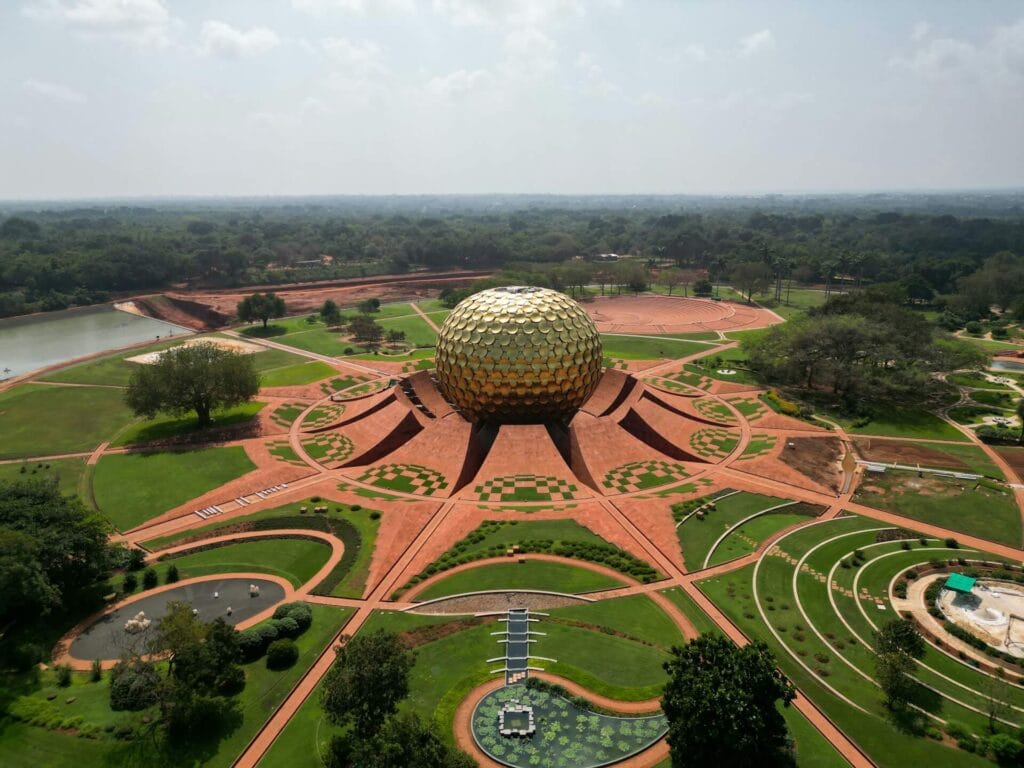
Auroville, near Pondicherry, is the place where over 60 nationalities came together with the intention of creating something totally unique.
It was established in 1968, and even today, it’s quite surreal. Auroville is an absolute gem for solo travelers who want to experience something totally offbeat and different.
The Matrimandir – the stunning golden sphere meditation hall – says it all. Around it, you’ll find organic farms, alternative schools, villages, and people who have been living there since the 1970s, pursuing their utopian ideals.
For Solo Travelers:
They need volunteers all the time. Stay for a few weeks, and in return for accommodation and meals, you can gain experience working on farms, cafes, or community projects.
You’ll immediately become part of the community, so it’s a bit like a melting pot. Be prepared to meet many other people from all over the world, all in a similar situation to you – a lone traveler who has opted to stick around.
You could find Germans who run bakeries, Japanese working on clay buildings, or Italians teaching art, and they’ll all be very friendly and accustomed to newcomers arriving in the community.
Auroville is a very safe place, and there is virtually no crime. The main means of getting around is by bicycle. The community is very close-knit, like one big happy family.
Practical Info:
You can stay in guesthouses (₹800-2,000 a night) or volunteer to get more permanent accommodation. Grab a bite to eat at the solar kitchen cafeterias or community restaurants.
To see the Matrimandir and the surrounding area is a breeze – it’s all flat and super bikeable. To get a visitor pass for the Matrimandir, you need to book in advance; otherwise, you can explore the community freely.
The daily budget should be around ₹1,000-2,000, unless you take the volunteering option – which will slash your costs pretty dramatically.
Common Solo Travel Mistakes to Avoid
- Overpacking your itinerary: With all the moving around, there’s little time to get settled well enough to get to know people or feel comfortable in a given spot. Stay three days minimum per spot.
- Only eating Western food: I know, I know, your stomach is nervous. Trust me, eating at busy local places where families dine is safer than eating at empty tourist places with yesterday’s pasta.
- Not telling anybody your plan: Share your accommodation and daily plans with someone back home or at your last destination. Even small updates are helpful through WhatsApp.
- Assuming everywhere is unsafe: The internet loves horror stories. There are millions of single travelers come in India every year, and nothing bad happens to them. It is important to remain vigilant, not paranoid.
- Skipping travel insurance: Don’t assume all hospitals or medical facilities are created equal. Hospital bills can be very expensive.
Making Your Solo Travels in India a Total Success
Starting your journey in one of the safest places to travel solo in India can make a huge difference to your confidence. These destinations offer solid infrastructure, a sense of community, and the flexibility to move on easily if something doesn’t feel right.
You owe nobody any explanations when you’re traveling, remember? If you find somewhere that you feel is your real home, stay for longer than you wanted, even. And when making acquaintances with other travelers, well, don’t get too caught up in that either.
I’ve got some amazing memories of when I chose to sit somewhere and have a meal by myself, watching the world go by, and when you’re traveling alone, you get to decide when you’re wanting that and when you want something a little quieter.
India’s got a way of rewarding solo travelers who come at it with a willingness to see things from a different angle, a healthy dose of caution, and a flexibility to roll with the punches.
These places give you the basics to let you explore on your own and really figure out what kind of traveler you are. So pick a spot that sounds like it’ll really appeal to you, book a few nights to start with, pack a fraction of what you think you’ll need, and just set off.
The rest you’ll figure out as you go along – probably while you’re sitting at a cafe, chatting with some other solo traveler who’s probably just as nervous as you on their first trip.
FAQs: Safest Places to Travel Solo in India
Is India safe for solo travelers?
Yes, India can be safe for solo travelers if you choose destinations with good infrastructure, reliable transport, and established traveler communities. Safety depends more on where you go and how you travel than on crime statistics alone.
What are the safest places to travel solo in India?
Some of the safest places to travel solo in India include Rishikesh, Pushkar, Hampi, McLeodganj, Gokarna, Coorg, and Auroville. These destinations are used by solo travelers and offer good accommodation, transport, and a comfortable travel environment.
Is solo travel in India safe for women?
Many women travel solo in India safely, especially in solo-friendly destinations with visible traveler communities. Places like Rishikesh, Gokarna, McLeodganj, and Auroville are often described as comfortable for solo female travelers when basic precautions are followed.
What makes a place safe for solo travel in India?
A safe solo travel destination in India usually has good transport connections, accommodation that welcomes solo guests, locals familiar with independent travelers, and enough other visitors around so you don’t feel isolated.
How much does solo travel in India cost per day?
Solo travel in India typically costs between ₹1,200 and ₹2,500 per day. This usually includes budget accommodation, local transport, and meals, especially in popular solo travel destinations.
Do you need to speak Hindi to travel solo in India?
No, speaking Hindi is not required for solo travel in India. English is widely spoken in tourist areas, hotels, cafes, and transport hubs, making it easy to travel independently.
Is it easy to meet other solo travelers in India?
Yes, it’s easy to meet other solo travelers in India, especially in destinations with backpacker hostels, cafes, yoga centers, and group activities. Shared spaces naturally lead to conversations and travel connections.
How long should you stay in one place when traveling solo in India?
Staying at least three nights in one destination is ideal for solo travel in India. It allows time to settle in, feel comfortable, and decide whether to move on or stay longer.
What are the biggest mistakes solo travelers make in India?
Common mistakes include rushing between destinations, assuming everywhere is unsafe, eating only Western food, and skipping travel insurance. Slower travel and flexibility usually lead to a safer and more enjoyable experience.
Images: Unsplash
