





You land in Mumbai. You grab your bags. You walk to the prepaid taxi booth. The driver points to a QR code on the wall. The person at the chai stall next to you pays by scanning his phone.
The pharmacist at the airport asks, “Google Pay or cash?” The hotel receptionist says, “We prefer UPI.” You pull out your credit card.
Half the places don’t have a card machine. One that does swipes it, stares at the screen, and shakes their head.
“Not working, sir.”
This is India’s payment reality – digital, fast, and built on a system called UPI. If you’re wondering whether foreigners can use UPI in India, the short answer is yes – but access is still limited for most tourists.
And unless you understand it before you land, you’re going to feel very lost very quickly. The good news: you don’t need to panic. You just need a plan. This guide gives you that plan – step by step, no fluff.
This guide explains whether Can Tourists Use UPI in India and how foreign travelers can actually use it in real situations.
If this is your first time visiting India, start with the complete first time travel guide to India covering visas, airports, SIM cards, money, transport, safety, and common tourist mistakes.
What Is UPI and Why Digital Payments Are Everywhere in India
UPI stands for Unified Payments Interface. It was built by the Indian government’s payment body (NPCI) to let people send and receive money instantly using just a mobile phone. No card numbers. No bank details.
Just scan a QR code and pay instantly from your phone. It runs 24/7. It’s free. It works at the vegetable vendor outside, at five-star restaurants, and everywhere in between. That’s why India leapfrogged card payments almost entirely.
Hundreds of millions of Indians use UPI daily. When you see a small printed QR code taped to a shop counter, that’s UPI. Apps like Google Pay, PhonePe, and Paytm all run on top of UPI. They’re the face – UPI is the engine underneath.
Can Foreign Tourists Use UPI in India? (Clear Answer)

To clearly answer Can Tourists Use UPI in India, the short answer is yes, but with limitations.
Foreigners from certain countries can access UPI through specific apps or their bank’s international tie-ups – but standard UPI apps like Google Pay and PhonePe require an Indian mobile number and Indian bank account.
Most international tourists cannot fully set up Indian UPI apps from scratch after arriving in India. Access is expanding but remains limited.
UPI for foreign tourists in India is improving every year, but the process is still far less seamless than it is for Indian residents. Cash and international cards are still essential backups.
Why Most Foreign Tourists Cannot Use Standard UPI Apps
Standard UPI apps (Google Pay, PhonePe, Paytm) — mostly unavailable to tourists. These apps require an Indian SIM card and a bank account with an Indian bank. Without both, you cannot complete setup.
UPI for international visitors — possible in specific cases. The Reserve Bank of India (RBI) has been expanding UPI access to foreign nationals.
Some banks and fintech providers offer UPI access linked to foreign mobile numbers, particularly for travelers from countries with bilateral agreements. This is real, but it is not universal, and availability changes as policies evolve.
Bottom line: Don’t plan your India trip assuming UPI will work for you. Plan with cash and cards as your main tools, and treat UPI as a bonus if you can access it.
How Foreign Tourists Can Use UPI in India
If you want to try getting UPI access as a foreign traveler, here are your realistic options:
Option 1: Buy a local SIM card and open a bank account
This is the full setup. Get an Indian SIM (easy at most airports with your passport), then open an account with a bank that allows foreign nationals – such as ICICI or HDFC. Once linked, you can use any UPI app.
This makes sense for long-term travelers or expats, not a 10-day tourist.
Option 2: Use a UPI-enabled international card or wallet
Some international banks, travel cards, and digital wallets now support UPI payments in India through partner arrangements. Check whether your home country’s bank or travel card provider has a partner arrangement with Indian banks before you travel.
Option 3: Ask your hotel or host to pay on your behalf
This sounds unusual but it’s common. At markets, hotels, or guesthouses, a local contact can pay via UPI and you hand them cash. Informal but effective.
Option 4: Use the Paytm Wallet (limited)
Paytm’s wallet feature can sometimes be loaded using international cards without a full UPI link. Functionality varies. Check Paytm’s current foreign user policy before relying on this.
Important: UPI rules for foreign visitors are actively changing. Check with your bank and the app you plan to use before you travel. What works today may shift.
If you haven’t set up mobile connectivity yet, read my complete guide on how to get a SIM card in India for tourists, including documents, activation time, Airtel vs Jio, and airport setup.
Where Tourists Can Use UPI Payments in India

Understanding where UPI dominates helps you plan your cash needs:
- UPI payments are nearly universal across major Indian cities. Restaurants, shops, auto-rickshaws, grocery stores, pharmacies, salons — if there’s a QR code (and there usually is), UPI is expected.
- Street food stalls and small vendors — many are UPI-only now. They don’t carry change for large bills.
- Transport: Auto-rickshaws and cabs booked through apps like Ola and Uber allow in-app payment linked to cards or wallets. Street autos often prefer UPI or exact cash.
- Tourist attractions: Major temples, monuments, and parks increasingly accept digital payments for tickets, but always carry cash as backup.
- Smaller towns and rural areas: Cash is still king. Don’t assume digital payment will work once you leave major cities.
Best UPI Apps for Foreign Tourists in India
If you do manage to get UPI access, these are the apps you’ll use:
- Google Pay (GPay): The most widely used. Clean interface. Works seamlessly everywhere UPI is accepted. Requires Indian number and bank account for full use.
- PhonePe: Nearly as popular as Google Pay. Often used for paying bills, utility payments, and store purchases. Same requirements apply.
- Paytm: The oldest player. Has a wallet feature that may have slightly more flexibility for foreign cards. Also works for booking trains, flights, and movie tickets inside the app. Worth exploring before you travel.
Many travelers search for UPI apps for foreigners before visiting India, but availability still depends heavily on SIM card and banking requirements.
You should also install the essential travel apps used across India for taxis, maps, train bookings, food delivery, and digital payments before your trip.
Best Payment Method in India for Tourists: UPI vs Cash vs Cards
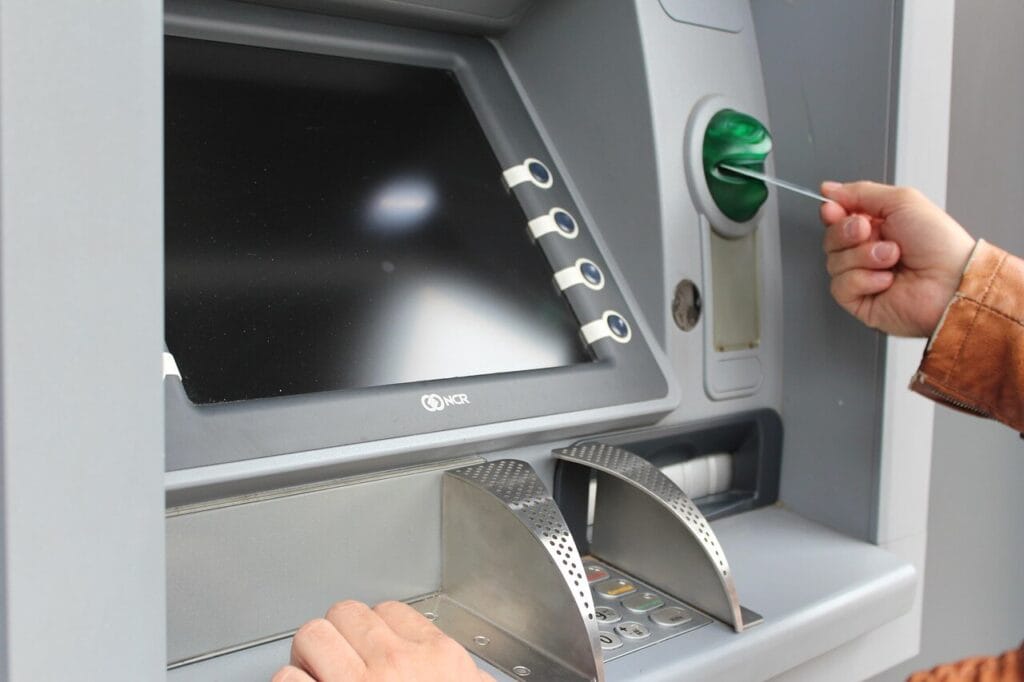
The best payment method in India for tourists depends on where you are. Cards work well at hotels, malls, and larger restaurants. Cash is essential in small towns, street markets, and anywhere rural.
UPI is ideal if you can access it, covering almost everything in cities. Most experienced travelers in India use a mix of cash, cards, and UPI depending on the city, merchant, and travel situation.
When asking Can Tourists Use UPI in India, the reality is that most travelers still need a combination of cash, cards, and UPI access.
Best Rule when you travel: Always carry ₹2,000–₹3,000 in cash as a buffer. Always.
Situation | Best Method for Payment |
Street food or local market | Cash (small bills) |
Auto-rickshaw (unbooked) | Cash or UPI |
Cab booked via app (Ola/Uber) | In-app card payment/ UPI |
Hotel or resort | Card or UPI |
Large shopping mall | Card |
Pharmacy in a city | UPI or Cash |
Village or rural area | Cash/ UPI (Prefer Cash) |
Train tickets | Card (IRCTC website) or app |
Do Foreign Tourists Still Need Cash in India?
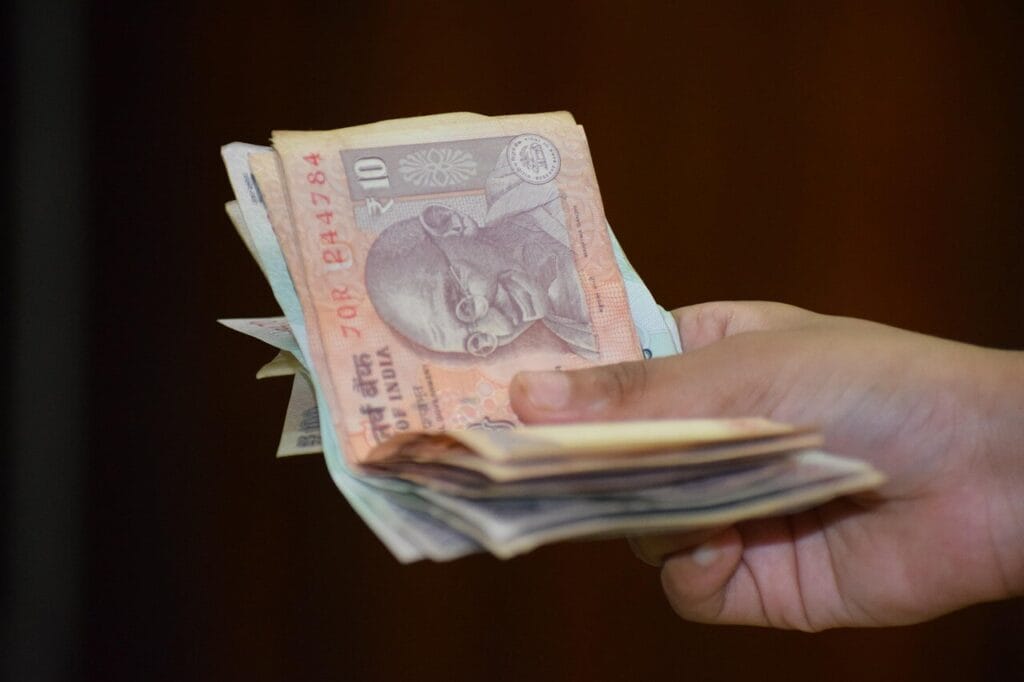
Yes – always. Even in digitally advanced Indian cities, cash remains essential. India may be rapidly moving toward cashless payments, but physical cash is still important for many everyday tourist situations.
Street markets, smaller eateries, rural transport, temple donations, and tipping all require cash. ATMs are available in most cities but can run out of notes during busy periods.
Carry a mix: some cash for daily needs, a card for bigger expenses, and UPI if accessible.
If you’ve just arrived, my India airport arrival guide explains where to exchange money, how airport ATMs work, and the safest way to get transport from the airport.
Common Payment Problems Tourists Face in India
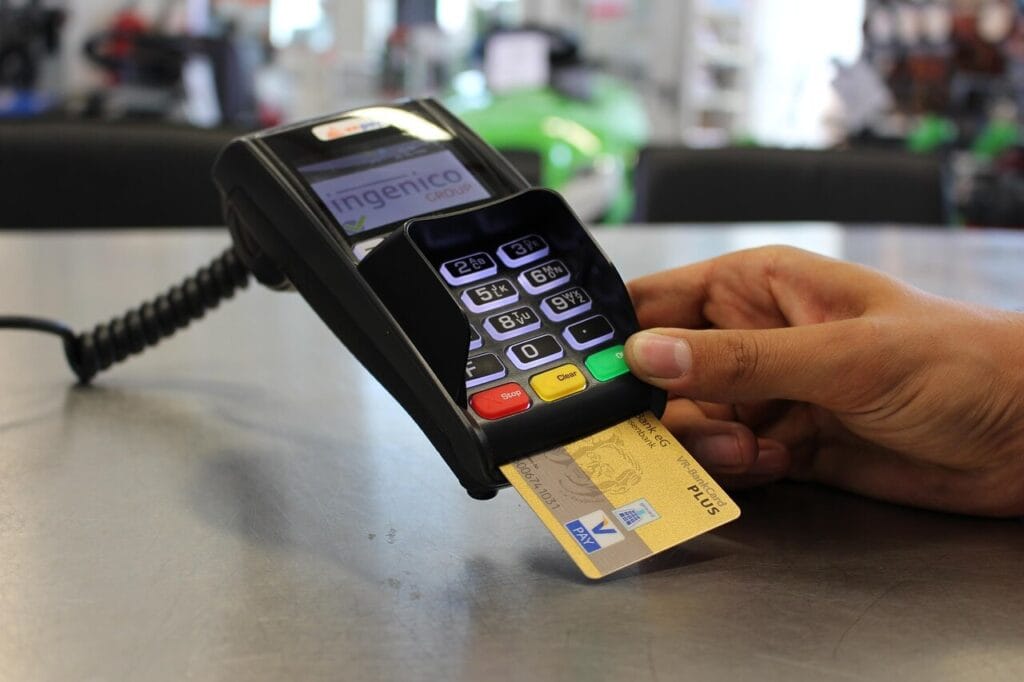
“My card keeps getting declined.” Indian merchants use international card terminals, but banks sometimes flag foreign transactions as suspicious.
Before traveling, call your bank, tell them your dates and destination, and ask them to enable international transactions.
“The ATM rejected my card.” Try a different ATM. Visa and Mastercard usually work at HDFC, ICICI, and SBI ATMs. Avoid third-party standalone ATMs in tourist areas — higher fees, more errors.
“The shop wants exact change and I only have big notes.” This is extremely common. ₹2,000 notes are hard to break at small shops. Carry ₹100 and ₹200 notes whenever possible.
“UPI QR code appeared — I can’t pay.” Show the vendor your card. If they have no machine, ask if they have a phone number you can bank transfer to. If not, find an ATM nearby.
“My forex card isn’t working.” Ensure it’s loaded with INR (Indian Rupees) before use, or verify it supports INR transactions dynamically. Some forex cards have PIN issues at Indian terminals.
Best Payment Alternatives If UPI Doesn’t Work in India
International Debit/Credit Cards
Visa, Mastercard, and Amex are accepted at most hotels, larger restaurants, and malls. Add them to Google Pay or Apple Pay for contactless tap payments where terminals support it.
Forex (Foreign Exchange) Cards
These are prepaid travel cards loaded with INR or multi-currency. Brands like Wise, Niyo Global, or Thomas Cook India’s Borderless card are popular with India-bound travelers. Lower fees than credit cards, widely accepted, and you control your spending.
Wise (TransferWise) Debit Card
Wise gives you near-real exchange rates with minimal fees. Works at Indian ATMs, hotels, restaurants, and most card terminals. One of the best tools for budget-conscious travelers.
Western Union / Money Transfer on Arrival
Only as a last resort. Fees are high. Use only if you land with zero local currency and need emergency cash.
Hotel Exchange Desks
Safe but expensive. Rates are worse than banks or airport exchange counters. Use sparingly.
Payment Safety Tips for Tourists in India

Never scan a QR code someone hands you physically. Always scan the QR code posted permanently at the business location. Scammers in tourist areas sometimes hand out fake QR codes that route payments to their accounts.
Use ATMs inside banks or malls. Standalone street ATMs in high-traffic tourist areas carry higher skimming risk.
Don’t let anyone else “help” you use a payment app. Particularly at airports or train stations. Friendly strangers offering to help with your phone’s payment settings are a classic scam setup.
Keep transaction records. Screenshot any successful UPI or card payment confirmation. Disputes are easier to resolve with proof.
Avoid public Wi-Fi for payments. Use your mobile data connection when making any digital payment.
Set a daily limit on your international card. Talk to your bank before travel. This limits damage if a card is compromised.
Pro Payment Tips for First-Time Travelers
- Get a mix of small denomination notes at the airport. The moment you land, exchange enough for ₹3,000–₹5,000 and ask specifically for ₹100 and ₹200 notes.
- Keep some cash separate from your main wallet. Emergency stash in your bag or hotel safe. India is generally safe, but pickpockets exist in crowded tourist areas.
- Download Google Maps and cache offline maps before you go. Many payments fail because tourists can’t find ATMs. Knowing where the nearest HDFC or ICICI branch is saves stress.
- Learn to say “do you accept card?” in Hindi: “Card chalega?” (kaard cha-le-gaa). You’ll use it constantly.
- Use Ola and Uber for most city transport. In-app payment means no cash haggling and no broken-card drama at the end of the ride.
- Book trains on the IRCTC website or the MakeMyTrip app using your international card. Train travel is cheap and reliable — just don’t try to pay cash at the station ticket counter without a lot of patience.
- Check if your hotel has a “petty cash” service. Some guesthouses will break large notes or even do small card transactions on your behalf for a small fee.
Final Payment Checklist for India
Before you board the flight:
- Notify your bank of travel dates and destination
- Enable international card transactions
- Set a daily ATM withdrawal limit you’re comfortable with
- Load your forex card with INR (if using one)
- Download your bank’s app for remote card lock/unlock
- Check if Paytm wallet works with your country’s card
- Research whether your home bank has UPI partner arrangements in India
When you land:
- Exchange cash at the airport (enough for day 1)
- Get small denomination notes (₹100, ₹200)
- Test your card at an airport ATM before leaving the terminal
- Save offline maps with ATM locations for your destination
During your trip:
- Always keep ₹1,000–₹2,000 cash on hand
- Screenshot payment confirmations
- Never scan a QR code handed to you by a stranger
- Use mobile data (not public Wi-Fi) for all payments

Conclusion
India’s payment system is genuinely impressive – and genuinely confusing for first-time visitors. UPI has transformed how over a billion people pay for things.
But for most foreign tourists, it’s not a plug-and-play solution. You can’t just download an app and go. The access is real but limited, and the requirements are real too.
For most foreign tourists, the best way to handle payments in India is to combine UPI (if available), international cards, and local cash. What you can do is arrive prepared. Keep cash in small notes.
Carry an international card your bank has cleared for use abroad. Consider a forex card or Wise. And if UPI opens up to you through a local SIM or your bank’s arrangements – use it.
It’s genuinely convenient once it works. The goal isn’t to master every payment method in India. It’s to never be stuck. Follow this guide and you won’t be.
FAQs about Foreigners Use UPI in India
Can foreign tourists use UPI in India?
Yes, but with limits. Most UPI apps need an Indian bank account and Indian mobile number. Some foreign travelers can use UPI through partner banks, wallets, or special tourist services.
Can foreigners use Google Pay in India?
Usually no. Google Pay India normally requires an Indian SIM card and Indian bank account. Most tourists cannot fully activate it after arriving in India.
Does Paytm work for tourists in India?
Sometimes. Paytm’s wallet may work with some international cards, but full UPI access is still limited for foreign users. Check the latest rules before traveling.
Do tourists still need cash in India?
Yes. Cash is still important for street food, local markets, small shops, tipping, and rural travel. Always carry small notes like ₹100 and ₹200.
What is the best payment method for tourists in India?
The best option is a mix of cash, international cards, and UPI if available. Cards work in hotels and malls, while cash is still common in smaller places.
Can tourists scan QR codes and pay in India?
Only if they have access to a UPI-compatible app or wallet. Most QR codes in India are linked directly to the UPI payment system.
Why do foreign cards get declined in India?
Banks sometimes block international transactions for security reasons. Before traveling, tell your bank you are visiting India and enable international payments.
Which ATMs work best for foreign cards in India?
HDFC Bank, ICICI Bank, SBI, and Axis Bank ATMs usually work well with Visa and Mastercard. Avoid random standalone ATMs in tourist areas.
Is India mostly cashless now?
India is rapidly moving toward digital payments, especially through UPI. But cash is still widely used in many everyday situations.
Is UPI safer than carrying cash in India?
In many cases, yes. UPI reduces the need to carry large amounts of cash. But tourists should still avoid fake QR code scams and use trusted payment apps only.
Can tourists use Apple Pay in India?
Apple Pay has limited acceptance in India because most merchants rely on UPI instead of NFC card terminals. International cards added to Apple Pay may work at some hotels, malls, and larger stores, but not everywhere.
Images: Pixabay
