


You walk into a small shop near your hotel. You’ve just landed. You pick up a bottle of water and some snacks – maybe ₹120 total. You hand over your card.
The shopkeeper shakes his head. No machine. You look around. The guy behind you pays in three seconds by scanning a QR code with his phone.
The person before him had exact change ready before the shopkeeper even asked. You’re standing there holding a Visa card that works in forty countries, and it’s useless.
This is a classic example of why understanding cash vs card in India for tourists is crucial.
While India has embraced digital payments, most street vendors, local markets, and transport options rely on cash or UPI, which can confuse travelers with international cards.
This is the moment most first-time visitors to India hit their first wall. India feels cashless – QR codes are everywhere, people barely touch physical money – but your international card doesn’t slot into that system.
Before you arrive, read my complete First-Time Travel Guide to India covering SIM cards, transport, scams, payments, apps, and how India actually works for foreign travelers.
So which is it? Is India cashless or cash-based? And what should you actually carry?
This Cash vs Card in India for Tourists guide answers that directly. No vague advice — just practical tips on what to carry, where cash or cards actually work, and what to do when payments fail.
Table of Contents showCash vs Card in India: Quick Answer for Tourists
Tourists in India should use both – but cash is essential. Cards work reliably at hotels, large restaurants, and shopping malls.
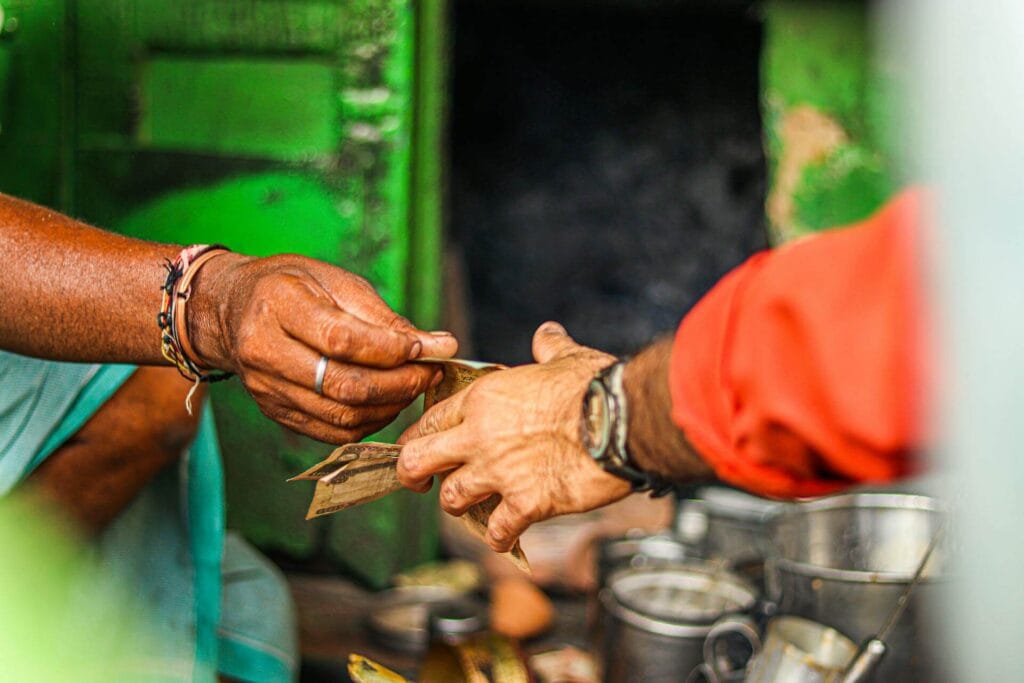
Cash is required at street stalls, local markets, auto-rickshaws, smaller towns, and anywhere without a card terminal.
Carrying ₹3,000–₹5,000 in small notes at all times prevents the most common payment problems tourists face.
Is India Cashless or Cash-Based?
The honest answer: it depends entirely on where you are and what you’re buying.
In a Bangalore café or a Delhi mall – card accepted, sometimes even tap-to-pay. At a Mumbai street food stall or a village outside Jaipur – cash only, and ideally exact change.
India has gone digital incredibly fast, but that digitization runs on UPI (a local bank-to-bank system), not on international card infrastructure.
Most small vendors use their phones to accept UPI payments. They often don’t have – and don’t want – a card terminal. That’s where tourists get stuck.
You’re visiting a country that looks cashless but runs on a digital system you largely can’t access. That’s the part this guide helps you navigate.
When Tourists Must Use Cash in India
Knowing where cash is non-negotiable saves you from getting stuck. Here’s where your card simply won’t work:
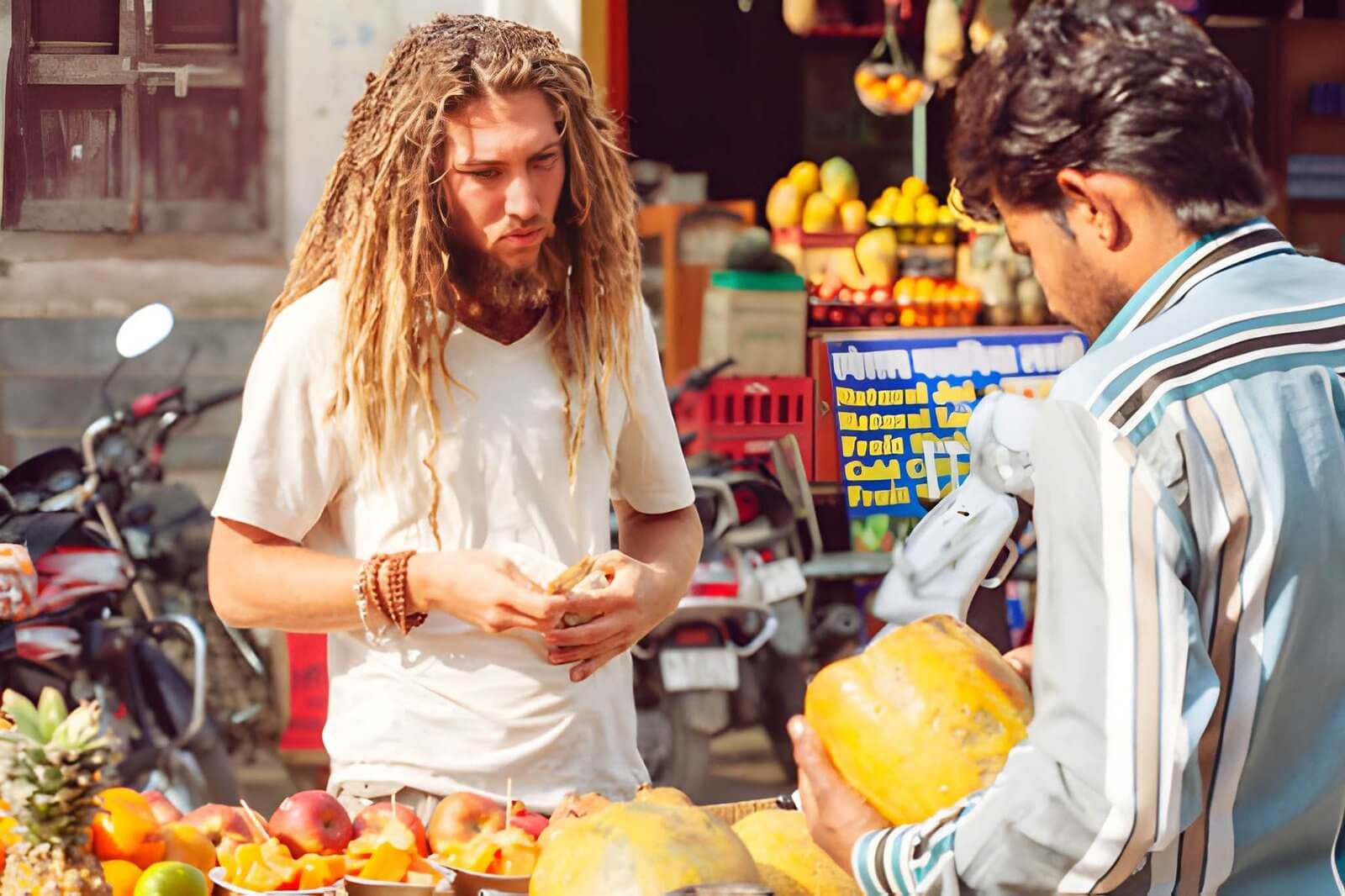
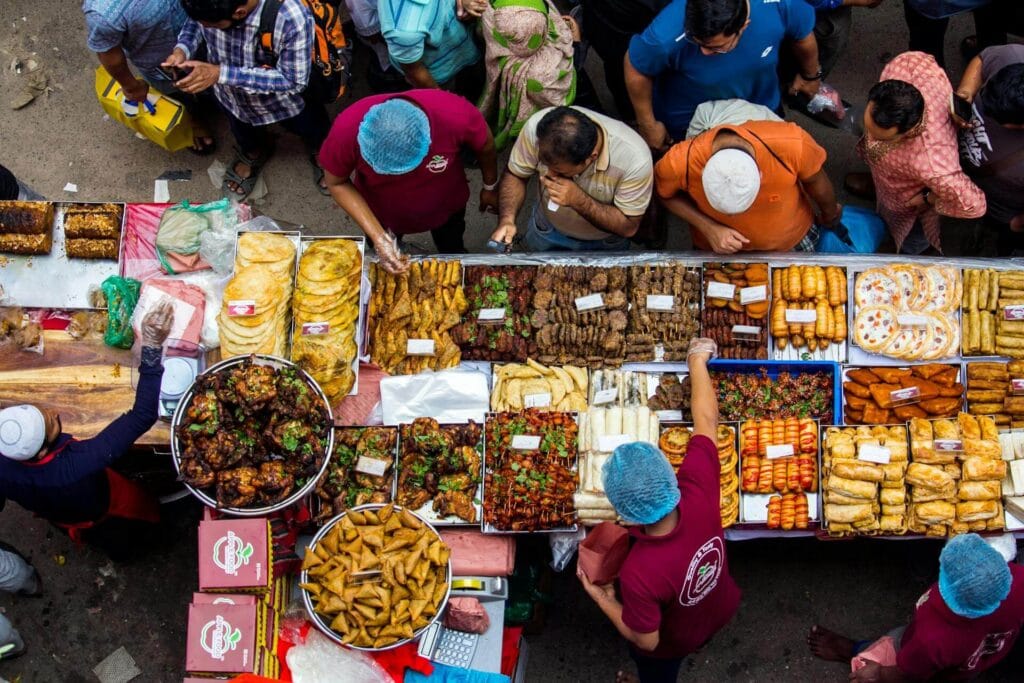
- Street food and local eateries. Dosas, chai, pani puri, thalis at roadside dhabas – these are cash transactions. Some vendors in cities have UPI, but none have card machines. Most street vendors and local markets in India accept cash or UPI.
- Auto-rickshaws and cycle rickshaws hailed on the street. Drivers expect cash or, increasingly, UPI. A card reader in an auto is essentially unheard of.
- Local markets, bazaars, and weekly haats. Sarojini Nagar in Delhi. Crawford Market in Mumbai. Anjuna Flea Market in Goa. Every traditional market in India runs on cash.
- Temple donations and religious sites. Offerings, entry to inner sanctums, flower garlands, prasad – all cash.
- Tipping. Hotel staff, tour guides, drivers — cash tips are expected and practical.
- Small towns and rural areas. In many smaller towns, the nearest ATM might be a 20-minute drive away – and there’s no guarantee it’ll actually be working.
- Shared transport and local buses. Conductors aren’t swiping cards.
Where International Cards Work in India for Tourists

Used in the right places, your international card works fine:
- Hotels. From budget guesthouses to five-star properties – most accept international Visa and Mastercard. Always confirm at check-in, not check-out.
- Large restaurants and chains. Sit-down restaurants in cities, hotel restaurants, and branded chains (McDonald’s, Café Coffee Day, etc.) take cards without issue.
- Shopping malls. Every major mall in India has card terminals at every checkout. Tap-to-pay increasingly works at these terminals too.
- Flight and train bookings online. Book through IRCTC, MakeMyTrip, or Cleartrip – your international card works on all of them.
- Pharmacies in cities. Larger chains like Apollo Pharmacy and MedPlus accept cards.
- Major tourist attractions. Many government-run sites, national parks, and heritage properties now accept cards for entry tickets.
You start noticing the pattern pretty quickly: the more formal and urban the setting, the more reliably your card works.
Why Cards Sometimes Fail in India
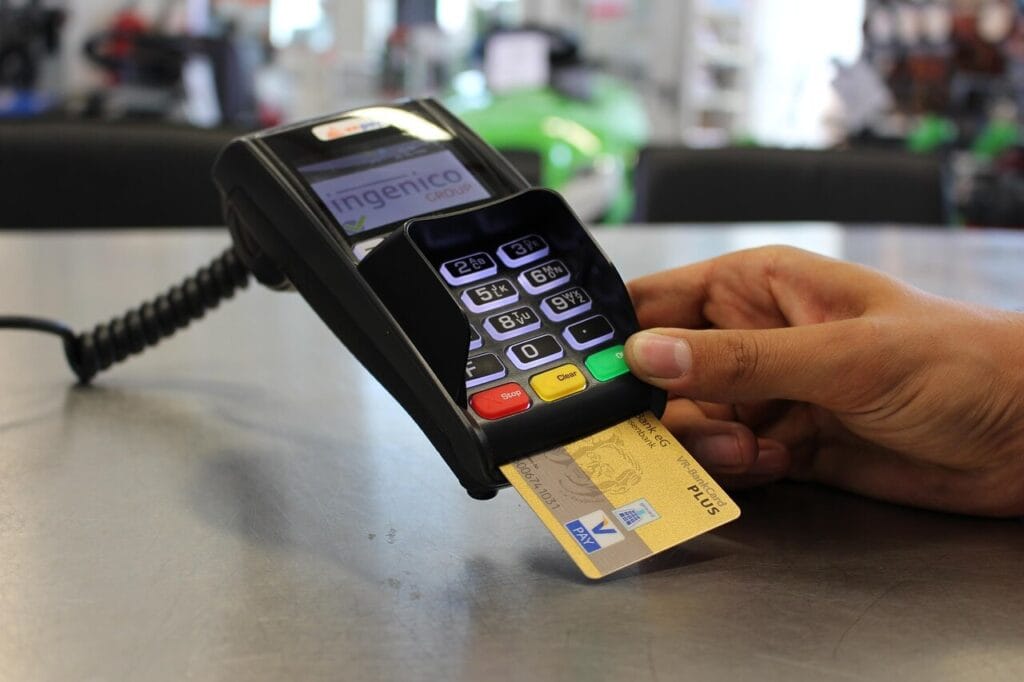
Even foreign debit cards in India sometimes fail due to older terminals, bank fraud blocks, or connectivity issues, so always carry cash as backup.
Even where card machines exist, cards randomly fail sometimes. This isn’t random – there are consistent reasons:
Your bank blocked the transaction. Banks in the US, UK, Europe, and Australia often flag unusual international transactions as fraud. If you didn’t tell your bank you were traveling to India, they may have quietly declined multiple charges already.
The terminal is set up for domestic cards only. Some older terminals in India are configured for RuPay (India’s domestic card network) and struggle with international Visa or Mastercard. Less common now, but it happens.
Network connectivity issues. India’s payment terminal infrastructure occasionally drops out, particularly in areas with patchy data coverage. The machine might technically accept cards, but the transaction simply times out.
Currency mismatch. Some forex cards need to be set to INR mode or loaded with rupees specifically. A multi-currency card that’s empty in INR will fail even if it has dollars loaded.
Daily spending limits. Your bank or card may have a foreign transaction limit you haven’t checked. Hit it midday and your card stops working for the rest of the day.
Before your trip, do this: Call your bank. Tell them your travel dates. Ask them to raise your international limit and whitelist India. Five minutes of admin before you fly prevents most card headaches.
UPI in India: Why Everyone Uses It (And What It Means for Tourists)
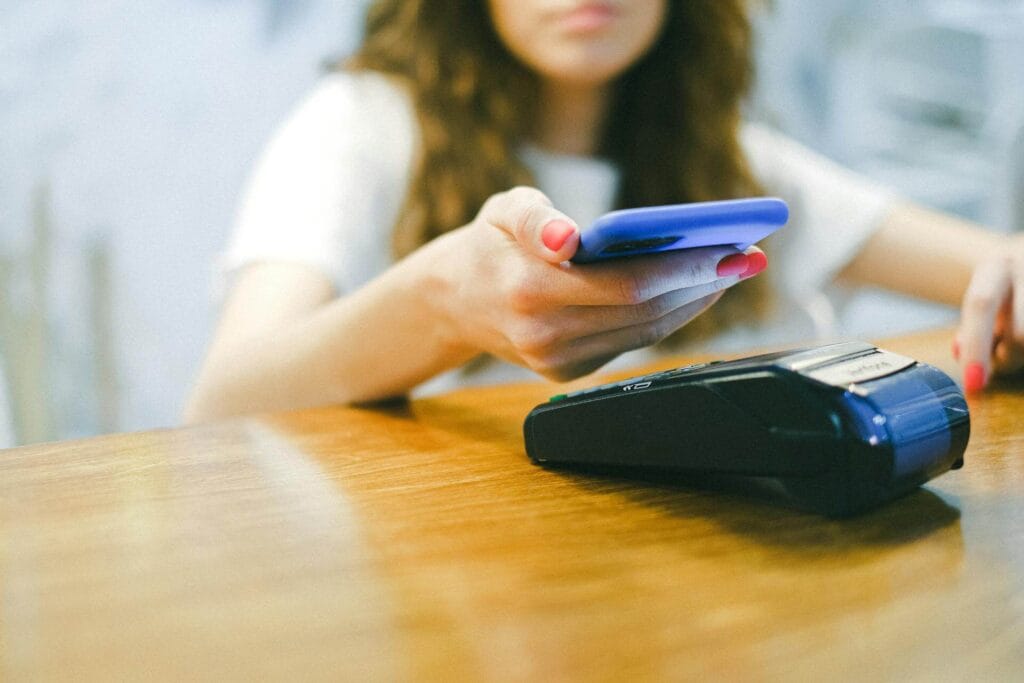
UPI India for tourists is usually not accessible because most apps require an Indian bank account and mobile number, making it challenging for short-term visitors to use.
After a few days in India, you start noticing QR codes everywhere. Shops, autos, food stalls, temples, even individual chai vendors have a QR code printed on a laminated card or stuck to the wall.
That system is UPI – Unified Payments Interface. It’s a government-built instant bank transfer system that runs through apps like Google Pay, PhonePe, and Paytm.
It’s fast, free, and works everywhere – for Indian residents. For tourists, the setup barrier is high.
- Standard UPI apps usually require:
- an Indian bank account
- an Indian mobile number
Most visitors on a short trip can’t meet both requirements. This is the part that feels slightly awkward for many tourists. Locals scan and pay in three seconds.
You’re reaching for your wallet. Some longer-term visitors do get UPI access – by getting a local SIM and opening a bank account. For a trip under three weeks, it’s generally not worth the effort. Plan around it.
I explain the full system, tourist limitations, and setup options in my detailed guide on Can Tourists Use UPI in India?
Cash vs Card: What Should You Actually Use?
Here’s a clear overview of payment methods for tourists in India, showing where cash, cards, or UPI are accepted.
Situation | Cash | Card | UPI |
Street food / chai stall | ✅ Usually required | ❌ Rarely accepted | ✅ Common |
Auto-rickshaw (street hail) | ✅ Expected | ❌ No terminal | ✅ Increasingly common |
Budget guesthouse | ✅ Always accepted | ⚠️ Check first | ✅ Accepted |
Hotel (mid-range and above) | ✅ Accepted | ✅ Reliable | ✅ Accepted |
Shopping mall | ✅ Accepted | ✅ Reliable | ✅ Widely accepted |
Local market / bazaar | ✅ Usually required | ❌ Rarely accepted | ✅ Common |
Large restaurant (city) | ✅ Accepted | ✅ Reliable | ✅ Common |
Roadside dhaba | ✅ Usually required | ❌ Rarely accepted | ✅ Accepted |
Online bookings | ❌ Not applicable | ✅ Preferred | ⚠️ Limited for tourists |
Small town / rural area | ✅ Essential | ⚠️ Unreliable sometimes | ✅ Very common locally |
Tourist attractions | ✅ Accepted | ✅ Usually accepted | ✅ Accepted |
Tipping | ✅ Best option | ❌ Rarely possible | ⚠️ Occasionally accepted |
No single payment method covers India. The travelers who have no problems are the ones who switch fluidly between the two.
How Much Cash Should Tourists Carry in India
This depends on your itinerary, but here are reliable benchmarks:
- Daily budget in a major city (Delhi, Mumbai, Bangalore): ₹1,500–₹3,000 for a mid-range traveler covering transport, meals, small purchases, and tips.
- Daily budget in smaller cities or towns: ₹1,000–₹2,000, but with fewer ATM options so carry more going in.
- Buffer to always keep on hand: ₹2,000–₹3,000. This is your cushion, not your daily spend. Don’t let it drop below ₹1,000.
- Note denomination strategy: This is the detail most guides skip. Break ₹500 notes as quickly as possible. Stock up on ₹100 and ₹200 notes.
- A surprising number of small shops genuinely don’t have change for large notes – small shops often refuse large notes early in the morning, and auto drivers will claim to have none.
- Never carry all your cash in one place. Split it between your day bag and your hotel safe or a concealed pocket. Losing your wallet shouldn’t mean losing everything.
Common Payment Problems Tourists Face
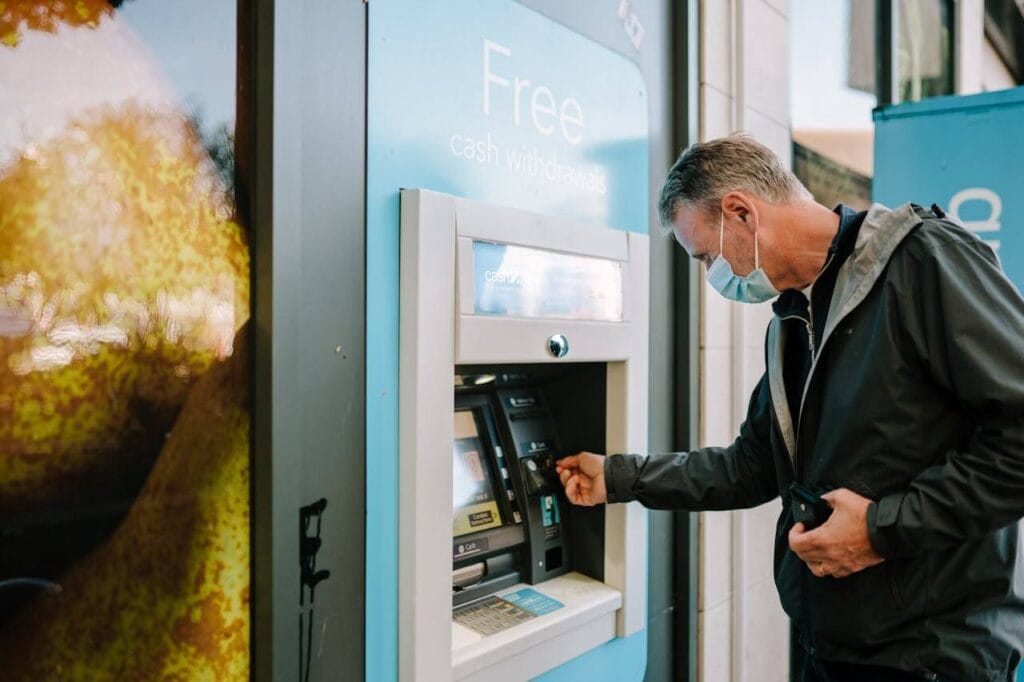
Problem: Card works at the ATM but fails at shops.
Likely cause: The shop’s terminal is domestic-only, or your bank added a merchant-category block on foreign spending. Solution: Use cash for street-level purchases, save the card for hotels and malls.
Problem: ATM swallows card or errors out.
Rare, but definitely not unheard of. Always use ATMs inside bank branches during business hours, where staff can help. Carry a backup card.
Problem: Shop asks for “exact change only.”
Plan for this, especially in the morning. When you break a big note at a hotel or restaurant, ask for ₹100s and ₹200s, not more ₹500s.
Problem: No ATM for the next 50 kilometers.
This is real in rural and mountain areas. Check your route before leaving a town. Withdraw more than you think you need before heading to Spiti Valley, Coorg, or any off-the-beaten-path destination.
Before traveling outside major cities, read my guide to the best ATMs in India for foreign tourists, including withdrawal fees, safe banks, and how to avoid blocked cards.
Problem: Card was charged twice.
Screenshot every successful payment confirmation. Dispute processes with Indian merchants can be slow — your bank needs your evidence.
Problem: Someone “helps” you at an ATM.
Walk away. This is a known scam. Use ATMs inside bank lobbies, not street-side machines, and shield your PIN.
Best Backup Payment Options
Wise Debit Card Excellent exchange rates, low fees, accepted at ATMs and card terminals. Works where Mastercard or Visa is accepted. One of the most tourist-friendly cards for India.
Niyo Global Card Specifically designed for Indian travel by foreign visitors. Zero forex markup. Works at Visa-enabled ATMs and merchants across India.
Revolut Good for currency exchange and emergency cash needs. Less consistent at some Indian ATMs — test it early, not when you’re desperate.
A second card from your home bank Not a travel card – just your regular credit or debit card kept in your hotel safe. If your primary card is blocked, cloned, or lost, you need something to fall back on. Don’t keep both cards in the same wallet.
Travel insurance with card replacement coverage Less of a payment method, more of a backstop. If you lose everything, you need a way to get emergency funds wired to you.
Safety Tips for Handling Money in India
- Use ATMs inside bank branches. Card skimming is less common there. Standalone street ATMs in busy tourist zones are higher risk.
- Block and unblock your card remotely. Most modern banking apps let you freeze your card instantly. If your card goes missing, freeze it immediately from your phone rather than waiting to call your bank.
- Don’t flash large amounts of cash. Count and distribute your money in your hotel room, not in public. Use a money belt or hidden pocket for your main cash reserve.
- Check the exchange rate before you exchange. Airport exchange booths are convenient but expensive. The worst rates are at booths near major tourist sites. Banks and ATMs give better rates. Online comparison tools help — check before you convert.
- Inspect ATM card slots. Run your finger along the card reader. A skimmer is often a loose overlay. If it feels wrong, use a different machine.
- Keep digital records. Photograph your cards (front and back), passport, and important documents. Store them in your email or cloud storage. You need those card numbers to make a fraud report if the physical card is gone.
Smart Payment Tips for First-Time Travelers
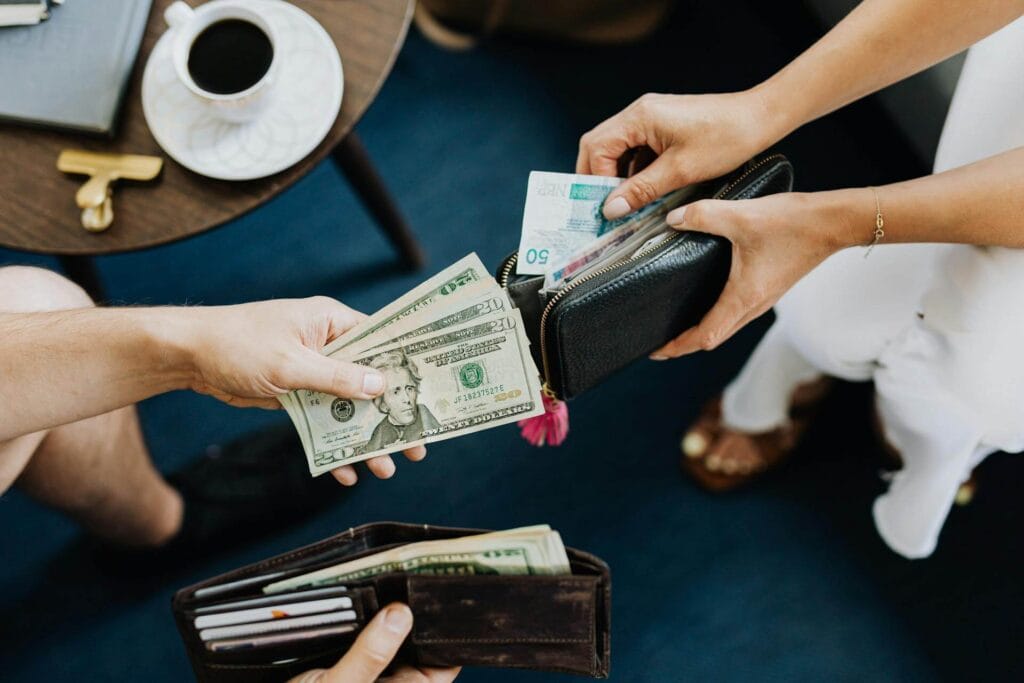
Knowing how to pay in India as a tourist can save you time, avoid frustration, and keep your travel money safe.
- Break large notes at every opportunity. Hotel restaurant bill, airport café, anywhere that clearly has change. Do this proactively, not when you’re stuck.
- Learn “Do you accept card?” in Hindi: “Card chalega?” You’ll save yourself from walking to the counter, choosing items, and then finding out.
- Book transport through apps. Ola and Uber let you pay in-app with your card. This eliminates cash negotiation with auto drivers and removes the “no change” issue entirely.
- Keep one emergency ₹500 note somewhere separate from your wallet. Emergency only. It’s stayed there through three countries and has saved at least one airport taxi moment.
- Know your ATM fee situation. Most Indian banks charge international cards a fee per withdrawal — typically ₹150–₹250. Minimize this by withdrawing in slightly larger amounts rather than three small withdrawals a day.
I also break down the best apps for traveling in India, including taxis, food delivery, trains, maps, and hotel booking apps tourists actually use.
Best Payment Strategy for Tourists in India
Having a reliable travel card for India ensures that you always have access to funds, even if your primary international card fails. Here’s the formula. Follow this and you won’t get stuck.
What to carry:
- ₹3,000–₹5,000 cash at the start of each day (mix of ₹100, ₹200, and ₹500 notes)
- One primary travel card (Wise, Niyo Global, or your bank’s international debit card – pre-authorized for India)
- One backup card stored separately (hotel safe, not your wallet)
When to use each:
Method | Use for |
₹100 / ₹200 notes | Street food, chai, auto-rickshaws, tips, small shops |
₹500 notes | Larger market purchases, pharmacies, mid-size restaurants |
Primary card | Hotels, mall shopping, airport purchases, large restaurants |
Backup card | Emergency only - card lost, blocked, or failed |
Online payment | Flight/train bookings, ride apps (Ola/Uber) |
Your backup plan (in order):
- Card fails → try a different terminal or ATM brand
- ATM fails → find an ATM inside a bank branch
- No ATM nearby → use your backup card at the next opportunity
- Both cards fail → use emergency cash reserve from your hotel safe
Do this:
- Tell your bank before you fly
- Carry small notes from day one
- Withdraw cash at airport ATM to test your card immediately after landing
- Keep backup card and cash reserve separate from daily wallet
Avoid this:
- Relying on a single card with no cash backup
- Carrying only ₹500 or ₹2,000 notes
- Waiting to test your card until you actually need it urgently
- Using public Wi-Fi for any payment app or banking session
Final Payment Checklist for India
Before you fly:
- Call your bank — enable international transactions, set travel alert
- Check and raise your daily ATM withdrawal limit
- Load your travel card (Wise/Niyo) with funds
- Identify a backup card and pack it separately from your primary
At the airport on arrival:
- Exchange cash for ₹3,000–₹5,000 minimum (ask for small notes)
- Test your card at an airport ATM before leaving the terminal
- Download your bank’s app for remote card lock if you haven’t already
During your trip:
- Replenish cash before leaving cities for rural areas
- Keep ₹1,000 minimum in reserve at all times
- Screenshot every card payment confirmation
- Break large notes whenever you’re somewhere with obvious change
- Never carry your full cash reserve in your day wallet
If you’re arriving in India for the first time, my airport arrival guide explains where to get cash, how airport ATMs work, and the safest transport options.
Conclusion
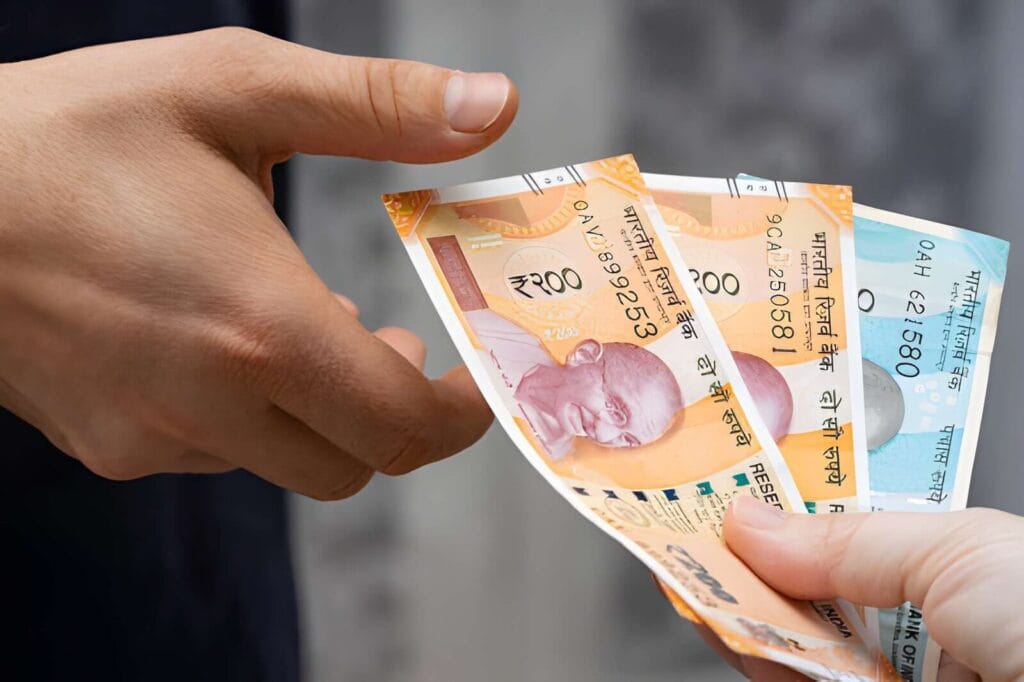
India is not a cash-only country. It’s not a cashless country either. It’s both – depending on exactly where you are and who you’re paying.
The tourists who handle payments smoothly usually aren’t the ones carrying the fanciest travel cards. They’re the ones who figured this out early, prepared for both, and switched between the two without stress.
India is neither fully cash-based nor completely cashless. Understanding cash vs card in India for tourists is essential.
With a mix of small notes, one main travel card, and a backup, you can pay smoothly at hotels, markets, street food stalls, and transport without stress.
Switch fluidly between cash, card, and UPI where possible, and follow the checklist to avoid common payment issues.
FAQs about Cash vs Card in India for Tourists
Can tourists use international cards in India?
Yes. International Visa and Mastercard cards work in hotels, malls, airports, and large restaurants. Smaller shops and street vendors usually prefer cash or UPI.
Is India cashless for tourists?
No. India is highly digital, but tourists still need cash for markets, street food, auto-rickshaws, and smaller towns.
How much cash should tourists carry in India?
Around ₹3,000–₹5,000 in small notes is usually enough for daily expenses and emergencies.
Can foreigners use UPI in India?
Usually not easily. Most UPI apps require an Indian bank account and mobile number.
Do auto-rickshaws in India accept cards?
Rarely. Most auto-rickshaws prefer cash or UPI payments.
Why do cards fail in India sometimes?
Common reasons include bank fraud blocks, weak network connections, or older payment terminals.
Are ATMs easy to find in India?
Yes in major cities. In rural or mountain areas, ATMs may be limited or out of service.
Is cash or card better in India?
Tourists should use both. Cards work best for hotels and malls, while cash is essential for street-level spending.
What’s the best payment setup for tourists in India?
Carry one main card, one backup card, and enough cash in ₹100 and ₹200 notes.
Should tourists exchange money at the airport?
A small amount is useful after landing, but airport exchange rates are usually higher than bank ATMs.
Images: Pexels
