





Booking train tickets in India as a foreigner can feel confusing the first time. The IRCTC website can feel outdated, OTP verification may fail, and international cards often get declined during payment.
When you add terms like waitlist, RAC, Tatkal, and Tourist Quota, booking can feel confusing at first.
The good news: foreigners can absolutely book Indian train tickets online, and millions do it every year without using agents. Once you understand how the system works, the process becomes simple and predictable.
In this guide, you’ll learn exactly how to:
- Book train tickets in India for foreigners step-by-step
- Create and verify your IRCTC account (without errors)
- Fix common issues like OTP not received or payment failure
- Understand waitlist, RAC, and Tourist Quota clearly
- Choose the best train class for comfort and budget
By the end, you’ll be able to book your first Indian Railways ticket confidently — even if this is your first time using IRCTC.
Quick Answers
What is IRCTC?
IRCTC (Indian Railways Catering and Tourism Corporation) is the official platform for booking Indian train tickets online.
It is the main platform used by both Indian residents and foreign travelers to reserve seats and berths on Indian Railways, which operates over 13,000 trains and 7,000+ stations across India.
Can foreigners book train tickets in India?
Yes, foreigners can book train tickets in India using IRCTC or third-party platforms.
They can use the official IRCTC website or trusted third-party platforms like Cleartrip, MakeMyTrip, and RailOne. Many trains also offer a Tourist Quota, which reserves seats specifically for international travelers.
How do you book train tickets in India online?
To book a train ticket in India online, you need to:
- Create an IRCTC account
- Search your route and travel date
- Select train, class, and quota
- Enter passenger details
- Make payment and receive your e-ticket by email
Your e-ticket is valid for travel and shows your seat, coach, and PNR number.
What is Tatkal booking?
Tatkal is a last-minute train booking system in India. It opens 24 hours before departure and allows passengers to book remaining seats at a higher price.
It is mainly used when regular tickets are sold out and should be treated as a backup option.
Why Train Travel in India Is Worth the Effort

Before getting into the mechanics of booking, it’s worth understanding why the process is worth navigating in the first place.
Indian Railways is one of the largest rail networks on earth, connecting virtually every city, town, and region of significance across the country.
For travelers, this means you can go almost anywhere by train — affordably, often comfortably, and in a way that puts you in genuine contact with the country rather than insulating you from it. The cost difference between trains and flights in India is substantial.
A Third AC train berth from Delhi to Mumbai might cost ₹800 to ₹1,200 — a fraction of even the cheapest domestic flight. Overnight trains also save you a night’s stay.
What Is IRCTC and Why You Need It
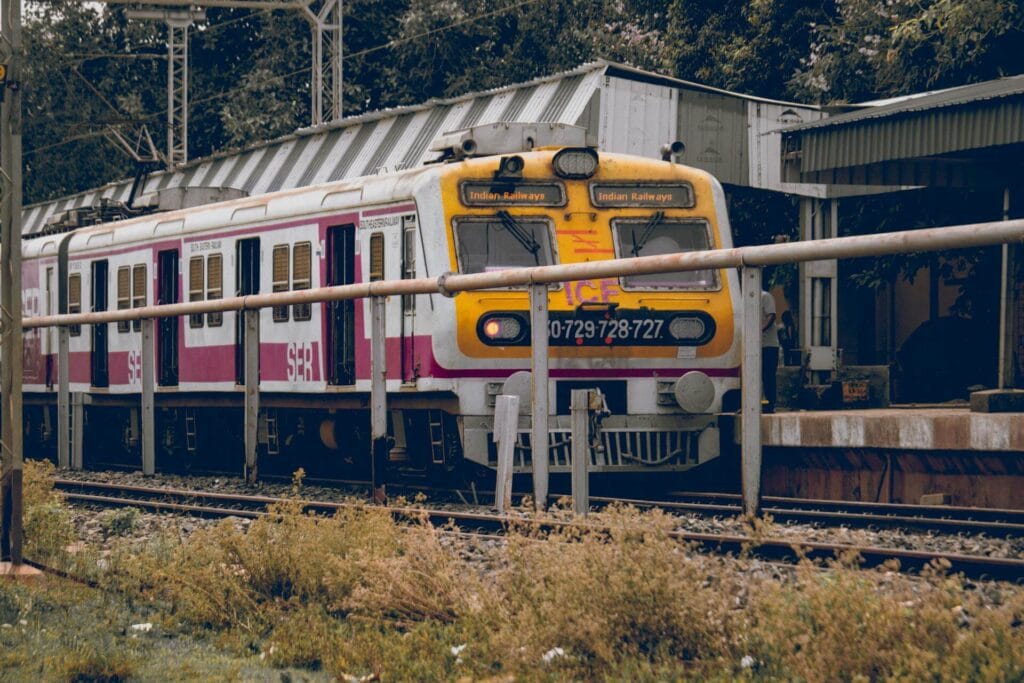
IRCTC is the only official platform authorized to sell Indian Railways tickets online. The IRCTC website is functional and remains the primary platform for booking train tickets in India.
The IRCTC Rail Connect app is somewhat more user-friendly than the desktop site and is worth downloading once your account is set up.
However, many foreign travelers prefer to use third-party platforms — Cleartrip, RailOne, or MakeMyTrip — which pull availability from the same IRCTC database but offer a cleaner interface and better international payment support.
The tradeoff is a small booking fee, typically ₹50 to ₹70 per transaction. For first-time foreign users, third-party platforms often make the process considerably less stressful.
That said, having an IRCTC account set up is still worthwhile for direct access, particularly once you’re more comfortable with the system.
Step-by-Step Guide to Booking Train Tickets as a Foreigner
Step 1 – IRCTC Registration for Foreigners (Without Errors)

Go to irctc.co.in and click on “Register.” The form asks for a username, password, and personal details including your nationality — select your country from the dropdown.
This is a common issue during IRCTC registration for foreigners, as the mobile number field is not always straightforward.
The solution is to select your country code from the dropdown before entering your number. IRCTC does support international mobile numbers for registration, but the field can be finicky.
Enter your number without the leading zero and without your country code prefix — IRCTC adds that from the dropdown.
If the system rejects your number, try registering with a local Indian SIM (which you can buy at any airport for around ₹200–₹300 with your passport) — this eliminates the OTP problem entirely and is the approach most frequent foreign travelers recommend.
Use a reliable email address you check regularly. Both OTP verification and your e-tickets will come here.
Step 2 — Verify Your Account

After registration, IRCTC sends a verification OTP to your registered mobile number and a confirmation link to your email.
If the OTP doesn’t arrive within a few minutes, check that your number was entered correctly, try requesting a resend, or use a different browser.
Chrome tends to work more reliably than Safari for this process. Email verification is usually instant. Once both are confirmed, your account is active and you can log in.
Step 3 — Log In and Search for Trains
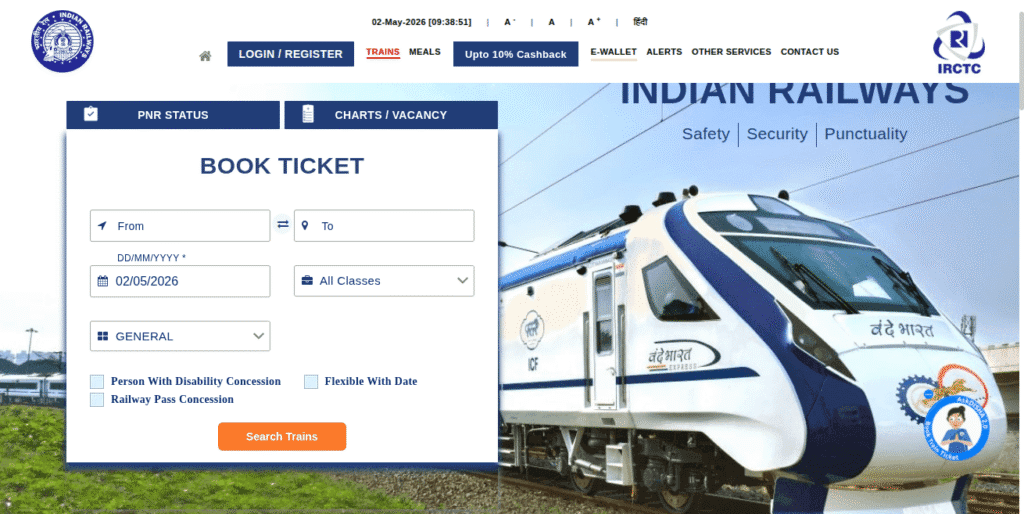
From the homepage, enter your origin and destination stations. Indian stations each have a unique three-to-four letter code — Delhi’s main station is NDLS (New Delhi), Mumbai Central is BCT, Agra Cantt is AGC.
If you’re not sure of the code, type the city name and the system will offer suggestions. Enter your travel date and click Search.
The results show every train running on that route on that date, including departure and arrival times, journey duration, and available classes. Look at the journey time carefully — on some routes, multiple trains run and they vary significantly in speed.
Step 4 — Choose Your Class and Quota
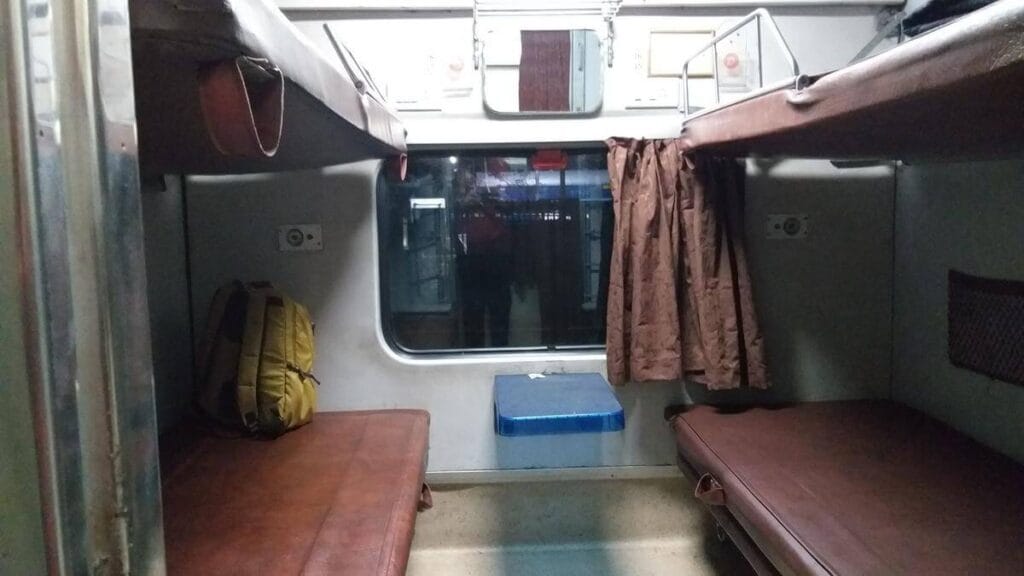
This is one of the most important decisions in the booking process. Each train offers multiple classes, and availability and price vary between them.
Sleeper Class (SL) is the most affordable option – open berths with fans and no AC. It’s fine for short journeys or cool climates but can be uncomfortable in summer heat.
Third AC (3A) is air-conditioned with six berths per compartment and is the most popular choice for foreign travelers — it strikes the right balance between comfort and cost.
Second AC (2A) offers more privacy with four berths per compartment and is worth considering for journeys over 12 hours. First AC (1A) is closest to a private cabin but is priced to rival budget flights.
Chair Car (CC) is available on daytime express trains and works well for shorter routes. For most foreign travelers on overnight journeys, Third AC is the practical default.
It’s safe, clean, air-conditioned, and reasonably affordable. The Quota section matters too. Look for the “Tourist Quota” option if it’s available for your train — this is a reserved pool of seats specifically for foreign nationals and overseas Indians.
It often has availability even when general quota seats are sold out, which can be a lifesaver on busy routes. If you’re unsure about comfort, many travelers compare Sleeper vs 3AC in India, and 3AC is usually the safest choice for foreigners.
Quick Tip for Foreign Travelers:
If tickets show as waitlisted, check the Tourist Quota before giving up. It’s a reserved seat pool for foreign nationals and often has availability even when general quota is full.
Step 5 — Enter Passenger Details
Add each traveler’s name, age, gender, and nationality. For foreign nationals, you’ll need to enter your passport number in the ID field. Keep this accurate — it should match the document you’ll carry on the train, as ticket checkers occasionally verify ID on popular tourist routes.
Step 6 — Make Payment
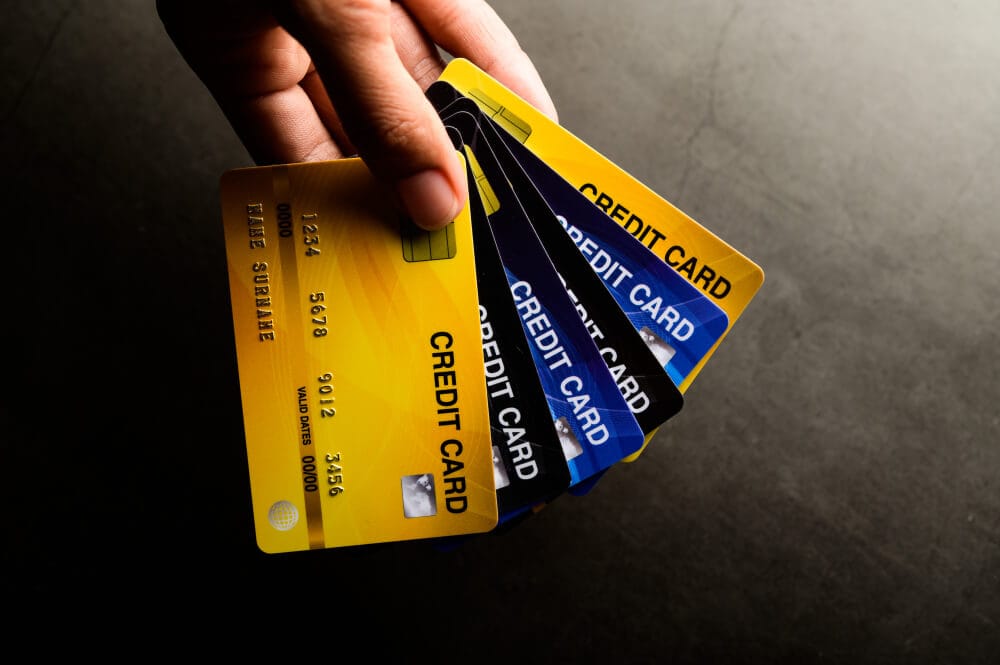
This is the second place where foreign travelers often run into trouble. IRCTC payment gateways sometimes fail with international cards without a clear reason.
If this happens, try a different card, switch browsers, or clear your cache and try again. The most reliable workaround is using a third-party platform like Cleartrip or Trainman for payment, as they have better-optimized international payment processing.
Some travelers also use travel-friendly debit cards like Wise, which tend to process more reliably on Indian payment gateways.
If you’ve purchased a local Indian SIM with a data plan, you can also use UPI-linked payment apps like PayTM or Google Pay, which work seamlessly on IRCTC.
Step 7 — Receive and Save Your E-Ticket

Once payment is confirmed, your e-ticket arrives by email within a few minutes. Save it as a PDF and keep a screenshot on your phone.
The ticket shows your train number, carriage (coach) number, berth number, PNR (Passenger Name Record) number, and the names of all passengers.
You don’t need to print it — a digital copy on your phone is sufficient for most ticket checkers, though having a printed backup is never a bad idea.
Your PNR number lets you track booking status. Enter it at indianrail.gov.in or on the IRCTC app to check whether a waitlisted ticket has confirmed.
Understanding Waitlists and Ticket Status
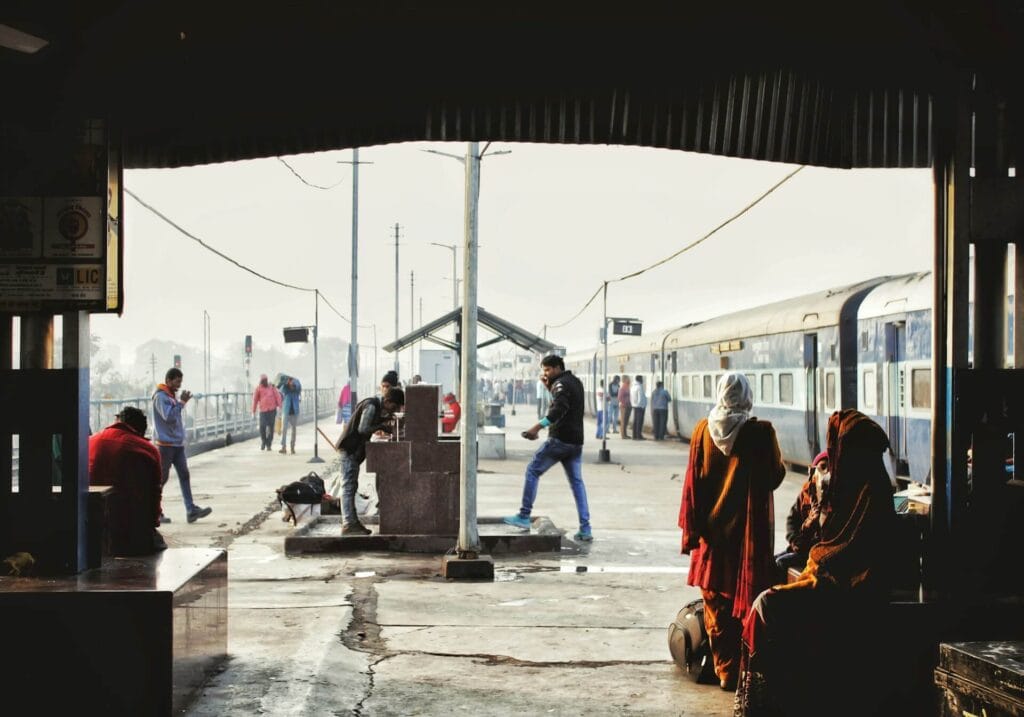
Confused about waitlist vs RAC in Indian trains? Here’s what it means
Waitlist (WL) means your ticket isn’t confirmed yet. RAC gives you a seat but not a full berth. Lower WL numbers have a better chance of confirmation.
Waitlisted tickets are one of the most confusing parts of booking train tickets in India for foreigners. When a train is full, IRCTC still allows bookings — but they are added to a waitlist (shown as WL followed by a number).
As confirmed passengers cancel, waitlisted tickets move up and may confirm before departure. WL 1 to WL 15 on popular routes usually has a reasonable chance of confirmation, while WL 30 and above is risky.
RAC (Reservation Against Cancellation) is a better position than WL. It guarantees you a seat, but you may have to share a berth until a full berth becomes available.
The practical advice: avoid booking waitlisted tickets unless your number is low and you have a backup plan. On overnight journeys especially, it’s better not to rely on uncertain confirmation.
Common Problem for Foreigners and How to Fix Them
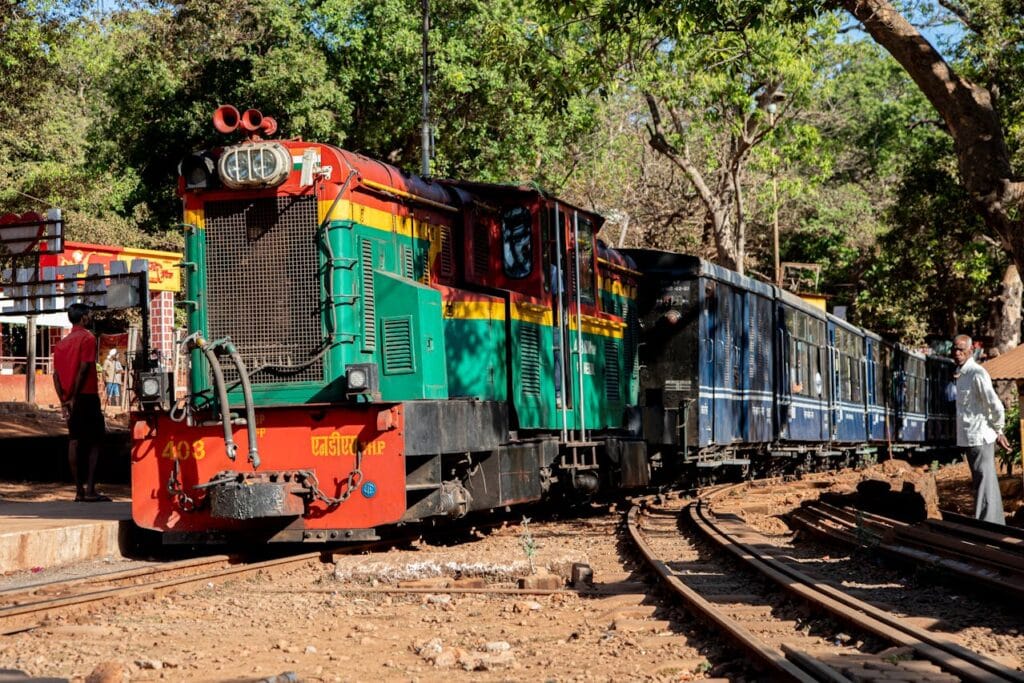
Not receiving the IRCTC OTP? This is a common issue for foreign users
OTP issues are common during IRCTC registration for foreigners. Check your country code, wait a few minutes, or use a local Indian SIM for faster verification.
OTP not received is one of the most common problems for foreign users. First, confirm your country code is selected correctly and your number is entered without the leading zero.
Wait three to five minutes before requesting a resend. If it still doesn’t arrive, try using a different browser or register with a local Indian SIM number. Some travelers also use a friend’s Indian number temporarily for verification.
IRCTC payment failed with international card? Here’s how to fix it
Many international cards fail on IRCTC payment gateways. Try another card or use Cleartrip or Trainman for more reliable booking.
Payment failure is another common issue when booking Indian Railways tickets online. Some international Visa and Mastercard payments get declined without a clear reason.
If this happens, try a different card, switch browsers, or clear your cache and try again. Many travelers find better success using third-party platforms like Cleartrip, which support international payments more smoothly.
Having trouble logging into your IRCTC account?
IRCTC accounts can get locked after multiple failed login attempts. Use “Forgot Password” or try the Rail Connect app for easier access.
Account login issues can happen if there are multiple failed attempts. Use the “Forgot Password” option to reset your account and make sure cookies are enabled in your browser.
In some cases, the IRCTC Rail Connect app works more reliably than the desktop website for logging in and managing bookings.
Best Alternatives to IRCTC for Foreigners
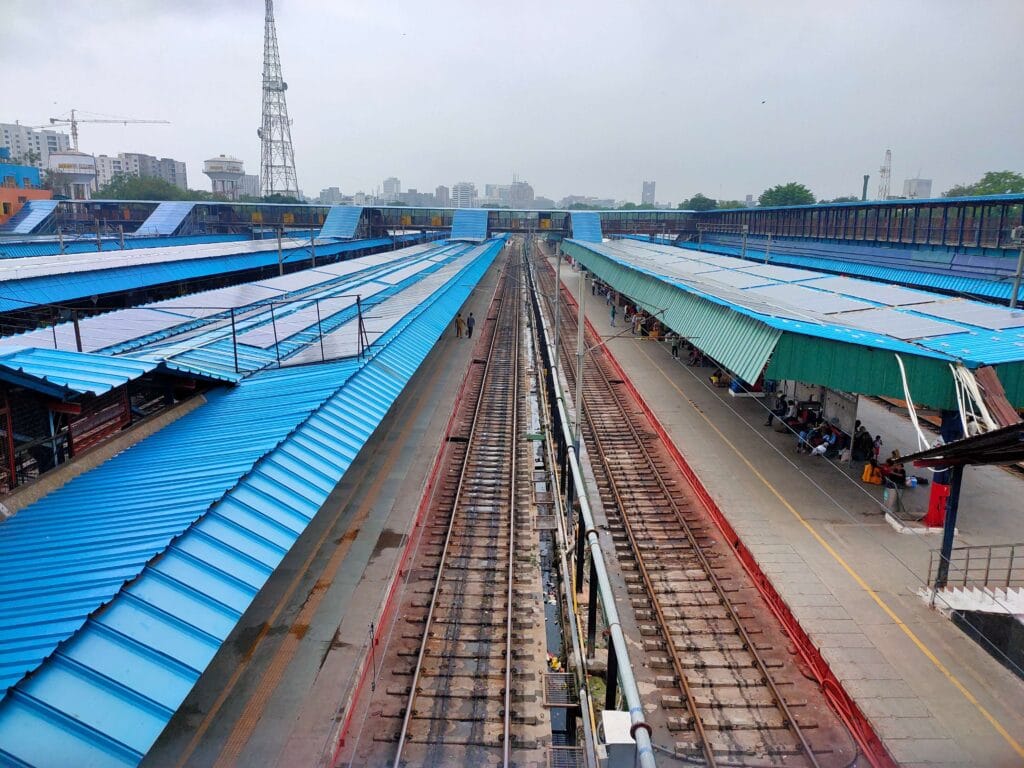
If the IRCTC website is giving you trouble, there are three reliable alternatives that foreign travelers use regularly.
IRCTC Rail Connect is the most beginner-friendly option – clean interface, reliable international payment processing, and the same ticket inventory as IRCTC.
Confirmtkt is popular for seat availability and PNR prediction tools. MakeMyTrip handles trains, flights, and hotels in one place, which can simplify overall trip planning.
For travelers who would rather not deal with online booking at all, most mid-range hotels in India can book train tickets through their front desk for a small fee.
Authorized travel agents near major train stations are also a legitimate option — just ensure they’re using the official IRCTC system and providing you with a proper e-ticket, not a handwritten note.
A Sample Booking: Delhi to Agra
To make this concrete, here’s how a Delhi to Agra booking actually looks in practice. Search “NDLS to AGC” on any date and you’ll see several options.
The Gatimaan Express is the fastest – just under two hours – and runs as a Chair Car (CC) service, which is ideal for a day trip.
The Shatabdi Express is another popular option. Both are well within comfortable range for foreign travelers and book out well in advance on weekends.
Search for your date, select Gatimaan Express, choose CC class, check for Tourist Quota availability, enter your passport details, and proceed to payment.
For a seat on the Gatimaan, you’d typically pay around ₹750 to ₹1,000 in CC class — less than many airport transfers.
Your e-ticket arrives by email, and you check in by showing it to the ticket checker on the platform. That’s the entire process, and it genuinely is that straightforward once your account is set up.
Good to Know: Booking your first train ticket in India feels confusing, but once you do it once, it becomes quick and routine.
Safety Tips for Train Travel in India
Indian trains are generally safe for foreign travelers, including solo women travelers, and the overwhelming majority of journeys pass without incident.
A few practical habits make the experience even smoother. Keep your passport and e-ticket accessible but not visibly on display.
On overnight trains, use the chain-lock attached to each berth to secure your bag to the luggage rack below your seat — a basic but effective precaution.
Keep your phone, wallet, and valuables in a small personal bag that stays with you rather than in larger luggage stored overhead.
At busy major stations like New Delhi or Mumbai CST, be alert around the entrance areas — unlicensed “helpers” and commission-based touts do approach tourists.
Walk confidently toward the platform number shown on your ticket and ignore unsolicited assistance. The station staff in uniform are always the right people to ask for directions.
Many first-time visitors ask: is train travel safe in India for foreigners? In most cases, yes – with basic precautions.
Safety Tip: Indian trains are generally safe, but always lock your luggage and keep valuables close, especially on overnight journeys.
Practical Tips for the Journey Itself
Arrive at the station at least 20 to 30 minutes before departure. Indian stations can be large and confusing to navigate — knowing your platform number in advance (check the IRCTC app or the departure board) saves a lot of stress.
Your coach position on the platform is shown on your ticket. Most long-distance trains also post coach position charts on the platform approximately 30 minutes before departure.
Food is available on most trains — vendors board at major stations selling chai, snacks, and meals, and on-board pantry cars serve hot food on longer routes.
Quality varies, so carrying your own snacks is never a bad idea, especially on overnight journeys. On long journeys in Sleeper or Third AC, a light blanket or sleep sheet, earplugs, and a padlock for your bag make a noticeable difference to comfort.
Useful Apps
The IRCTC Rail Connect app is the official mobile platform and is useful for searching trains, checking PNR status, and managing bookings on the go.
Where Am I — Train (also called Rail Radar) tracks your train’s live location, which is genuinely useful during long journeys when you want to know how far you are from your destination.
RailOne & Confirmtkt offers detailed seat availability charts and PNR confirmation predictions, which help you assess the real likelihood of a waitlisted ticket clearing.
Final Thoughts
Booking train tickets in India as a foreigner can feel complicated at first – but it’s mostly unfamiliar, not difficult.
Once you understand how IRCTC works and how to handle common issues like OTP errors or payment failures, the process becomes straightforward.
The key is to prepare once: set up your IRCTC account, understand train classes, and know how to check ticket status. After that, booking tickets becomes quick and routine.
And it’s worth it. Indian Railways isn’t just transport – it’s one of the most authentic ways to experience the country.
From short daytime routes to overnight journeys, trains connect you to places, people, and moments you simply won’t get any other way. Get your first booking done early, learn the system, and the rest of your travel across India becomes much easier.
FAQs about Book Train Tickets in India for Foreigners
Can foreigners book train tickets in India without an Indian mobile number?
Yes, foreigners can register on IRCTC using an international mobile number. If OTP verification fails, using a local Indian SIM card is the easiest workaround.
What is IRCTC and is it safe to use?
IRCTC is the official Indian Railways booking platform. It is safe, government-authorized, and used by millions of travelers daily.
Why is my IRCTC OTP not received?
This usually happens due to incorrect country code, network delays, or browser issues. Try resending OTP, switching browsers, or using an Indian SIM.
Can I use an international credit or debit card on IRCTC?
Yes, but IRCTC payment may fail with international cards, so alternatives like Cleartrip or Trainman are often used.
What does waitlist (WL) mean in Indian trains?
Waitlist means your ticket is not confirmed yet. It may confirm if other passengers cancel before departure.
What is RAC in Indian Railways?
RAC (Reservation Against Cancellation) gives you a seat but not a full berth initially. It may convert into a full berth later.
What is Tourist Quota in Indian trains?
Tourist Quota is a special seat allocation for foreign travelers. It often has availability even when general tickets are sold out.
Is train travel safe in India for foreign tourists?
Yes, train travel in India is generally safe. Basic precautions like securing luggage and avoiding touts at stations are recommended.
How early should I book train tickets in India?
Tickets open 120 days in advance. Popular routes should be booked as early as possible to avoid waitlists.
