
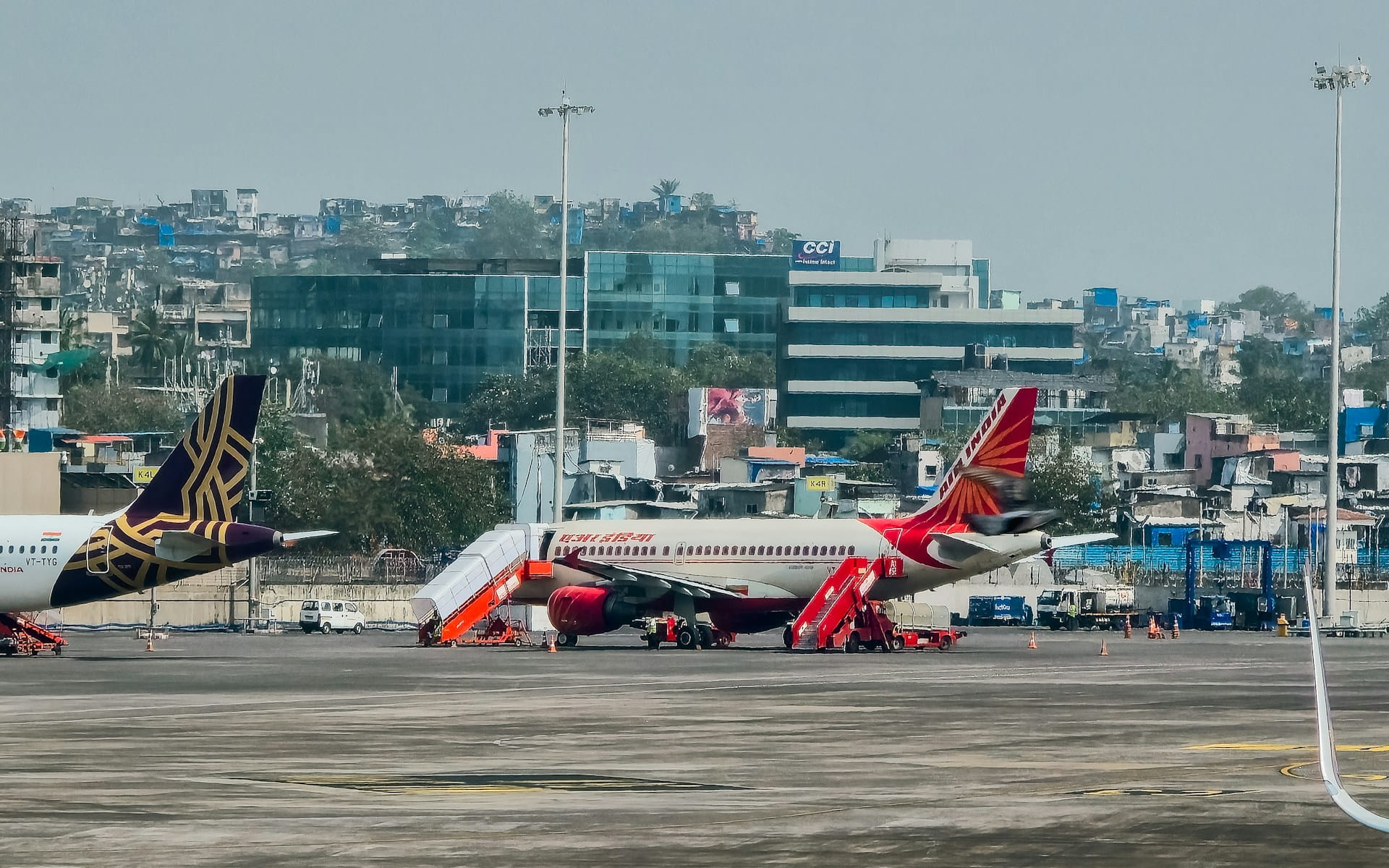

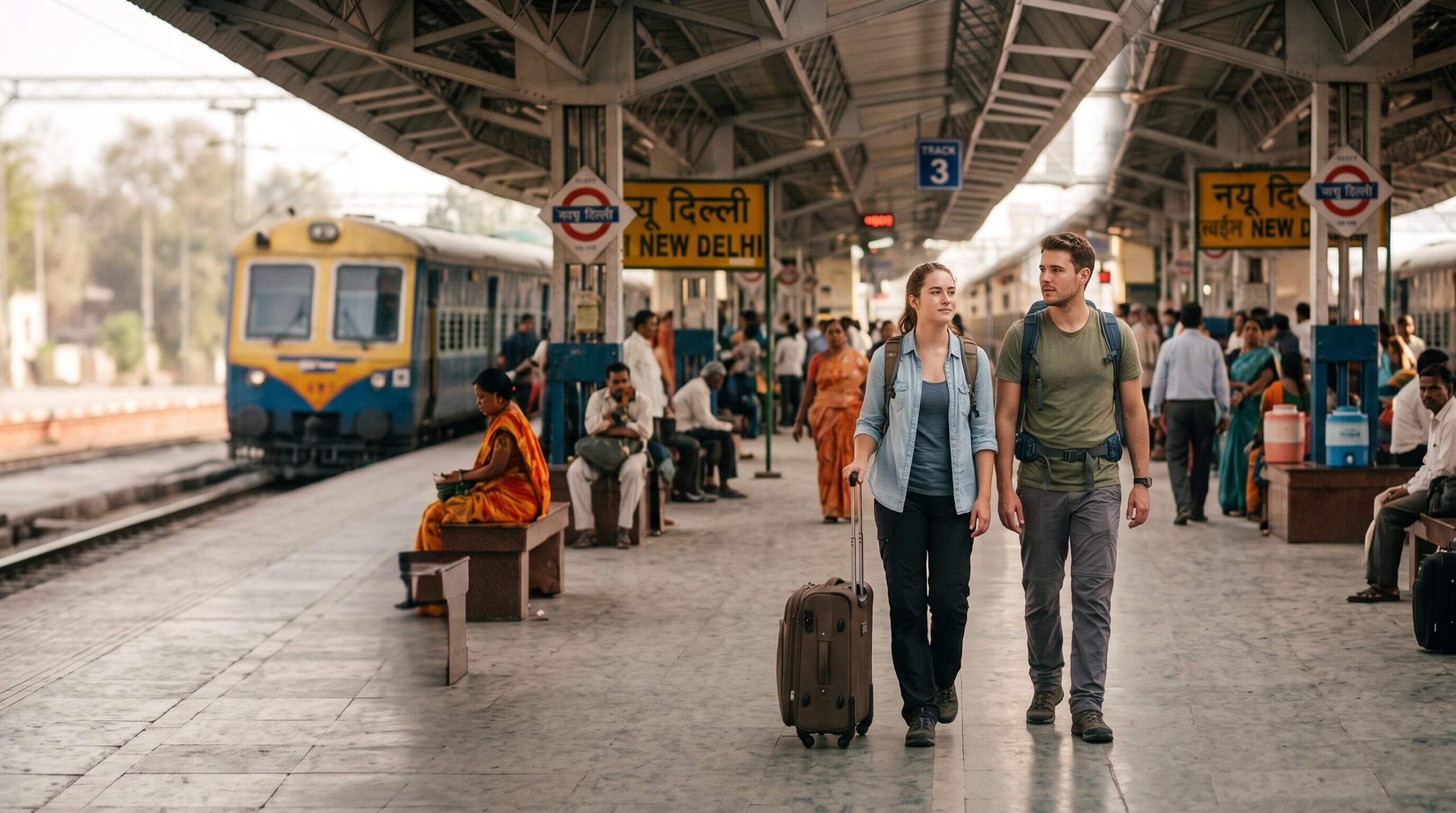

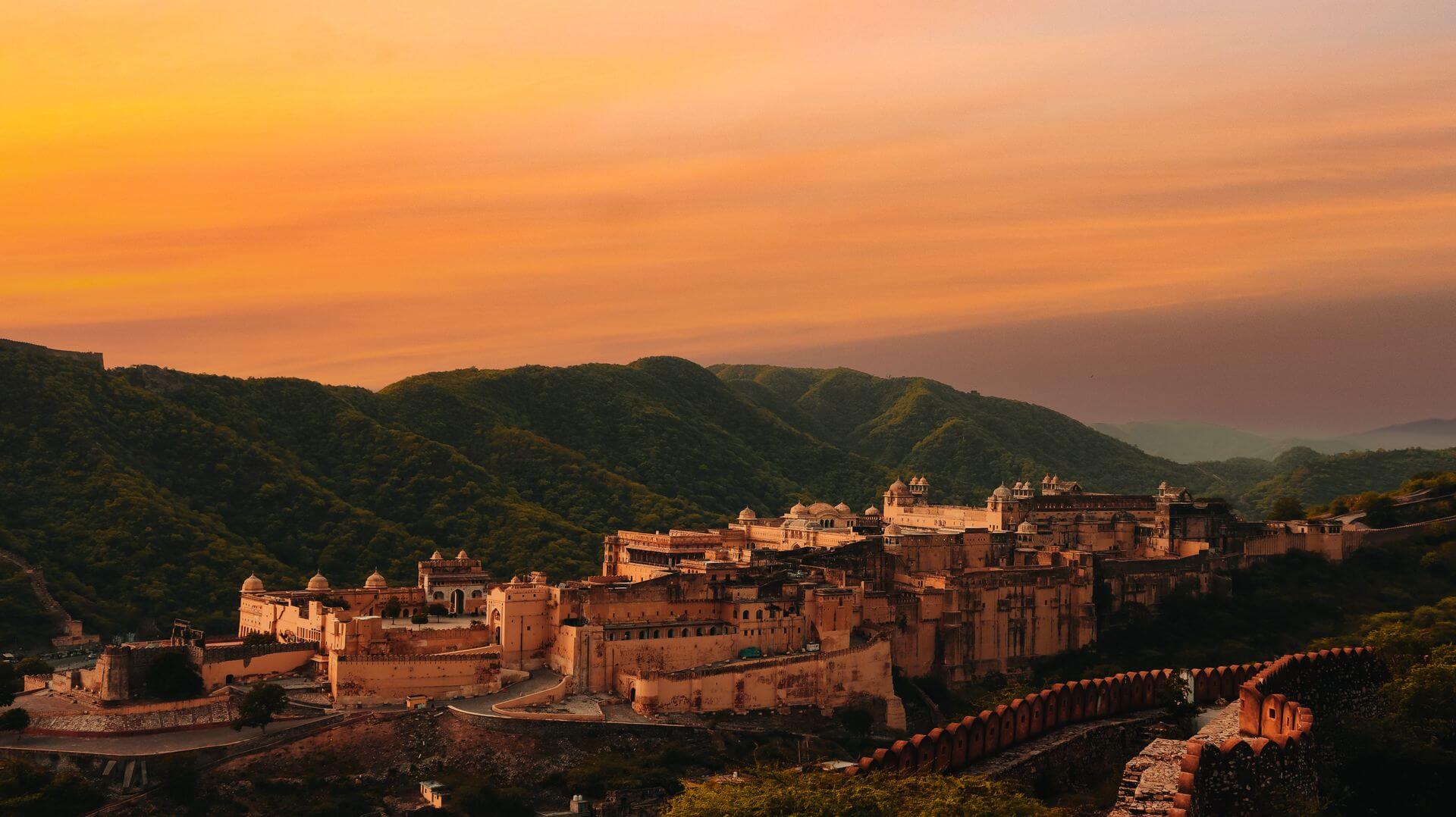
You land in Delhi or Mumbai, clear immigration, and walk toward the exit. Someone near the arrivals hall is holding a sign with your name.
You need to tip the porter who helped with your bags. You want a coffee before the drive. And you have absolutely no Indian rupees.
His moment catches more travelers off guard than almost anything else about arriving in India. The questions stack up fast: should you have exchanged money before flying?
Is your card going to work? Can you just use your phone to pay? This guide answers all of it.
This India Travel Money Guide covers everything you need to know about cash, cards, ATMs, UPI payments, currency exchange, and managing your travel budget while exploring India.
Whether you’re visiting for a week or several months, understanding how payments work in India will help you avoid unnecessary fees, payment failures, and last-minute stress.
How money actually works in India, what you will genuinely need cash for, where cards work and where they do not, and how to move through the country without a single payment-related panic.
Quick answer
Carry a mix of cash and cards. Use cards for hotels, malls, and established restaurants. Cash is mainly needed for everyday local spending such as food stalls, short transport rides, markets, and small vendors outside major tourist services.
India Travel Money Guide: How Money Actually Works in India
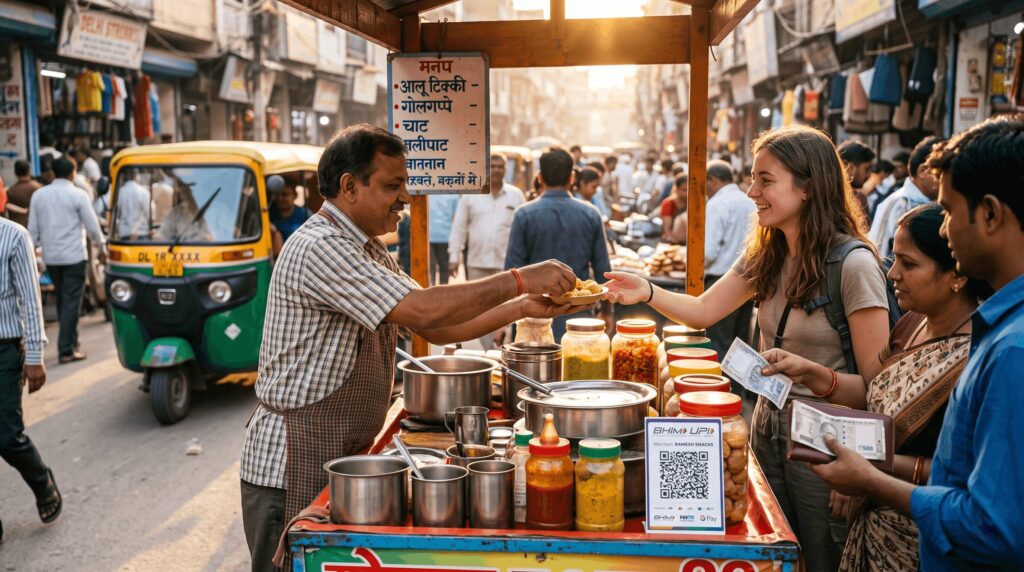
India runs on a mixed economy when it comes to payments. It is not cashless, not fully digital, and not what most Western travelers expect.
The Indian Rupee (INR) is the currency. Notes come in denominations of 10, 20, 50, 100, 200, 500, and 2000 rupees. The 500-rupee note is the most useful for daily spending.
₹2000 notes may still occasionally be seen, but they are no longer commonly used in daily transactions, and most travelers will rarely encounter them.
Urban India, particularly in cities like Delhi, Mumbai, Bengaluru, and Hyderabad, has enthusiastically adopted digital payments through a system called UPI.
Walk through any Indian city and you will see QR codes on street food stalls, auto-rickshaws, pharmacies, and roadside flower sellers.
Digital payment penetration is genuinely high. But step outside the major cities, into smaller towns, rural areas, hill stations, or less-touristy destinations, and cash becomes essential again.
The infrastructure is patchy, connectivity drops, and many vendors simply do not have or want digital payment setups.
The easiest approach is to carry both. Use cards for larger purchases and accommodation, while keeping enough cash for daily expenses, transport, markets, and smaller vendors.
When You Will Actually Need Cash in India
Cash is not optional in India. It is the default for a significant portion of daily travel spending. Street food and local restaurants will almost always want cash.
The chai stall, the samosa vendor, the neighborhood dhaba where the food is best: none of these take cards and most do not have UPI setups aimed at tourists.
Auto-rickshaws and cycle rickshaws run on cash. Even in cities with strong UPI adoption among locals, many drivers prefer cash from tourists because the QR payment process requires a phone number linked to an Indian bank account, which most foreign visitors do not have.
Small shops, market stalls, temples, public toilets, local transport like state buses, and entry fees at minor archaeological sites or local attractions are almost always cash only.
Rural areas and smaller towns operate almost entirely on cash. If your itinerary takes you off the main tourist circuit into hill stations, village homestays, or remote trekking areas, assume cash is the only option and plan accordingly.
Many travelers discover this only after arriving somewhere remote and finding the nearest working ATM several kilometers away.
A reasonable rule of thumb: carry enough cash to cover two full days of spending at all times. If you run low, top up before leaving a city, not after you have arrived somewhere smaller.
Using Cards in India as a Tourist
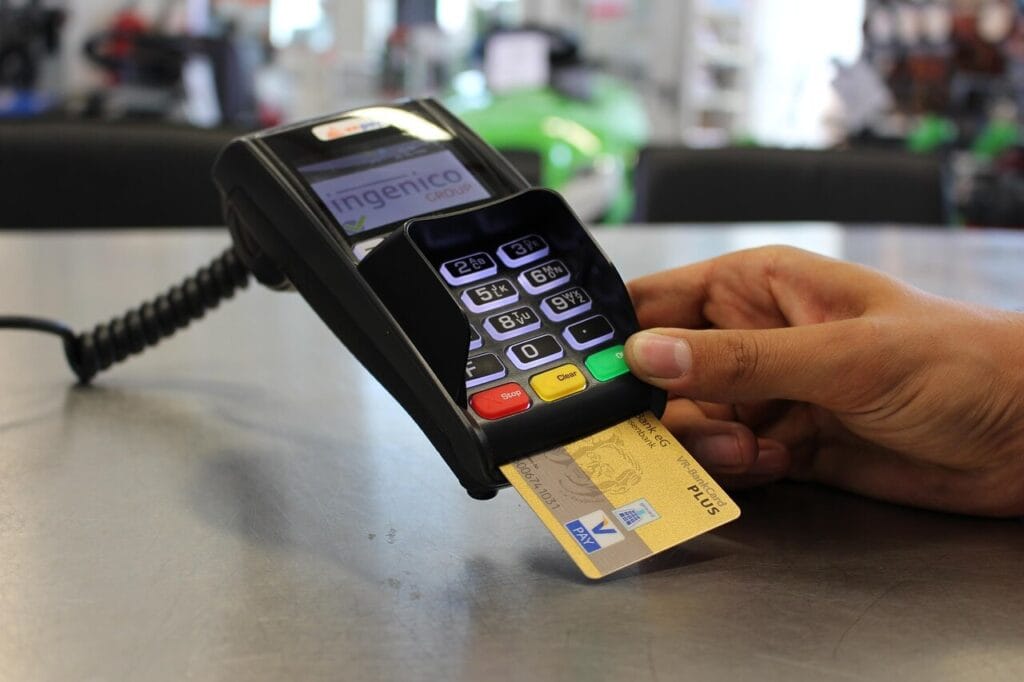
Cards work well in specific contexts and unreliably in others. Hotels, from budget guesthouses to luxury properties, almost universally accept Visa and Mastercard.
American Express has less coverage. Domestic card networks like RuPay are not relevant for international travelers.
Most international debit cards and credit cards issued by major banks work without difficulty at hotels, ATMs, and larger merchants across India.
Established restaurants in tourist areas, shopping malls, large retail chains, pharmacies like Apollo and MedPlus, and airport services all handle card payments smoothly.
Many businesses also support contactless payments, allowing travelers to tap their card or compatible mobile wallet for smaller purchases.
Where cards become unreliable: smaller restaurants outside tourist zones, any vendor at a street market, transport other than pre-booked cabs, and any situation in smaller towns or rural areas. The card terminal may exist but the connectivity may not.
A few practical points worth knowing before you travel:
Tell your bank you are going to India before you leave. Banks frequently flag international transactions as suspicious and freeze cards without warning.
A two-minute call before your trip prevents a very stressful situation mid-journey. Check your card’s foreign transaction fee.
When paying by card, some terminals may ask whether you want to be charged in your home currency or Indian rupees.
Always choose Indian rupees (INR). This avoids Dynamic Currency Conversion (DCC), which usually gives a worse exchange rate than your bank.
Many cards charge 2 to 3 percent on every international purchase. Travel-specific cards from providers like Wise, Revolut, or Charles Schwab (US) eliminate or significantly reduce these fees.
If you travel internationally with any frequency, one of these is worth having.
Visa is slightly more reliable than Mastercard at Indian ATMs and some smaller terminals, though both work at the vast majority of locations. Carry at least two cards from different networks if possible.
Can Tourists Use UPI in India?
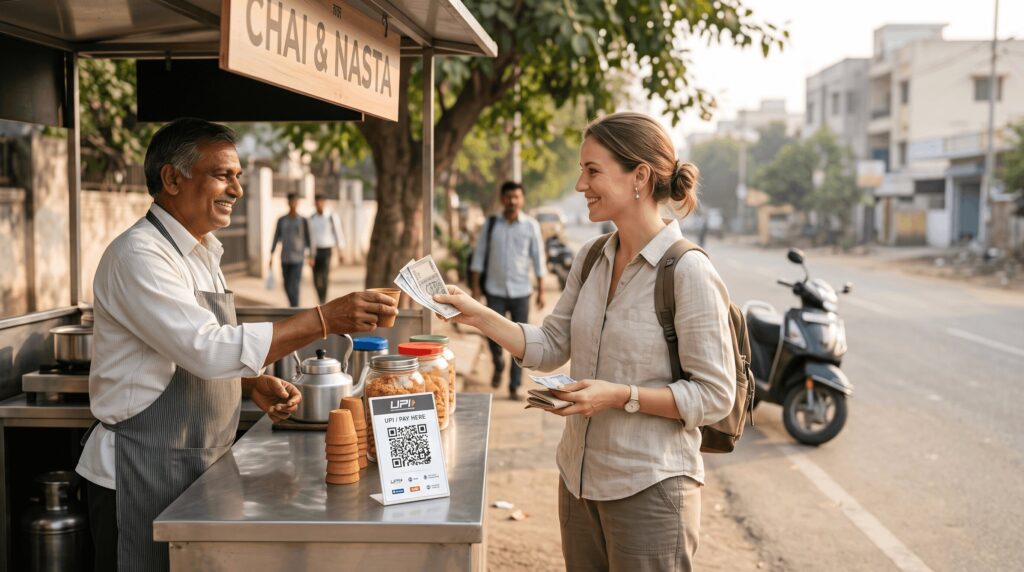
UPI (Unified Payments Interface) is India’s real-time digital payment system. It is fast, free, and works at essentially any vendor with a QR code.
Indians use it for everything from grocery shopping to splitting a restaurant bill to paying a street food vendor.
For foreign tourists, the situation as of 2026 is improving but not yet seamless.
Tourists from certain countries, including the US, UK, UAE, Singapore, Australia, Canada, and several others, can now use UPI through international versions of apps like PhonePe and Google Pay, linked to a foreign phone number and a compatible international card.
The RBI (Reserve Bank of India) has been expanding this program, and it works at any merchant that accepts UPI.
The setup requires downloading the app, verifying your foreign phone number, and linking an international Visa or Mastercard.
The process takes about fifteen minutes if everything works smoothly, and somewhat longer if it does not.
UPI can be very convenient for tourists, but it should be viewed as a backup payment option rather than a replacement for cash and cards.
If you are staying in India for more than two weeks or traveling frequently, setting up tourist UPI access is worth the effort. For a week-long trip, cash and cards will cover everything.
Should You Exchange Money Before Traveling to India?
In most cases, no. You do not need to exchange large amounts of money before arriving in India. A better approach is to withdraw cash from an airport ATM after landing or exchange a small amount for immediate expenses.
ATM exchange rates are usually more competitive than those offered by foreign banks before departure. If carrying foreign currency, US dollars are the easiest and most widely accepted option for exchange in India.
ATMs in India: What Tourists Should Know
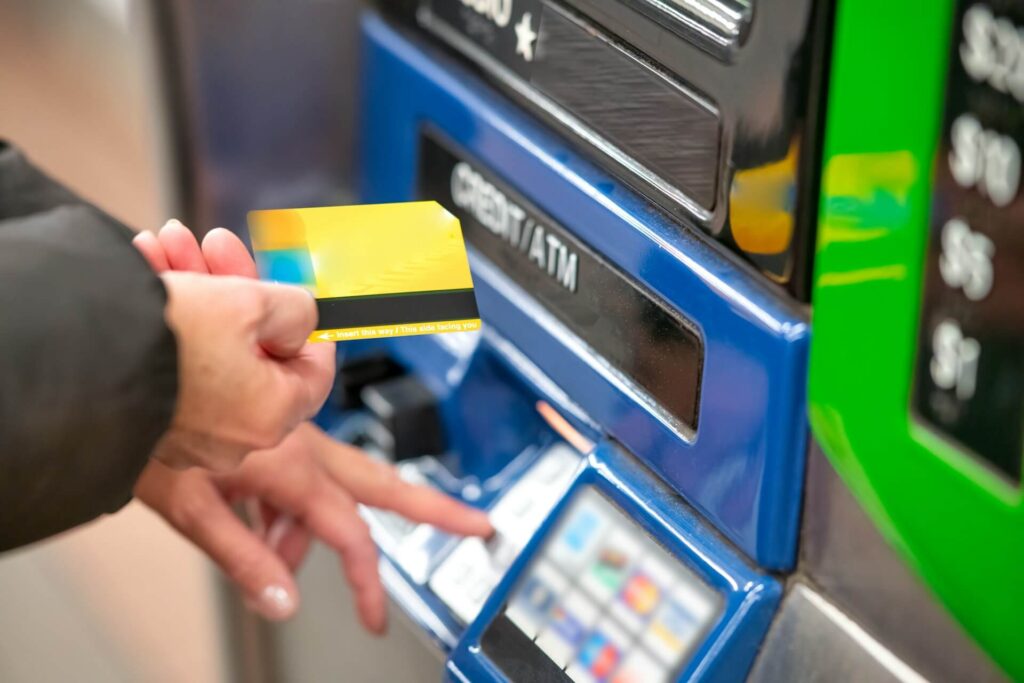
ATMs are widely available in Indian cities and major tourist destinations. In smaller towns and rural areas, they exist but with less reliability: the machine may be out of cash, out of service, or have connectivity issues.
Withdrawal limits and fees
Most Indian ATMs allow withdrawals of 10,000 to 20,000 rupees per transaction, roughly 120 to 240 USD. The exact limit varies by bank and machine.
Indian banks charge a transaction fee for foreign cards, typically between 150 and 250 rupees per withdrawal. Your home bank may also charge an international ATM fee on top of this.
To minimize fees, withdraw larger amounts less frequently rather than small amounts repeatedly.
Which ATMs to use
ATMs from major Indian banks are the most reliable: SBI (State Bank of India), HDFC, ICICI, Axis Bank, and Citibank all have good networks and handle foreign cards consistently.
Standalone ATMs in tourist areas from smaller operators can be less reliable and occasionally have higher fees.
Airport ATMs are often the simplest and most cost-effective way to get your first Indian rupees, especially if you only need enough cash for transport, food, and tips on arrival.
The exchange rate you get through an ATM withdrawal is generally better than the cash exchange desks in the arrivals hall, and significantly better than airport currency exchange booths.
ATM safety
Use ATMs inside bank branches or attached to bank buildings where possible. Check the card slot for anything that looks added on or loose before inserting your card. Shield the keypad when entering your PIN. Avoid ATMs in isolated locations at night.
Always carry some cash as backup
ATMs in India do run out of cash, particularly around public holidays and in smaller towns. Do not leave a city with only a card and the plan to find an ATM later.
Currency Exchange in India
Airport exchange on arrival
Convenient but expensive. Airport exchange desks offer worse rates than ATMs or authorized exchange centers in the city.
Checking the current exchange rate before exchanging money can help you recognize poor offers and avoid unnecessary conversion costs.
Use the airport only for a small amount to cover your immediate needs, around 3,000 to 5,000 rupees, enough for transport to your hotel and first-day basics. Exchange the rest in the city.
Authorized exchange centers
The best rates in India come from RBI-authorized money changers, which operate as standalone exchange shops in most tourist areas and major cities.
These licensed foreign exchange providers are generally the safest option for converting cash while traveling in India. Thomas Cook, BookMyForex, and Centrum are reputable operators.
They are transparent about rates and fees and issue official receipts. Banks also exchange currency and are reliable, but the process is slower and requires more documentation including your passport.
Compare rates between two or three exchange providers before exchanging larger amounts. Even small differences in rates can save a noticeable amount of money over the course of a longer trip.
What to avoid
Exchanging money with individuals on the street or through unofficial channels. It is illegal, the notes may be counterfeit, and the rate is rarely as good as claimed. This is a situation where convenience is not worth the risk.
Exchanging large amounts at hotel reception desks, which generally offer poor rates compared to authorized changers, though they are fine for small amounts in a pinch.
Bringing currency from home
USD and GBP exchange well in India and are accepted at most authorized changers. Euros are also widely accepted. Australian and Canadian dollars exchange less easily outside major cities.
If you are bringing cash from home to exchange, USD is the most practical option.
How Much Money Should You Carry?
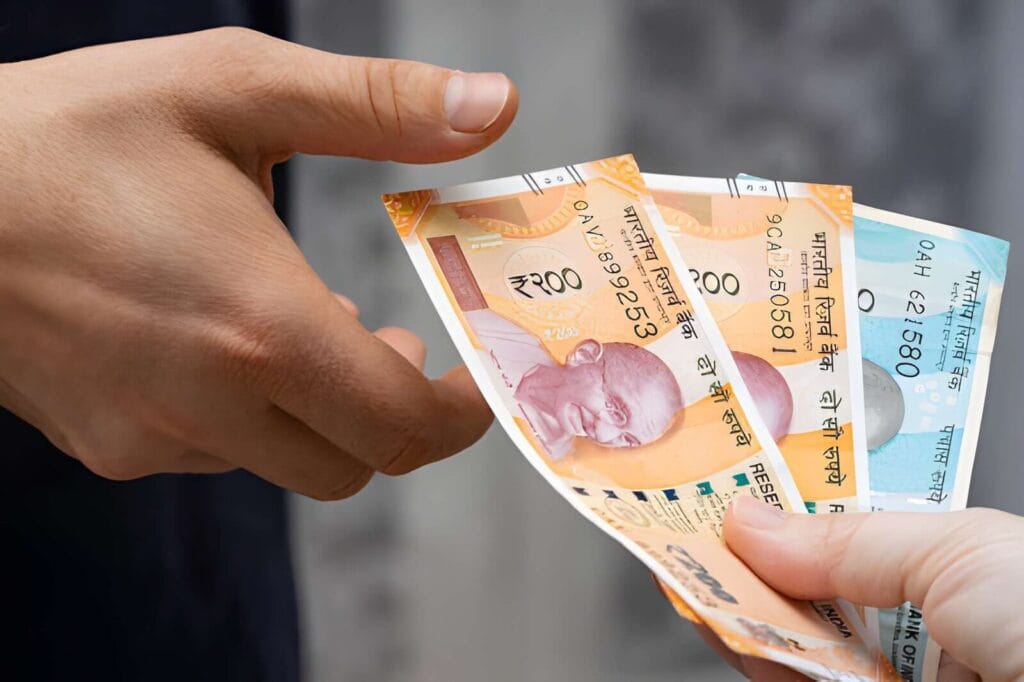
This depends entirely on your travel style. Here is a realistic breakdown:
Your travel budget in India can vary dramatically depending on accommodation choices, transport preferences, and how often you dine at restaurants versus local eateries.
Budget traveler (hostels, local transport, street food, budget guesthouses) Daily spend: 1,500 to 3,000 rupees (18 to 36 USD). Carry 5,000 to 8,000 rupees in cash at any time. Most of your spending will be cash-based.
Mid-range traveler (3-star hotels, mix of restaurants and street food, organized day trips) Daily spend: 4,000 to 8,000 rupees (48 to 96 USD). Cards handle hotel bills. Carry 5,000 to 10,000 rupees in cash for daily expenses.
Comfort traveler (4 to 5-star hotels, restaurants, private transport, premium experiences) Daily spend: 10,000 rupees and above. Cards cover most large expenses. Carry 5,000 rupees in cash for tips, markets, and incidentals.
Across all categories, the cash you need on hand at any time is roughly your two-day daily spend. The rest can sit in your account and be withdrawn as needed.
Money Mistakes Tourists Commonly Make
Relying only on cards
Cards fail at smaller vendors, in rural areas, and when connectivity is poor. Travelers who arrive assuming India is like Western Europe for card payments run into problems quickly.
Not informing their bank before travel
Banks flag international spending patterns and freeze cards without warning. This is the single most common payment problem travelers report. Call your bank before you leave.
Exchanging all their money at the airport
Airport rates can be 5 to 8 percent worse than authorized exchange centers in the city. On a significant amount of cash, that difference adds up.
Carrying all their money in one place
Losing a wallet is much less catastrophic if you have a backup card in your luggage and some emergency cash separate from your main wallet. Split your resources across at least two locations on your person and one in your accommodation.
Ignoring ATM fees
Multiple small withdrawals from ATMs with high per-transaction fees can add up to real money over a two-week trip. Withdraw what you need for two to three days at a time rather than daily small amounts.
Assuming UPI works for tourists everywhere
Tourist UPI access is improving but not universal. Do not arrive expecting to pay for everything with your phone.
Money Safety Tips for India Travel

Split your resources. Keep your main card, a backup card, and your cash in different places. A money belt worn under clothing is practical for keeping your primary card and emergency cash separate from your day wallet.
Use ATMs during daylight hours at bank branches where possible. The risk at Indian ATMs is card skimming, which is more prevalent at standalone machines in busy tourist areas than at bank-branch ATMs.
Keep a digital photo of your cards (front only, not CVV) in a secure cloud folder. If your wallet is lost or stolen, you have your card numbers for reporting and cancellation without having to remember them.
Budget a small amount of cash for tipping. Hotel staff, drivers, and tour guides across India typically expect tips in cash. Cards are not useful for this.
Track your spending loosely. India is cheap by Western standards, and it is easy to underestimate how quickly small cash purchases accumulate across a long trip. A rough daily tally prevents the surprise of running low at an inconvenient moment.
What Should You Actually Use in India?
Situation | Best Payment Method | Notes |
Hotel accommodation | Card | Widely accepted, keep receipt |
Street food and local stalls | Cash | Cards not accepted |
Auto and cycle rickshaws | Cash | Agree fare before getting in |
Ride-hailing apps (Uber/Ola) | Card or UPI | Set up in app before travel |
Established restaurants | Card or UPI | Both usually available |
Shopping malls and chains | Card | Works reliably |
Local markets and bazaars | Cash | Essentials |
Rural areas and small towns | Cash | Only option in many places |
Entry fees at tourist sites | Cash | Major sites accept cards too |
Tipping | Cash | Always |
Real-Life Scenarios
Arriving at the airport
You land and need to get to your hotel. Skip the currency exchange desk in arrivals. Find the ATM in the arrivals hall, withdraw 5,000 rupees, and use that for your prepaid taxi or app cab to the hotel.
You now have cash for tips and incidentals without having paid airport exchange rates on a large amount.
Paying for street food in Delhi
You stop at a popular chaat stall. There are twenty people eating. The vendor has a QR code taped to the cart. You try your tourist UPI app and it works. You try it at the next stall and the app times out.
The vendor shrugs and waits. You pay cash. This is the reality of UPI for tourists right now: use it when it works, have cash when it does not.
Withdrawing cash in a smaller city
You are in Jodhpur and your cash is running low. You find an SBI ATM near the main market. It accepts your foreign card, charges a 200-rupee fee, and dispenses 10,000 rupees.
You withdraw enough for three days rather than coming back tomorrow. The ATM two streets away had an out-of-service sign.
Paying a hotel bill
Your hotel in Jaipur sends a checkout bill for 12,000 rupees. Your Visa card goes through without issue. The hotel adds no surcharge.
You keep the receipt for your expense records and for your insurance paperwork in case you need it later.
Buying in a market
You are at a fabric market in Varanasi. The vendor quotes 800 rupees for a scarf. You negotiate to 600. He does not have a card terminal. You pay cash.
Having the right denominations matters: he does not have change for a 2,000-rupee note, so you pay with a 500 and a 100 rupee note. Always carry small notes for market shopping.
Final Checklist
Before you travel
- Inform your bank of travel dates and destinations
- Check foreign transaction fees on your cards
- Get a second card from a different network if possible
- Consider a travel card (Wise, Revolut) to reduce fees
- Save your bank’s international contact number offline
On arrival in India
- Withdraw 5,000 rupees from airport ATM for immediate needs
- Exchange larger amounts at authorized exchange centers in the city
- Check that your card works at the first ATM before you need it urgently
- Note the nearest bank-branch ATM to your accommodation
While traveling
- Keep two to three days of cash on hand at all times
- Split cash and cards across different locations on your person
- Withdraw larger amounts at city ATMs before heading to smaller towns
- Keep small denomination notes (10, 20, 50, 100 rupees) for markets and tips
In daily travel
- Cash for street food, local transport, markets, tips, and small vendors
- Card for hotels, established restaurants, malls, and organized services
- UPI where it works as a convenient supplement
- Track daily spend loosely to avoid running short at inconvenient moments
Managing money in India is easier than many first-time visitors expect. Carry a mix of cash, cards, and, if available, tourist UPI access.
Use cash for everyday local spending like street food, transport, markets, and tips, while relying on cards for hotels, restaurants, and larger purchases.
This India Travel Money Guide also answers the most common questions travelers have about cash, cards, ATMs, and UPI payments in India.
FAQs about India Travel Money and Payments Guide
How much cash should tourists carry in India?
Most travelers should carry enough cash to cover two days of expenses. For many visitors, this means keeping around ₹5,000–₹10,000 on hand for street food, local transport, markets, tips, and places that do not accept cards.
Can tourists use credit cards in India?
Yes. Visa and Mastercard are widely accepted at hotels, shopping malls, airports, larger restaurants, and retail chains. However, many small shops, local markets, and street vendors still prefer cash.
Is cash still necessary in India?
Yes. While digital payments are common in major cities, cash remains essential for street food, local transport, tips, markets, smaller towns, and rural areas where card and digital payment options may be limited.
Can foreign tourists use UPI in India?
Eligible foreign tourists can access UPI through supported apps linked to international cards and foreign phone numbers. However, cash and cards should still be carried as backup payment options.
What is the best way to get Indian rupees?
Using a bank ATM after arrival is usually the easiest and most cost-effective option. ATM exchange rates are generally better than airport currency exchange counters and hotel exchange services.
Should I exchange money before traveling to India?
You do not need to exchange large amounts before departure. Most travelers can withdraw Indian rupees from airport ATMs or use authorized money changers in major cities after arrival.
Which cards work best in India?
Visa and Mastercard offer the widest acceptance across India. Carrying two cards from different networks is recommended in case one card is declined or experiences technical issues.
Are ATMs easy to find in India?
ATMs are widely available in major cities, airports, and tourist destinations. In smaller towns and remote areas, machines may be less reliable, so it is wise to withdraw cash before leaving larger cities.
Do Indian ATMs charge foreign card fees?
Yes. Most Indian banks charge foreign card holders a withdrawal fee, typically between ₹150 and ₹250 per transaction. Your home bank may also charge additional international ATM fees.
What is the best payment method for tourists in India?
A combination of cash, cards, and tourist UPI access is the best approach. Cards are ideal for hotels and larger purchases, while cash remains necessary for many everyday travel expenses.
Can I use my debit card in India?
Yes. International Visa and Mastercard debit cards generally work at Indian ATMs and card terminals. Before traveling, inform your bank about your trip and check any foreign transaction or ATM withdrawal fees.
Images: Unsplash
