



Many first-time travelers arrive in India excited to experience authentic regional specialties. Within a day or two, that excitement often mixes with uncertainty.
What is safe to eat? Which famous Indian dishes are worth trying first? Is Indian street food actually safe, or is it a risk not worth taking?
This Indian Food Guide for first-time travelers explains how India’s food culture works, what to eat first, what to avoid, how to identify safe Indian street food, and how to enjoy local Indian food with confidence throughout your trip.
Understanding Indian Cuisine for First-Time Travelers
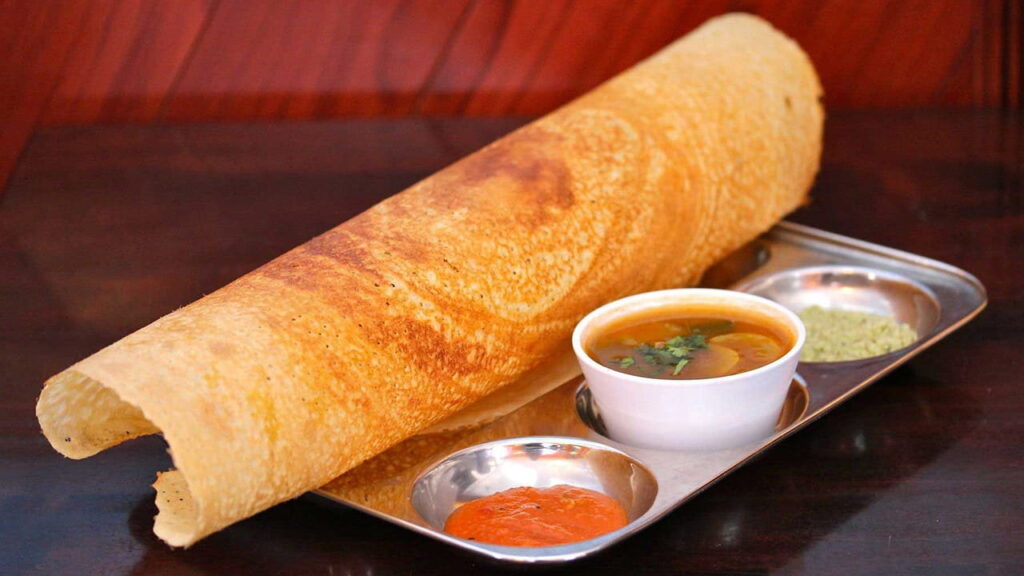
India does not have one cuisine. It has dozens, shaped by region, religion, climate, and centuries of distinct culinary traditions.
North India is known for wheat-based breads, dairy-rich curries, and tandoor cooking, while South India relies more on rice, lentils, coconut, and tamarind.
Coastal regions specialize in seafood, and every state has its own distinctive cuisine. The Northeast has its own traditions with minimal overlap with the rest of the country.
Indian food is almost always spiced, meaning it uses complex combinations of cumin, coriander, cardamom, turmeric, and other aromatics.
Many Indian dishes contain little or no chilli. Learning the difference between spices and heat makes it much easier to order Indian food according to your own spice tolerance.
Assuming every Indian dish will burn your mouth is one of the most common misconceptions first-time visitors bring with them.
The restaurant and street food systems also operate differently. Restaurants offer more controlled environments with kitchen hygiene standards.
Street food is fresher, cheaper, and often better tasting, but requires more judgment on your part to identify what is safe. Both are worth engaging with. Neither should be avoided entirely.
Food Safety in India: What Travelers Need to Know
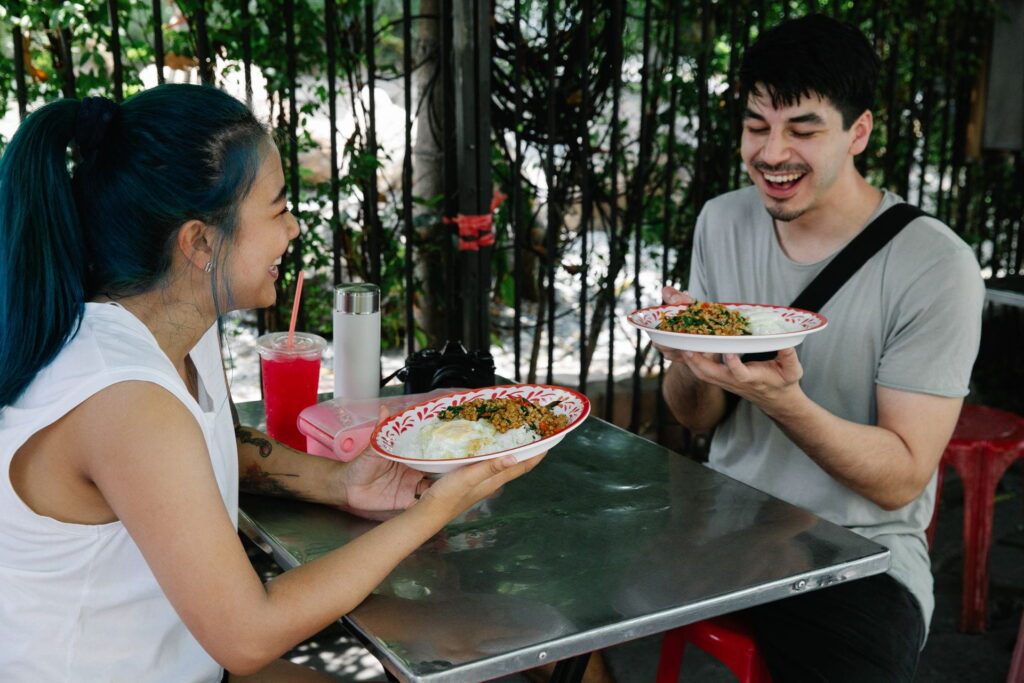
Most food safety advice for India travelers falls into vague categories. This framework is more useful. Think of food situations in three layers.
Risk | Where | Recommendation |
Low | Hotels, reputable restaurants | Ideal for first few days |
Medium | Busy dhabas, busy street stalls | Safe if cooked fresh |
High | Pre-cut fruit, raw chutneys, reheated food | Avoid or use caution |
Layer 1: Low risk
Hotels and reputable restaurants are the safest places to eat during your first few days in India. Eating here in the first few days while your digestive system adjusts is a sensible default.
Layer 2: Medium risk
Busy local eateries, popular dhabas (roadside restaurants), and high-turnover street stalls where food is cooked continuously to order.
Layer 3: Higher risk
Pre-cut fruit, raw chutneys, reheated food, and drinks made with unknown water or ice deserve extra caution. Most traveler illnesses are linked to these situations rather than Indian food itself.
The practical application: start in Layer 1 for the first two or three days. Move into Layer 2 as you get your bearings. Approach Layer 3 situations with specific awareness rather than blanket avoidance.
Safe Indian Food for First-Time Travelers
The safest starting point in Indian food is freshly cooked, simply prepared dishes at established restaurants.
Dish | Spice | Vegetarian | Why it's Good |
Dal Tadka | Mild | Yes | Light and nutritious |
Butter Chicken | Mild | No | Familiar flavours |
Dosa | Mild | Yes | Freshly made |
Idli | Very Mild | Yes | Easy to digest |
Jeera Rice | None | Yes | Simple starter |
Paneer Butter Masala | Mild | Yes | Popular vegetarian option |
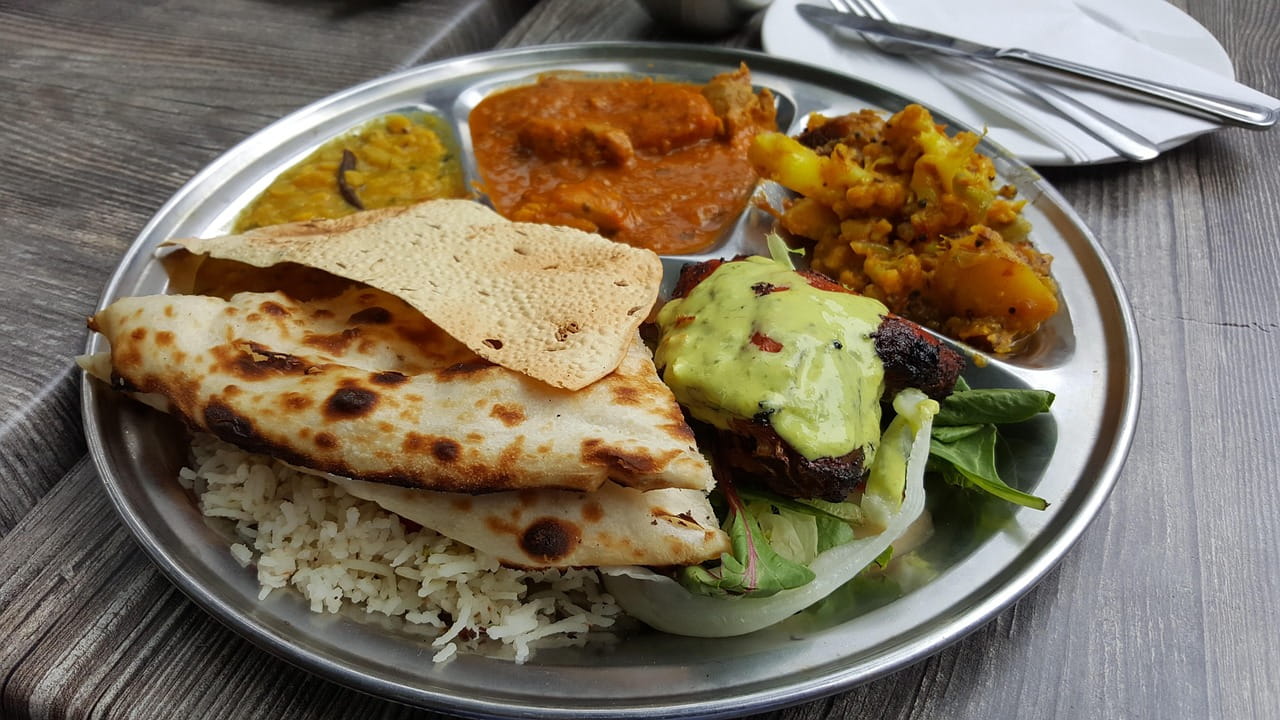
Indian Thali | Varies | Both | Try several dishes at once |
These dishes are freshly cooked, widely available and ideal for first-time visitors.
Indian Street Food Guide: What’s Safe to Eat?
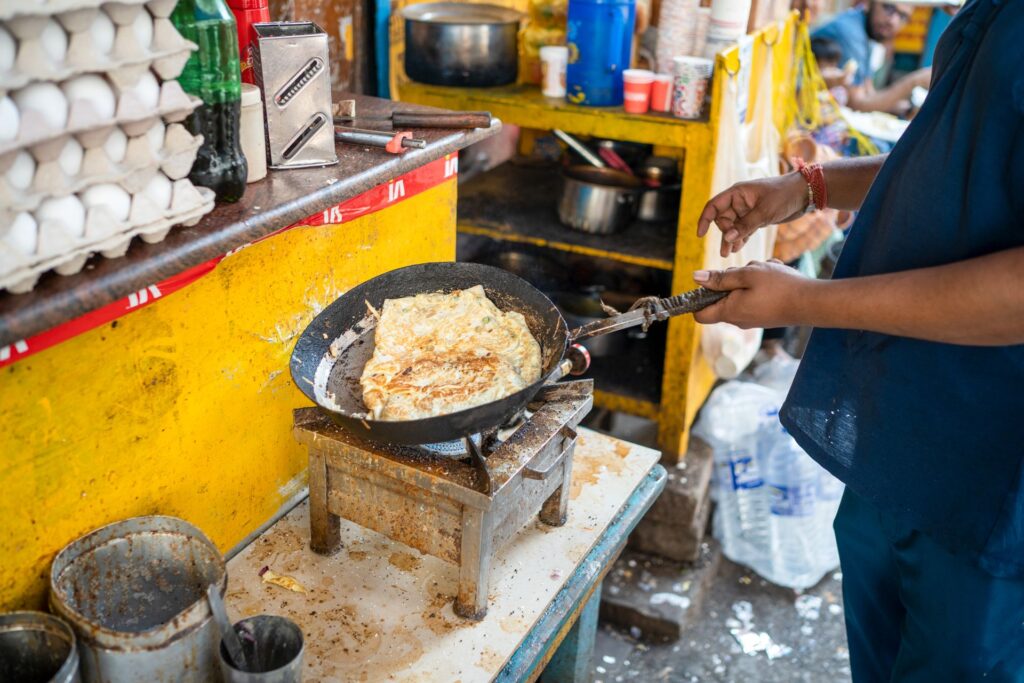
Street food is one of the best ways to experience India’s local cuisine. Avoiding it entirely means missing some of the country’s most memorable flavors.
How to Choose a Safe Street Food Stall
The easiest way to judge a street food stall is by looking at customer turnover. A busy stall with a constant stream of locals is usually preparing food continuously, so ingredients are fresher and dishes spend less time sitting out.
Watch the food being cooked before you order. Stalls that prepare food fresh in front of you are generally a better choice than those serving pre-made items from trays or display cases.
Pay attention to basic hygiene. Clean cooking surfaces, separate handling of food and money, fresh-looking oil, and clean utensils are all positive signs.
No street stall will be perfect, but a vendor who keeps their workspace organized is usually a better choice than one with poor hygiene.
Finally, choose food that is served piping hot. High cooking temperatures reduce food safety risks, while dishes that have been sitting at room temperature for long periods are more likely to cause stomach problems.
Safe street food choices
Food or Drink | Recommendation | Why? |
Fresh samosas | Safe | Fried fresh and served hot |
Dosa or idli | Safe | Made fresh to order |
Kathi rolls | Safe | Cooked fresh in front of you |
Grilled kebabs | Safe | High-heat cooking reduces risk |
Masala chai | Safe | Water is boiled during preparation |
Pav bhaji | Safe | Best from busy stalls, served hot |
Pani puri | Choose carefully | Eat only from busy, high-turnover vendors |
Raw chutneys | Be cautious | May be made with untreated water |
Drinks with ice | Be cautious | Ice may be made from tap water |
Pre-cut fruit | Avoid | Higher risk of contamination |
What to Avoid Eating in India
The biggest risks usually come from contaminated water, food left sitting out for long periods, and poor food handling rather than Indian cuisine itself.
Water in the food chain
Tap water used in cooking, washing ingredients, making chutneys, or rinsing plates is the leading cause of traveler illness in India.
This is why the raw chutney at a street stall is riskier than the freshly fried snack next to it: the chutney was made with water.
Temperature and time
Avoid buffet food that’s been sitting out for a long time, uncovered curries, and food from low-turnover stalls.
Ice of unknown origin
At mid-range and upscale restaurants, ice is typically made from filtered water. At street stalls and budget eateries, assume it is not.
A perfectly safe meal can be undermined by two ice cubes in a lime soda. Ask for drinks without ice when in doubt.
Raw and pre-cut produce
During your first week, avoid raw salads and pre-cut fruit unless you’re eating at a reputable restaurant. Choose fruit you can peel yourself whenever possible.
Reheated food
Food that has been cooked, cooled, and reheated repeatedly concentrates risk. The dal made fresh that morning is safe. The same dal reheated for the third time that evening is a different situation.
How to Eat Like a Local in India Without Getting Sick
The travelers who eat best in India are not the ones who are most adventurous on day one. They are the ones who give their digestive system time to adapt and then expand their eating progressively.
Days 1 to 3: The foundation phase
Eat at established restaurants with sit-down service. Order freshly cooked, simply prepared dishes: dal, rice, naan, mild curries, dosa, idli.
Drink only sealed bottled water. Use this phase to get your bearings, understand portion sizes, identify your spice tolerance, and let your gut begin adjusting to a new food environment.
Days 3 to 5: Introduction phase
Start exploring busy street stalls with freshly cooked items. Samosas, vada pav, kathi rolls. Watch the cooking process before committing.
Apply the turnover and freshness rules from the street food section above. Try one or two new dishes per day rather than a complete adventure in a single meal.
Day 5 onwards: Confident eating
By this point your digestive system has made significant adjustment. You can eat more adventurously, try chaat, explore regional specialties, and engage more fully with the street food culture.
This gradual approach gives your digestive system time to adjust to a new food environment while letting you enjoy more local dishes as your trip progresses.
Regional Indian Cuisine: What to Eat Across India
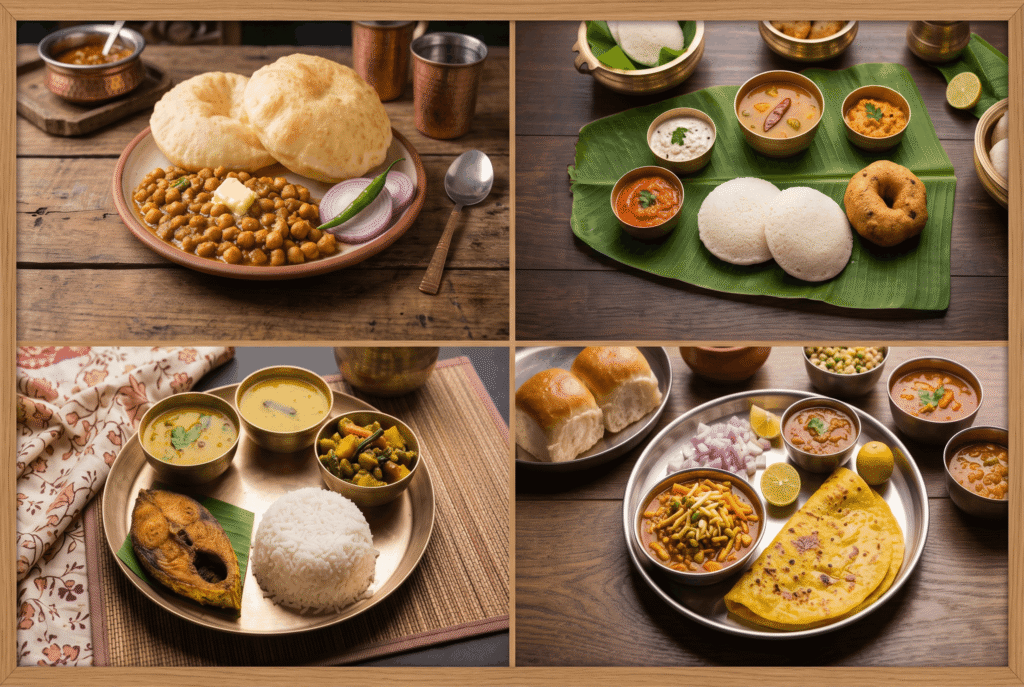
Exploring regional traditional dishes is one of the biggest highlights of traveling across India. Every state has signature dishes that reflect local history, climate, agriculture, and culture.
North India
Rich, wheat-based, and dairy-forward. The cuisine of the Mughal era left a deep mark: slow-cooked biryanis, cream and butter gravies, tandoor bread and meats.
Delhi, Jaipur, Agra, and Lucknow are the key food cities. Key dishes: butter chicken, dal makhani, biryani, paratha, kebabs.
South India
Rice and lentil-based, lighter in fat, more sour and tangy in profile. Coconut and tamarind are prominent. Vegetarian cooking is deeply developed here.
Coastal areas add excellent seafood. Key cities: Chennai, Bengaluru, Kochi, Hyderabad. Key dishes: dosa, idli, sambar, rasam, Kerala fish curry, Chettinad chicken.
West India
Gujarat is predominantly vegetarian with sweet-salty flavor profiles and exceptional thali meals. Maharashtra has Mumbai’s street food culture: vada pav, bhel puri, pav bhaji.
Goa brings Portuguese influence with vindaloo, xacuti, and seafood curries. Key dishes: Gujarati thali, pav bhaji, Goan fish curry, vindaloo.
East India
West Bengal is the cultural capital with a sophisticated tradition of fish-based cooking, mustard oil, and exceptional sweets.
Kolkata’s street food scene, including kathi rolls and puchka, is a destination in itself. Key dishes: macher jhol (fish curry), rasgulla, kathi roll, litti chokha from Bihar.
Safe Drinks, Water & Food Hygiene Tips in India
Water
Avoid drinking tap water anywhere in India, regardless of the city or hotel. Drink only sealed bottled water from reputable brands, and use it for brushing your teeth as well.
Ice
Ice is generally safe at mid-range and upscale restaurants where it’s made from filtered water. At street stalls and budget eateries, the source is often unknown, so it’s best to order drinks without ice.
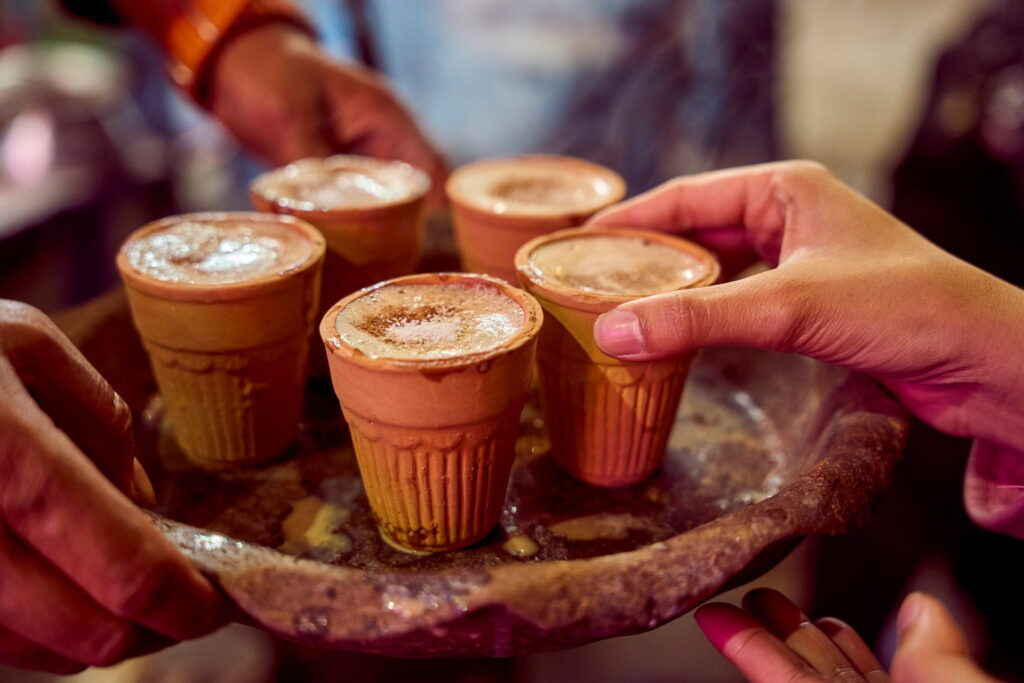
Masala Chai
Masala chai is one of the safest drinks in India because the water is boiled during preparation. It’s inexpensive, widely available, and a great way to experience everyday Indian tea culture.
Filter Coffee
South Indian filter coffee is brewed strong, often with chicory, and served hot in a traditional steel tumbler. It’s safe to drink and well worth trying, especially with breakfast dishes like dosa or idli.
Lassi
Lassi is a yogurt-based drink served sweet or salted. It’s usually safe at established restaurants, but hygiene standards vary at smaller street stalls. Mango lassi is the most popular choice for first-time visitors.
Fresh Juices
Packaged juices with intact seals are generally safe. Freshly squeezed juices from street vendors may contain tap water or ice of unknown origin, so it’s best to avoid them during your first few days in India.
Hand Hygiene
Wash your hands with soap before eating whenever possible, or use hand sanitizer if soap and water aren’t available. Good hand hygiene is one of the simplest ways to reduce the risk of traveler’s diarrhea.
In many parts of India, it’s traditional to eat with your right hand, especially when enjoying rice or bread-based meals.
Restaurants are happy to provide cutlery if you prefer, so visitors shouldn’t feel obligated to follow local dining customs.
Common Food Mistakes First-Time Travelers Make in India
Eating too aggressively on day one
Trying every new dish, every sauce, chaat, lassi, and street snack on the first day overwhelms a digestive system that has not yet started adjusting. The result is discomfort that has nothing to do with food safety and everything to do with pacing.
Trusting low-hygiene stalls
A stall that looks authentic and has one or two customers does not have the turnover to keep food fresh. Authenticity is not a hygiene signal. Crowd size is.
Ignoring water safety
The single most consistent cause of traveler illness in India is water, including water hidden in sauces, ice, and washed raw produce. Staying vigilant about water sources across the whole trip rather than just the first few days is what protects you.
Misunderstanding spice levels
Avoiding everything that might be spicy means missing most of Indian cuisine. Ask about heat level before ordering. Request less chilli when needed. Most restaurants in tourist areas handle this request without any issue.
Avoiding local food entirely
Sticking exclusively to hotel restaurants and international food out of caution means eating worse food at higher prices and missing the entire culinary point of being in India.
Many travelers spend their entire trip eating international food because they worry about food poisoning in India.
In reality, choosing freshly cooked meals from busy restaurants and reputable street vendors is usually a much better strategy than avoiding regional food altogether.
Not carrying backup snacks
Long train journeys, delayed connections, and travel days sometimes leave you hungry in situations where your only options are unfamiliar or risky. Packaged biscuits, nuts, and protein bars in your bag are a simple solution.
What to Do If You Get Food Poisoning or Traveler’s Diarrhea in India
Mild stomach upset in the first week is common and usually not cause for alarm. Your digestive system is adjusting to new bacteria, new spice combinations, and a different food environment.
Immediate steps
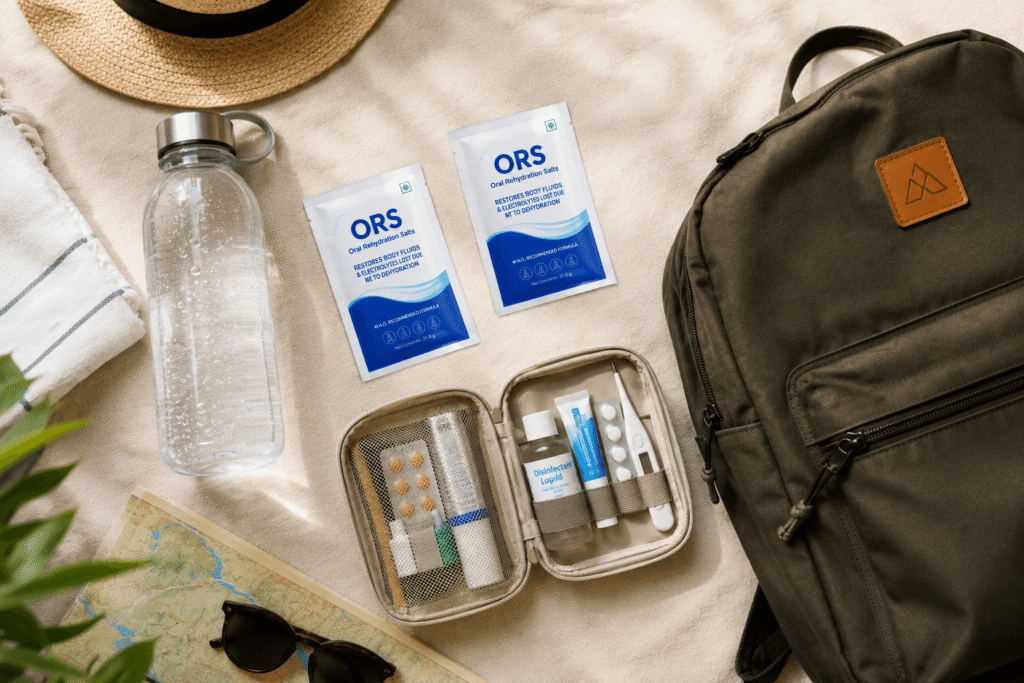
Start oral rehydration salts (ORS) as soon as symptoms begin. ORS packets are available at every pharmacy in India for almost nothing.
Mix one packet into a glass of clean bottled water and drink in small sips consistently. Dehydration makes everything worse faster than the illness itself.
What to eat
Plain white rice, banana, plain roti, and boiled potato. These are easy to digest and available everywhere. Avoid spicy food, dairy, and anything rich or oily until you feel fully normal.
Medication
Loperamide (sold as Imodium or generic equivalents at Indian pharmacies) controls symptoms when you need to travel or function.
It slows the digestive system but does not treat the underlying cause. Use it when necessary, not as a substitute for rest.
When to see a doctor
Seek medical help if: symptoms do not improve after 72 hours, there is blood in the stool, fever rises above 38.5 degrees Celsius, or you cannot keep any liquid down.
Apollo Hospitals, Fortis Healthcare, and Max Healthcare are reputable private hospital chains in major Indian cities. Your hotel can recommend the nearest clinic.
Travel insurance is worth having before you go. Medical care in India is affordable by Western standards but emergency situations can become expensive quickly without coverage.
Final Tips for Enjoying Indian Food Safely
Enjoying Indian food is about making smart choices, not avoiding local cuisine. Start with freshly cooked meals from reputable restaurants, drink only sealed bottled water, and give your digestive system a few days to adjust.
As your confidence grows, explore busy street food stalls and regional specialties while continuing to follow the same basic food safety habits.
Choosing food that’s cooked fresh and served hot will greatly reduce your risk of stomach problems.
India is one of the world’s most diverse food destinations. From rich North Indian curries to South Indian breakfasts and vibrant street food, every region offers something unique.
Eat thoughtfully, stay curious, and you’ll leave with unforgettable meals instead of unwanted stomach troubles.
FAQs about Indian Food for First-Time Travelers
Is Indian food safe for first-time travelers?
Yes. Indian food is generally safe for first-time travelers when you choose freshly cooked meals from reputable restaurants or busy street food stalls. Most stomach problems are linked to contaminated water, ice, or food left sitting out – not Indian cuisine itself.
Can tourists safely eat Indian street food?
Yes. Indian street food can be safe if you choose busy vendors where food is cooked fresh to order. Avoid stalls with low customer turnover, pre-cut fruit, raw chutneys, or drinks made with ice from unknown water sources.
What is the safest Indian food to try first?
Start with freshly cooked dishes like dal tadka, dosa, idli, butter chicken, jeera rice, or an Indian thali. These meals are widely available, beginner-friendly, and typically served hot, making them a good choice for your first few days.
Is all Indian food spicy?
No. Indian food is known for its spices, but many dishes are mild rather than hot. If you’re sensitive to chilli, ask for less spice when ordering – most restaurants are happy to adjust the heat level.
Can I drink tap water in India?
No. Avoid tap water throughout your trip, including ice from unknown sources. Drink sealed bottled water and use it for brushing your teeth to reduce the risk of stomach problems.
What foods should I avoid in India?
Avoid food that’s been sitting out for long periods, pre-cut fruit, raw salads washed with tap water, and reheated meals from low-turnover vendors. Freshly cooked food served hot is usually the safest option.
Can vegetarians eat easily in India?
Yes. India is one of the best destinations for vegetarian travelers, with countless dishes made from lentils, vegetables, paneer, rice, and bread. Dal tadka, dosa, idli, and vegetarian thalis are excellent places to start.
How can I avoid getting sick while eating in India?
Choose freshly cooked food, drink only sealed bottled water, wash or sanitize your hands before eating, and try new dishes gradually. A little caution during your first few days goes a long way toward enjoying Indian food with confidence.
Images: Pixabay
